Beijing, China

A Partnership for the Future

Eight prizewinners from WFIMC member competitions will perform at China's National Centre for the Performing Arts this November. The new collaboration could become an important model for creating career opportunities through the Federation's network.

For music competitions, the challenge is familiar: identifying exceptional young musicians is one thing; helping them establish sustainable careers is another. Major prizes no longer guarantee regular engagements, and organisers are increasingly expected to provide meaningful professional opportunities for their laureates.

The WFIMC has made career development an important priority, notably through its international Inspiring the Future forums  and seminars such as Beyond the Stage. A new partnership with Beijing's National Centre for the Performing Arts (NCPA) now adds a practical dimension to these efforts.

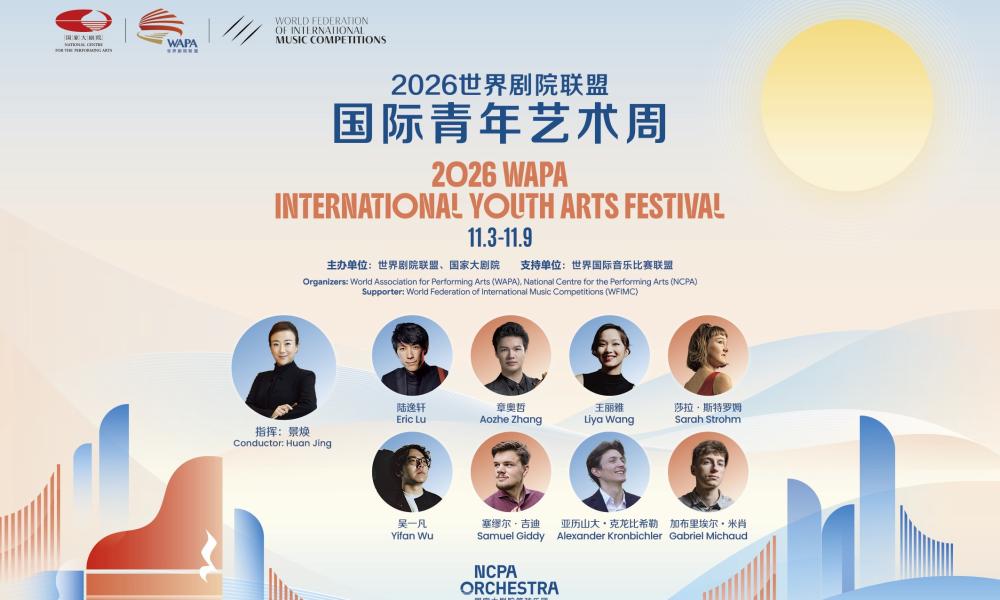
From 3 to 9 November 2026, the inaugural WAPA International Youth Arts Festival will bring eight outstanding competition laureates to Beijing for orchestral concerts, chamber music, solo performances, masterclasses and public events.

The project has taken two years of discussions and negotiations to realise. Under the leadership of NCPA President Ning Wang and WFIMC President Peter Paul Kainrath, WFIMC Vice President Sisi Ye and NCPA Artistic Director Jia Lü have been particularly instrumental in its development, helping to turn the original idea into a major international collaboration.

Two extraordinary venues, one new opportunity
 

From 3 to 9 November 2026, the inaugural WAPA International Youth Arts Festival will bring a group of outstanding international competition laureates to the Chinese capital for orchestral concerts, chamber music, solo performances, masterclasses and public events. At the centre of the project is a collaboration between the World Association for Performing Arts (WAPA), the National Centre for the Performing Arts (NCPA) and the WFIMC.

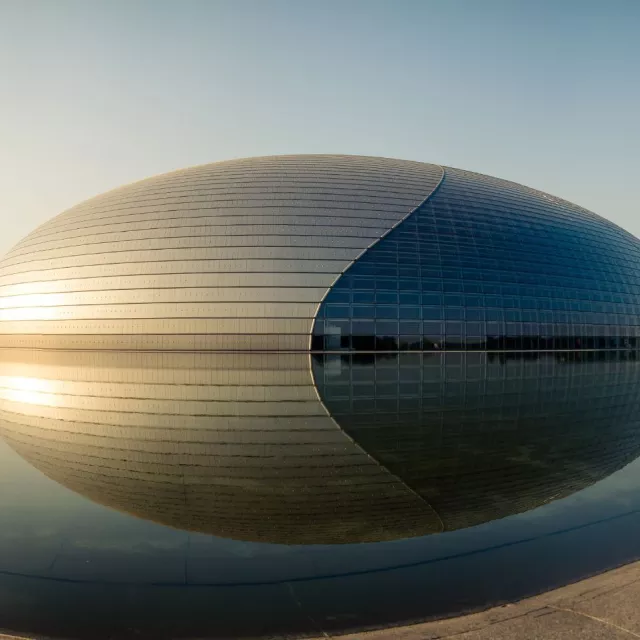
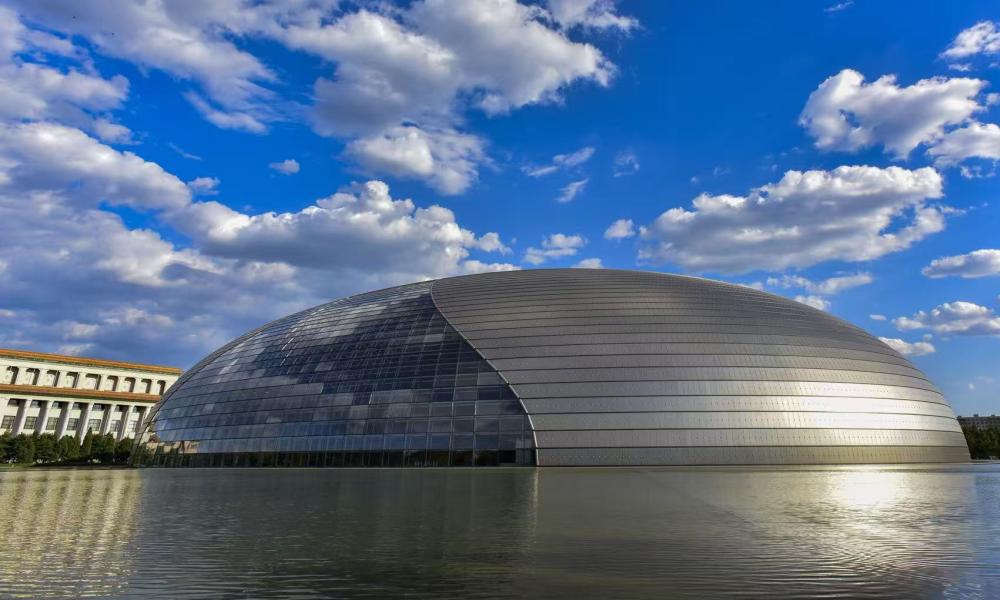
The setting is remarkable. Since its opening in 2007, Beijing's National Centre for the Performing Arts has established itself as one of Asia's most important performing arts institutions. Designed by French architect Paul Andreu and situated immediately west of Tiananmen Square, its monumental titanium-and-glass structure has become an architectural symbol of China's cultural ambitions. But behind the famous exterior lies something considerably more significant for musicians: a major producing and presenting institution, with its own orchestra and chorus, substantial artistic and technical resources, and an extensive programme of performances, education and international exchange.

Its Concert Hall, seating approximately 1,900, is among the country's leading venues for symphonic music and solo recitals. The NCPA also encompasses an opera house, theatre and multifunctional performance space, allowing it to accommodate an exceptionally broad range of artistic activity.

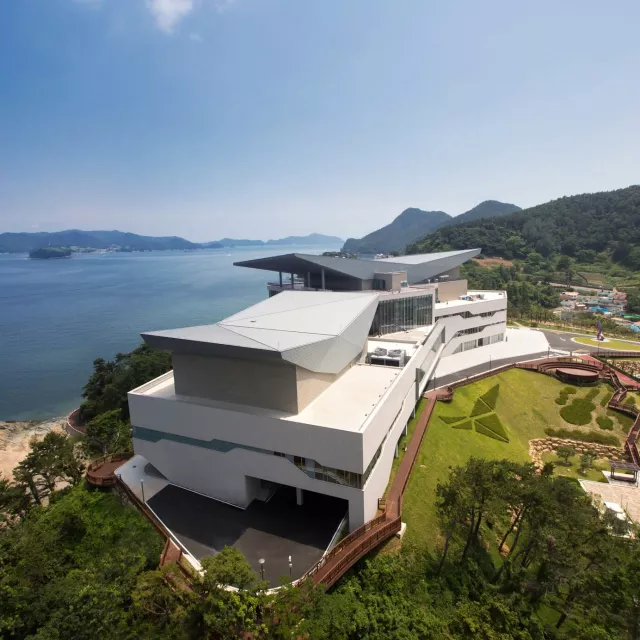
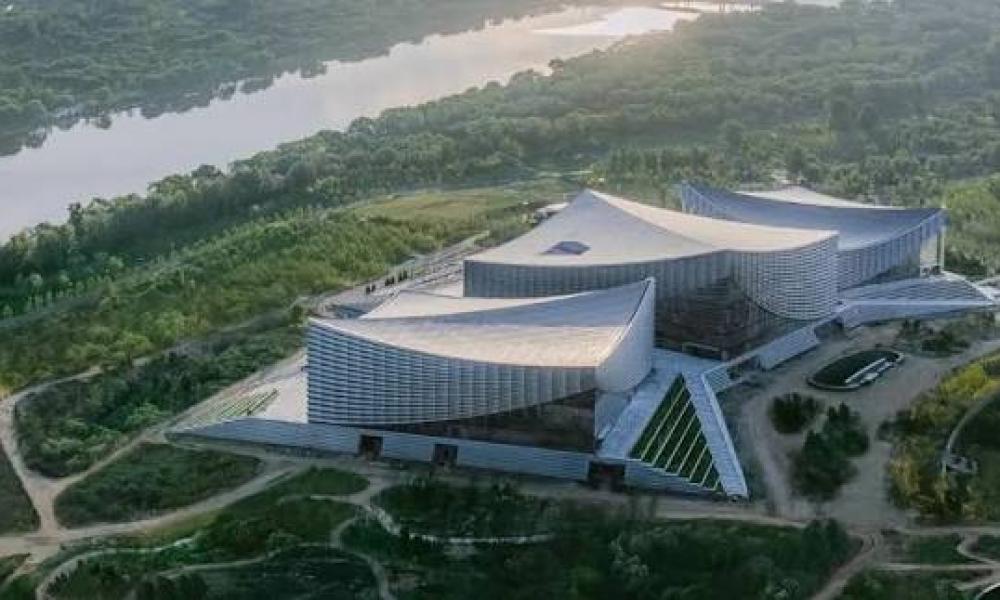
In December 2023, the institution expanded dramatically with the opening of the Beijing Performing Arts Centre (BPAC) in Tongzhou, beside the historic Grand Canal. The new complex offers five performance spaces with a combined capacity of 5,610 seats. Its 1,500-seat Concert Hall features a vineyard-style auditorium and a major pipe organ; a 500-seat multifunctional theatre provides a flexible setting for chamber music and smaller-scale performances. Together with the NCPA's Taihu Stage Art Centre, the two concert complexes form part of an integrated institutional structure encompassing eleven stages and more than 13,000 seats.

For young musicians, the significance of such infrastructure extends far beyond its architectural splendour. An institution of this scale can offer precisely the range of opportunities that emerging artists need: concerto appearances with professional orchestras, chamber music collaborations, solo recitals, educational activities, professional production support and exposure to large, diverse audiences. Just as importantly, it can introduce them to an artistic environment and a concert market that many European and American musicians still find difficult to access.

The NCPA is not simply a prestigious destination for a single performance. It is an institution with the resources, artistic programming and international relationships to become an important partner in the development of young careers.
Eight artists, eight competition stories
The inaugural festival brings together musicians whose achievements demonstrate both the diversity and the exceptional standards of the international competition world.

Among the most established participants is American pianist Eric Lu, whose victory at the 2025 International Chopin Piano Competition in Warsaw followed his First Prize at the Leeds International Piano Competition in 2018. A graduate of the Curtis Institute of Music, Lu has already developed an international career with major orchestras and concert halls, establishing a reputation for the refinement and individuality of his interpretations. His presence in Beijing provides an important connection between the emerging generation of laureates and an artist whose competition successes have already translated into a substantial professional career.

The younger pianists represent two particularly striking recent achievements. Yifan Wu won First Prize at the 2025 Ferruccio Busoni International Piano Competition in Bolzano. His musical development has been unusually rapid, and his success at Busoni has placed him firmly among the most closely watched young pianists of his generation. Liya Wang, winner of the piano category at the 2025 ARD International Music Competition in Munich, represents another major competition tradition. The ARD Competition has long been recognised for its rigorous selection process and its emphasis on musicianship across a wide range of instruments.

The string players are no less remarkable. Swiss violist Sarah Strohm shared First Prize at the 2025 Concours de Genève, a competition whose viola edition attracted considerable attention for the exceptionally high standard of its finalists. Born in Geneva and now studying at the Conservatoire National Supérieur de Musique et de Danse de Paris with Jean Sulem, Strohm has already appeared at numerous festivals and academies, including the Seiji Ozawa Academy and Verbier Festival programmes. Her success in Geneva, where she also received several audience-related distinctions, marked a major step in a promising international career.

Chinese violinist Aozhe Zhang, born in 2008, is among the youngest members of the ensemble. Winner of the 2025 Premio Paganini in Genoa, he has also achieved success at the Tibor Varga International Violin Competition in Sion and the Sendai International Music Competition. His extraordinary command of the instrument attracted attention at an early age: as a teenager, he performed the complete 24 Paganini Caprices in recital. For a musician at such an early stage of his career, the opportunity to appear in a major international festival alongside established laureates and professional orchestral musicians represents a particularly valuable experience.

The festival also gives important prominence to wind instruments. Alexander Kronbichler, the young oboist from South Tyrol, was awarded Second Prize at the 2025 International Aeolus Competition for Wind Instruments in Düsseldorf. A student of Ralph van Daal at the Robert Schumann Hochschule, he performed Richard Strauss's Oboe Concerto in the competition's final concert. His participation in Beijing is a reminder that outstanding wind players deserve concert opportunities extending well beyond the traditional orchestral audition circuit.

French percussionist Gabriel Michaud brings a different artistic perspective. Winner of the 2025 IPEA International Percussion Competition in Shanghai, he had previously received First Prize at the TROMP International Percussion Competition in Eindhoven and went on to win the percussion category of the 2026 ARD International Music Competition. Trained in Nantes, Geneva and Paris, Michaud combines classical percussion with interests in jazz, contemporary music and composition. His career illustrates the increasingly diverse artistic identities of today's young performers, whose work frequently crosses the boundaries of conventional concert programming.

Completing the group is Australian organist Samuel Giddy, winner of the International Organ Competition of Saint-Maurice in Switzerland. Based in Sydney, where he works as a recitalist, church musician and educator, Giddy has also been a prizewinner at the Martini International Organ Competition in Groningen. His participation is particularly significant given the relatively limited number of international performance opportunities available to young organists outside their established recital and church-music networks. The substantial organ at the Beijing Performing Arts Centre offers a particularly fitting setting for an artist whose instrument is too rarely represented in multidisciplinary international festivals.

Taken together, these eight musicians represent an impressive cross-section of the Federation's membership: established and emerging careers, different instrumental traditions, and competitions with distinct histories and artistic priorities. Their selection is not intended to establish yet another hierarchy of winners. Rather, it demonstrates the extraordinary artistic resources already present within the WFIMC network—and the possibilities that arise when those resources are brought together.

The new Beijing Performing Arts Center (BPAC) in Tongzhou, Beijing, designed by Schmidt Hammer Lassen in collaboration with Perkins&Will

A Partnership with a Future


The Beijing festival brings together two complementary international networks: the World Association for Performing Arts (WAPA), established at the initiative of the NCPA in 2020, and the WFIMC, whose member competitions identify exceptional young musicians across the world. Their collaboration demonstrates how these networks can create opportunities that individual competitions would find difficult to secure on their own.

If successful, the festival could become a regular feature of the Federation's activities, with new groups of laureates appearing in Beijing and similar partnerships developing with other major concert institutions. Such initiatives would offer tangible additional benefits to WFIMC members while strengthening their efforts to support young artists beyond the competition stage.

For the Federation, Beijing represents more than a prestigious international engagement. It is an opportunity to translate the collective strength of its membership into something of lasting value: new stages, new professional connections and new career prospects for the musicians its competitions have helped discover.


©WFIMC 2026