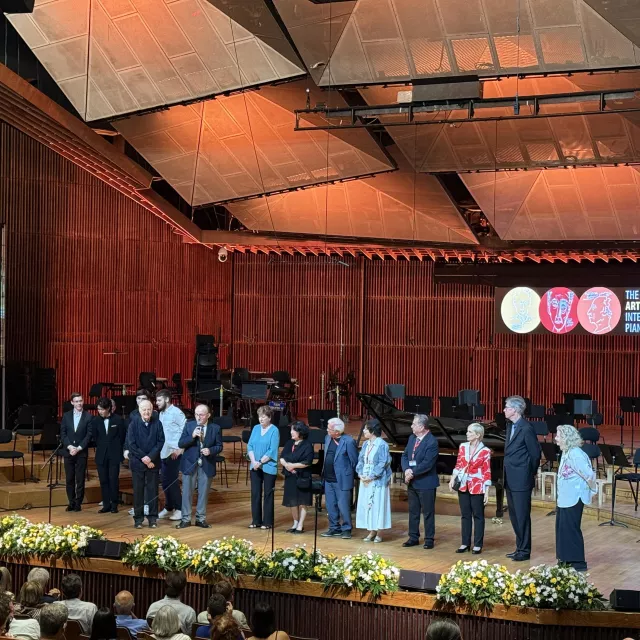
TEL AVIV, ISRAEL

Nothing Is Wasted

Rubinstein Competition Winner Dmitry Yudin Reflects on an Intense Few Weeks in Tel Aviv and on Tour Across Israel

WFIMC: Congratulations on your victory! You’ve barely stopped since the competition began, with a prizewinners’ tour across Israel straight afterwards. Are you still in Europe?
Dmitry Yudin: I’m in Seville, in Spain right now. My last concert in Israel was on Thursday, and I came here on Friday for the weekend. I wanted to see real flamenco and relax a little. Now I’m on my way back to the US.
It was a very intense week after the competition. I didn’t really count the concerts, but I think there were around twelve in fifteen or sixteen days, perhaps even more. It certainly felt like more! I was on the move almost the whole time. We played nearly every day, and on a couple of days we played twice.
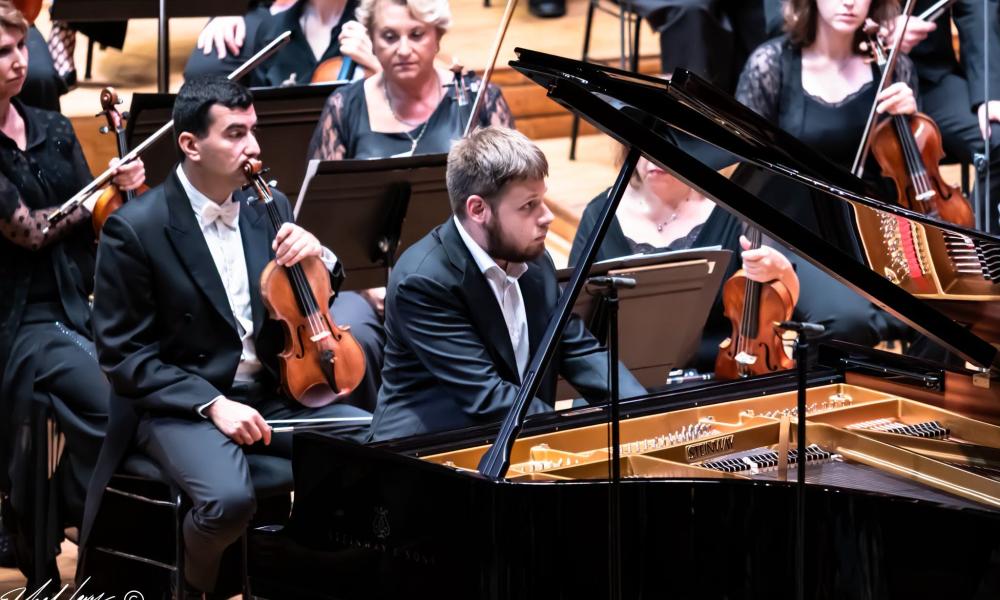
Most of the concerts were recitals, but I also played a Mozart concerto with the Camerata again, in a different city, and we performed the trio again in Tel Aviv.

Where are you based currently? 
I lived and studied in New York for six years, until last year, when I moved to Kansas City to study with a different teacher. My home is still in New York, and I go back very often, so I’m basically based there while studying somewhere else for now.
Originally, I’m from Moscow. I studied at the Gnessin Music School until I was eighteen, and seven years ago I moved to the US. I love New York. Spain is very vibrant, but in a different way. New York is much crazier! Spain feels like a very healthy place to be, which was perhaps what I needed after the intensity of the past month. For now, I expect to stay in the US, although it’s difficult to predict. I became an American citizen last year, which makes working there much easier than it would be on a visa. I have at least another year to finish my studies in Kansas City, and after that I’ll have to see. I don’t really know yet.

Turning to the Rubinstein Competition, was this your first visit to Israel?
No, it was my fourth. By this point I was almost feeling like a local! My first visit was four years ago, for the Tel-Hai International Piano Master Classes.
Whatever people’s views of the country might be, I believe people are the same everywhere. Most people want to be warm and hospitable, and that is what I have felt every time I’ve been to Israel. People welcome you, and the whole atmosphere is very family-like, in the best and the worst possible ways. I really like the warmth and the lack of formality. It felt like home.


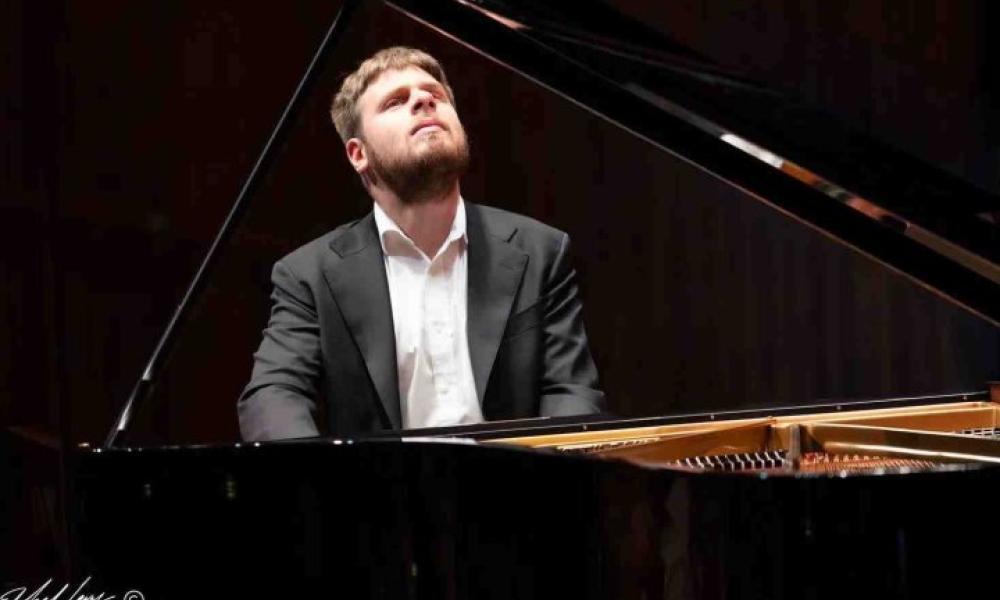
Dmitry Yudin at the Rubinstein Competition © Yoel Levy

How did you find the competition itself and the weeks that followed?
The final was the easiest part! It was still stressful, of course, but much easier than what came afterwards. I had no idea what that would be like. I still haven’t really had time to sit down and reflect on what it means to be the First Prize winner of a competition like this. Perhaps it’s a good thing that I haven’t had time.
The competition’s artistic director, Ariel Cohen, tried to make everything as comfortable as possible for all of us. I cannot imagine the stress of organising everything for everyone. The tour was very demanding, but he was always trying to put us at ease, and I’m very grateful to him for that.

Is there a particular moment from your stay in Tel Aviv that stands out?
Let me tell you the funniest one. We were playing in a small town near Tel Aviv, on one of the days when we had two concerts. I was hungry, so I ordered some food in the lobby.
Usually, these concerts had an interval, and I was always the last to play. I thought I had plenty of time. I kept checking who was playing, and I thought, “Everything is fine. I’ll change during the interval.” I was already dressed in black, so the only thing I needed to change was my shoes. I was wearing shining white sneakers. Then I noticed that everything had gone quiet. I thought it must be the interval, but when I went to check, they were already looking for me. This concert had no interval! They said, “You’re supposed to be playing now. We’ve been looking for you for five minutes. We didn’t know what to tell the audience.” I asked whether I had thirty seconds to change my shoes. Ariel was on stage, and he asked the audience, “Would you like him to change his shoes, or shall he play like this?” They were perfectly happy for me to play like that. I had also decided to change the programme because I was a little tired of playing the same things every day, so I announced that from the stage as well. It was the most chaotic concert, but it went quite well. I’m sure there are photographs of me dressed entirely in black, with these shining white trainers at the piano.

That sounds like an unforgettable concert!
I’m sure it was unforgettable for Ariel! Even with all that intensity, there was still room for fun.


Dmitry Yudin performing at the final round at the Rubinstein Competition © Yoel Levy

What was the atmosphere like in Tel Aviv during your stay this time?
During the month I was there, it was very calm, and I felt safe in Tel Aviv. In some other places, closer to certain regions, it felt a little more tense because you didn’t really know what might happen. But in Tel Aviv, I felt very safe.

Did this visit feel different from your previous trips to Israel?
This time was a little more chaotic because we had played the solo rounds in Germany and then waited four months for the final in Tel Aviv. Apart from the organisational differences, though, it didn’t feel very different from my previous visits. Given the circumstances, things went quite smoothly.

What was it like to play the first two rounds at Kronberg Academy?
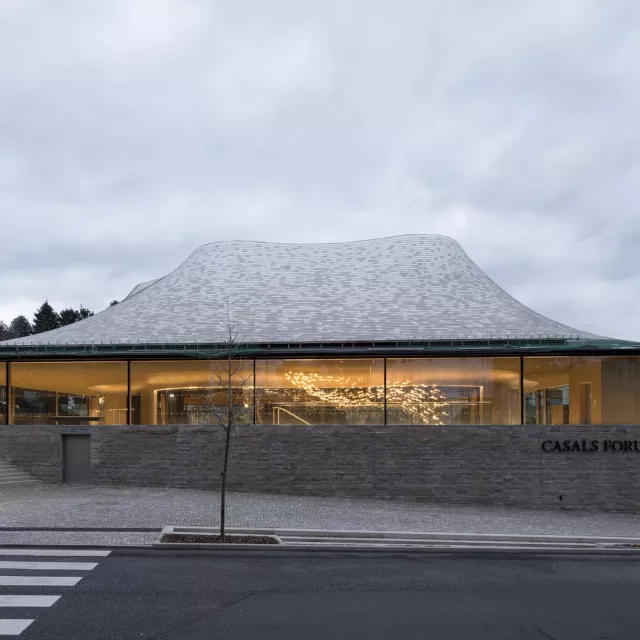
It was very interesting, and very unusual. Everything was organised at the last moment. Ariel is a hero for managing it. They had to move the competition to Germany, book a hall, invite everyone and bring in an audience. I still don’t know how he did it.
I was the last person to play on the day of my first round. There was a camera backstage for the livestream, and I was walking up and down, a little nervous. A string quartet concert at Kronberg Academy had just finished, and people were passing by, laughing and talking very loudly. One of the organisers asked them to be a little quieter because there was a competition and a livestream going on. They asked, “Which competition?” When she told them it was the Rubinstein Competition, they said, “Oh, sorry, we didn’t know!” It actually helped me, because I was laughing by the time I went on stage. If you watch my first round, you’ll see me smiling. There were very few people in the audience, perhaps five or six besides the jury. It felt almost like playing a conservatory exam, which was more stressful for me than playing to a full hall. But I love spontaneity. Even if the hall was rather empty, the atmosphere around the competition felt very alive, and I was grateful for that.


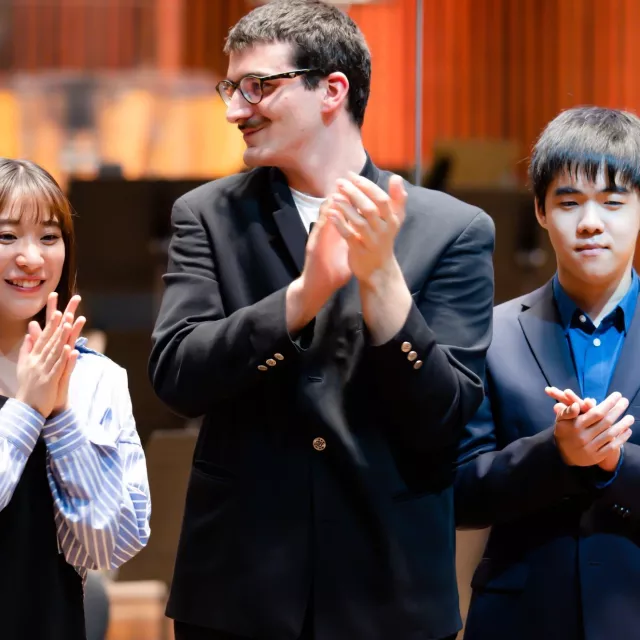
Before the performance during the competition © Yoel Levy

What drew you to the Rubinstein Competition?
I had entered three years earlier, but I didn’t reach the final. That was my first really serious experience of a competition. I played quite well in the first round, but not so well in the second. I think I became a little too nervous. I’ve learnt a few things since then, and I was curious to test myself again. Perhaps the most important reason was the jury. When you see musicians such as Martha Argerich, Yefim Bronfman and Daniel Barenboim on the jury, you want to go. Even if you don’t reach the second round, you want these people to hear you and perhaps give you some feedback. You want to play well for them. To me, the chance to be heard by these musicians, and to speak with them, is worth everything. It’s much more important than winning First Prize, to be honest.

Looking back on your first Rubinstein Competition and your success at Géza Anda, how has your approach changed? 
Compared with many of my colleagues, I haven’t entered that many major competitions, perhaps four or five. Each one has been a slightly different version of myself, with a different approach. 
At my first Rubinstein Competition, I was very inexperienced and just trying things out. Even though I didn’t make the final, it confirmed that I was ready for big stages: that I could perform at that level, play freely and connect with people. That gave me a real boost in confidence. I went to the Géza Anda Competition without expecting anything, and I think that helped. The demands of preparing different programmes for each round also helped me let go of expectations. 
For some people, having so much to prepare might make them anxious. For me, it was liberating. I played each round as freely as I could. A lot of friends I had studied with in Moscow had moved to Switzerland, and most of them came to support me. Apart from practising and performing, I wasn’t thinking about the competition at all. I had a life outside it, and that really helped. And there’s a funny detail: I’m a huge tennis fan. During the Géza Anda Competition, the French Open was taking place, and I was supporting a particular player. I think it was the day after I received Second Prize that he won the tournament. I was ecstatic, perhaps even happier than I was about my own prize! During this Rubinstein Competition, the US Open was taking place, and I was following my player again. Unfortunately, he lost on the day I won the competition. So one was sacrificed for the other! I was watching tennis and spending time with people I enjoy being around. That helped take my mind off the competition.

Do you play tennis yourself?
Not really. I’m a little worried about my hands. I play table tennis quite well, though. I trained for three years, from the age of ten to thirteen, until music school became too demanding. My father plays tennis very well and gave me a few lessons, but they were rather irregular. When I first tried it, I used my wrist too much, as I would in table tennis. The next day, my wrist hurt so much that I couldn’t play the piano. After that, I became much more careful. But I love watching. It helps me to have things outside music. Some people benefit from being completely focused all the time, but I don’t. I need a distraction sometimes.


How did you choose your repertoire for the competition?
I play what I like, to be honest. That could be a very short answer! But it wouldn’t be entirely honest to say that I simply play whatever I want. There are realities of competition life that you have to consider. You cannot necessarily play an entire round of contemporary music and expect a particular result. You need a balanced programme that shows different sides of you. Even so, I try to leave room for experiments and for music that isn’t played very often.
In the first round, I played Roger Sessions’s From My Diary between Beethoven’s Sonata, Op. 109, and Scriabin’s Fifth Sonata. I had played the Beethoven many times and felt confident with it. I hadn’t performed the Scriabin quite so often, but I feel a strong affinity with that music. You go into a competition with repertoire you feel confident about. Competitions do impose restrictions, but they can be good ones. They help you stay in shape and bring out your best. At a certain point, you have to go in believing that your level is good enough to win. Anything can happen, of course, but I think you need that confidence. At least, that’s how it works for me: I’m ready, and whatever happens, happens. In my experience, if you play your best, even if you don’t advance, there will be people who hear you, remember you and perhaps invite you somewhere. Nothing is for nothing.

The competition also required a work by a Jewish composer from the Holocaust period. Were you already familiar with any of the pieces?
I knew some of the pieces, but I didn’t know the one I chose at all. That was one reason I picked it. I love discovering new music, especially repertoire that has been a little neglected.
This piece has a very poignant, painful quality that spoke to me. I actually had a little argument with my teacher about it because he didn’t want me to choose it. But I managed to convince him, and, as you can see, it worked!

Do you have a personal recipe for dealing with pressure?
I’m not a good chef, so I don’t have a very good recipe for you! But I think the answer is both universal and individual. The best recipe is to be yourself, and that means knowing what works for you and what doesn’t.
That is a journey. It doesn’t happen in one competition, one year or one event. It’s a process. When colleagues don’t get the result they want, don’t pass a particular round or don’t make the impression they hoped for, I think that’s important to remember. I know it’s hard to remember in the moment, but keeping it in mind can help you move towards success.
Everyone has their own definition of success, and it’s very important to find it. Pianists, especially, often have a definition imposed on us: you play a hundred concerts a year in the world’s best halls, fly around constantly, have money, good contracts and management. Then you’re successful. That may be the right path for some people, but it is also a very difficult life. When you want it badly and don’t yet have it, you don’t necessarily think about that. Once you get somewhere, your perspective changes.
It’s important to find your own path to success, the one that works for you, rather than the one your teachers, parents or anyone else has told you to follow. Being yourself and finding your own success are the two most important things in any career, not only an artistic one.

What is coming up next for you?
After this weekend in Spain, I’ll have four or five days in New York, then a couple of concerts in Washington, DC. After another short stay in New York, I’m going to Switzerland for four concerts.
There are concerts in the Locarno and Ascona area through the Géza Anda Foundation. I’m also particularly looking forward to a project at the Tonhalle, playing double and triple concertos by Mozart and Bach with some wonderful colleagues. It’s a very special trip for me. I expect to return to Israel in January to play Beethoven’s Third Piano Concerto. Those concerts are confirmed, and I think there will be some recitals as well.

What are your main goals for the future?
My next goal is to continue being a pianist. That’s the main thing! More specifically, I want to keep preparing new programmes and growing, mentally and musically, and in other ways too. I believe the stage helps us grow. Now I have that stage, and with it the best instrument for growth. I want to keep my head on my shoulders and stay on course. That is my main goal.


A student of Lydia Grigoryeva, Dmitry Yudin is a prizewinner of numerous national and international competitions, including the 2nd prize at the Geza Anda International Piano Competition (2024), 2nd Prize at the New York Liszt International Piano Competition (2024), 15th International Scriabin Piano Competition, the International Classical Music Festival and Competition for Young Pianists, Astana Piano Passion, Vladimir Krainev Moscow International Piano Competition, and the Youth Delphi Games in Russia.