Tongyeong, South Korea

Music Must Speak Beyond the Notes

Klaus Hellwig on Isang Yun, the art of listening, and the extraordinary opportunities of the 2026 ISANGYUN Competition

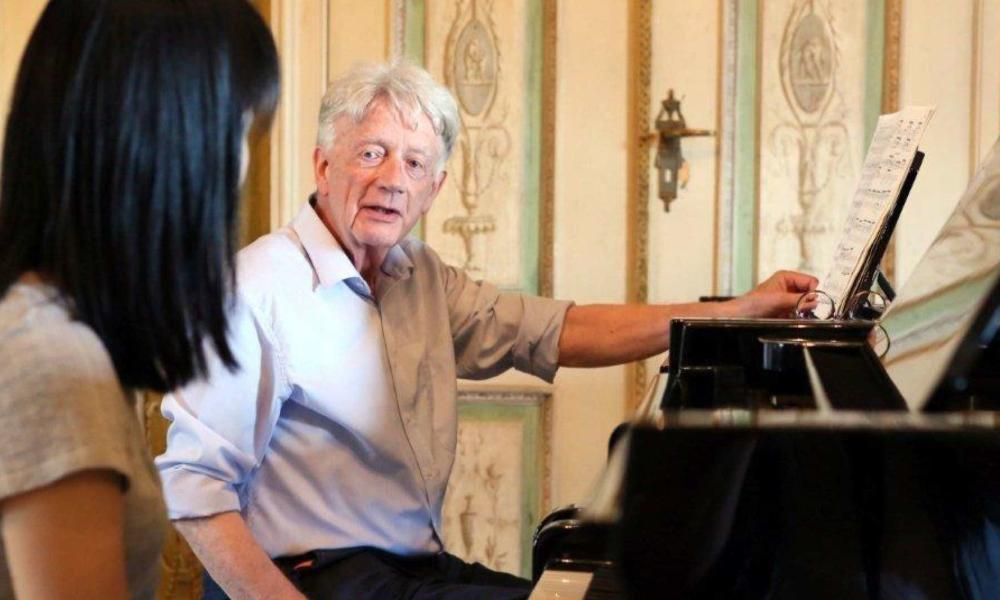
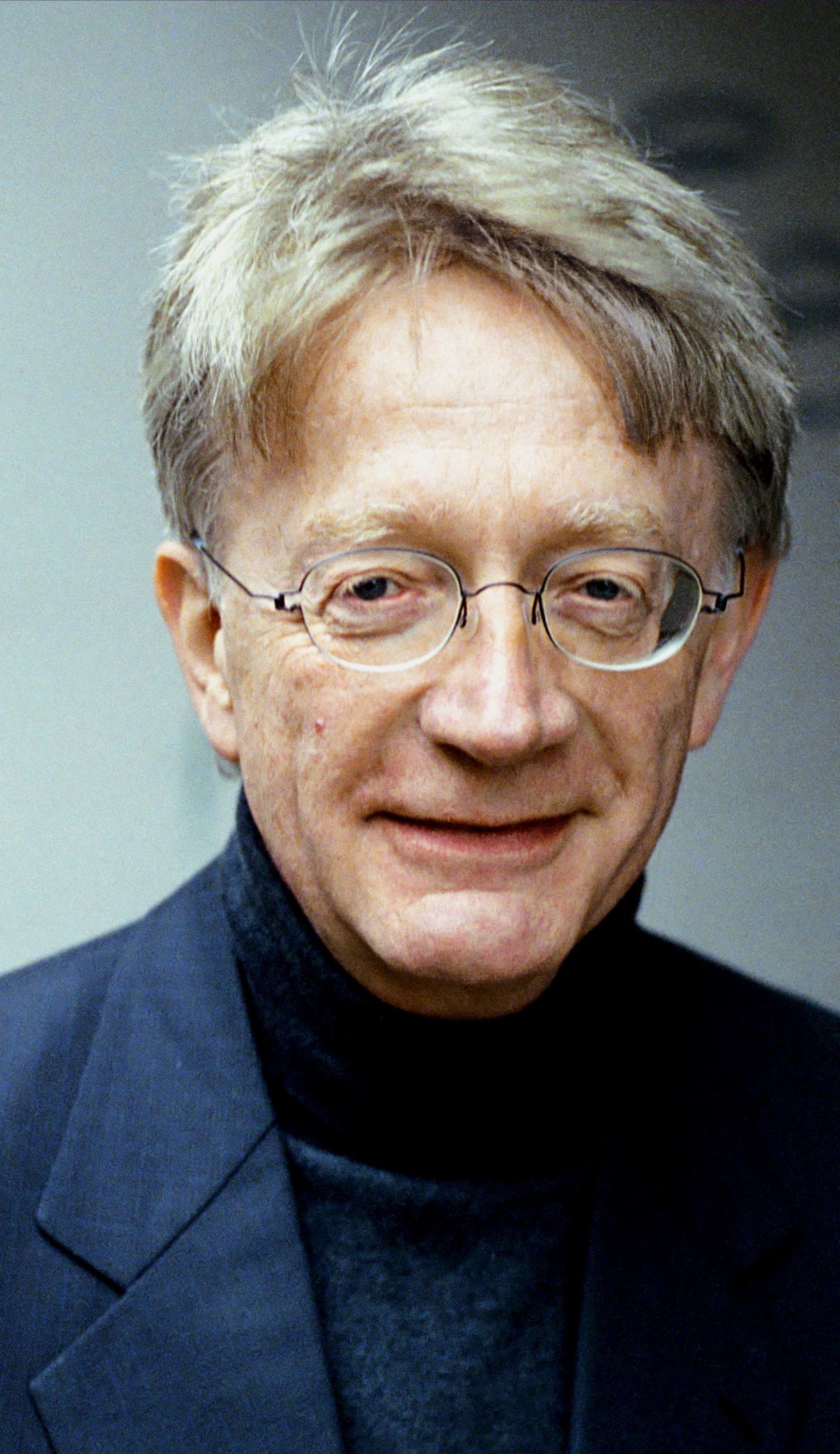
Few pianists and pedagogues have experienced the international competition world from as many perspectives as Klaus Hellwig. A prizewinner of the Long-Thibaud and Viotti competitions, a distinguished concert pianist, and a longtime professor at Berlin's University of the Arts, Hellwig has guided generations of young musicians towards international careers. His students have won prizes at some of the world's most prestigious competitions, while he himself has served on juries from Leeds and Brussels to Hamamatsu, Seoul and Harbin.
This autumn, Hellwig returns to South Korea as Chairman of the Jury of the 2026 ISANGYUN Competition, held in Tongyeong from 31 October to 8 November. It is a particularly meaningful return: Hellwig chaired the competition's piano jury in 2005 and knew the composer Isang Yun personally during their years as colleagues in Berlin.
For Hellwig, the competition offers much more than an opportunity to identify outstanding young pianists. It is a meeting place for different musical traditions, a testing ground for artistic individuality, and an invitation to discover the remarkable legacy of one of the twentieth century's most distinctive composers.

WFIMC spoke with him about his memories of Isang Yun, the fascinating encounter between Eastern and Western musical thought, and what makes an international competition truly worthwhile.

WFIMC: Professor Hellwig, you knew Isang Yun personally during your years at the Berlin University of the Arts. What are your memories of him?

Klaus Hellwig: I began teaching at the Hochschule der Künste in Berlin in 1980, and Isang Yun and I were colleagues for several years. We were not particularly close, but we would meet regularly in the building and have little conversations. I remember that he always parked his Mercedes behind the Hochschule on Bundesallee before driving home to Kladow.
At the time, I had quite a number of Korean students, and on one occasion I arranged for us to have dinner together with him. He was a rather reserved man, which is certainly understandable considering everything he had experienced in his life.

I learned a great deal about him through people who knew him much better, particularly my colleague Roswitha Staege, who was closely associated with his music, and through Wolfgang Sparrer. I also knew the Korean conductor Lim Won-sik, who was a close friend of Yun's and visited him regularly in Berlin. Through these encounters, I gradually gained a deeper understanding of Yun, both as a composer and as a human being.

My last personal encounter with him was at a concert at the Konzerthaus in Berlin in 1995, the year of his death. One of his violin concertos was performed, and we spoke briefly during the interval. He was already seriously ill. It was a very moving occasion, and I remember it vividly.

Yun's life was marked by extraordinary political and personal experiences. Do you think these are reflected in his music?

One cannot really separate his music from the experiences that shaped his life. But what interests me most is how he transformed those experiences into an entirely individual musical language. He was a fascinating figure because he brought together two very different musical worlds. He had studied Western compositional techniques, including twelve-tone music, but he also drew deeply on the musical traditions of Korea.

What emerged was something completely his own. I find that particularly remarkable. He did not simply combine different styles or techniques; he created a language in which these different influences became inseparable. When I later visited the museum dedicated to him in Tongyeong, I learned much more about his personal history and the extraordinary international solidarity that surrounded him. It certainly deepened my appreciation of the man and his achievements.

You have also been closely involved with Yun's music as a pianist and teacher. Which works have particularly impressed you?

My wife, the pianist Mi-Joo Lee, has performed his Interludium A and the Five Pieces for Piano on numerous occasions. I have always been particularly enthusiastic about Interludium A, and I was able to encourage several of my students to study it. It became a work that we returned to quite frequently in my class.

Yun once gave me the score personally, which I still remember with pleasure. It is a genuinely demanding work and teaching it was a wonderful experience. I had some very talented students who were able to meet its considerable technical and musical challenges. The important thing, as with any great music, is to take the score seriously and pay close attention to what the composer has written.

I also performed Yun's chamber music with Roswitha Staege. That was a particularly stimulating collaboration, because we worked very carefully on the musical details. It gave me a fascinating insight into the practical interpretation of his music.

What makes Yun's music so compelling for performers and audiences today?

I think his music has an extraordinary expressive power. Whenever I have heard it performed really well, I have never had the impression that audiences found it inaccessible or strange. Of course, there are complex compositional ideas behind it. Yun developed his own approach, often referred to as the main-tone technique, and it is fascinating to study how he brought together elements of Eastern and Western musical thought.

One image that has always impressed me is his comparison with a brushstroke in East Asian painting or calligraphy. In Western drawing, we often think of a line as something clearly defined. A brushstroke, on the other hand, can have an extraordinary variety of textures, colours and nuances. It can become more intense, dissolve, or change its character as it develops. This opens up a completely different world of imagination. And I believe that this richness of colour and expression is something an audience can experience directly.

You do not need to understand every compositional technique in order to appreciate the music. After all, you do not have to study Schoenberg's twelve-tone system to be moved by his works. What matters is that something is communicated beyond the technical construction. That is precisely what I find so convincing about Yun.

His music is often described as a bridge between East and West. Is that also what makes it relevant to younger generations of musicians?
Hellwig 1

Absolutely. I find the background of his music fascinating, particularly the way he approached musical expression from two different traditions. For a young musician, this opens up entirely new possibilities of listening and thinking. It encourages you to consider sound itself, its development, its colour and its expressive potential. And there is another important aspect: Yun's music is often highly instrumental. It makes considerable demands on the performer, but it also offers opportunities for virtuosity and for a very direct form of musical expression. I think young musicians can discover a great deal through studying it. And when they perform it convincingly, the audience can share in that discovery.

The competition bearing Yun's name naturally encourages participants to engage with his music. How important is that connection?

I think it is a very valuable idea. A competition dedicated to a particular composer has a wonderful opportunity to introduce that composer's music to a new generation. When I was in Tongyeong in 2005, Yun's music was already part of the competition repertoire. I would certainly be delighted to hear young pianists performing it again this year.

The Isang Yun Special Prize is an excellent way of encouraging that interest. It gives participants an additional artistic challenge and, at the same time, helps bring the music to a wider audience. But what is important to me is that a young musician approaches such a work with genuine curiosity and commitment. It requires considerable preparation, but it can be enormously rewarding.

And I think it is particularly appropriate that this happens in Tongyeong, the city where Yun was born. There is something very special about hearing his music in the place that is so closely connected with his identity.
You chaired the piano jury in Tongyeong in 2005. Are there any young musicians from that competition whom you particularly remember?

Yes, absolutely. One pianist I remember very clearly is Dasol Kim, who was only sixteen years old at the time. He was an extraordinarily gifted young musician. What impressed me was not only his pianistic talent but also the directness and freshness of his musical approach. There was something very natural and unselfconscious about his playing.

I followed his development over the years and heard him again much later, at a competition in Harbin in 2019. Naturally, his playing had changed considerably. That is one of the fascinating things about following young artists over a long period: you can observe how their musical personalities develop and mature. And now he is returning to Tongyeong as a member of the jury! I think that is a particularly nice connection between different generations of the competition.

You have known Korea for a remarkably long time. What first brought you there?

My first visit to Korea was in 1969, so my connection with the country goes back a very long way. I also spent some time living in Japan and have travelled frequently throughout Asia for concerts, teaching and competitions. Over the decades, I have developed many friendships and professional relationships in Korea.

It has been fascinating to observe the development of musical life there. The level of instrumental training is extraordinarily high, and Korean musicians have become an integral part of the international classical music world.

I have also always enjoyed the encounters with students and colleagues. For me, travelling as a musician is not simply about giving concerts or teaching masterclasses. It is about discovering how people in different places approach music, how they listen, and what they consider important.

And what do you remember about Tongyeong itself?

Hellwig: Tongyeong made a very strong impression on me when I first visited. It has a special atmosphere, quite different from the large metropolitan centres.

The coastal landscape is extraordinarily beautiful, and the city has a fascinating history. I remember particularly the harbour and the pleasure of discovering local restaurants in the evening.

There is something very appealing about being in a place where the natural surroundings are so present. It gives the whole experience a different character.

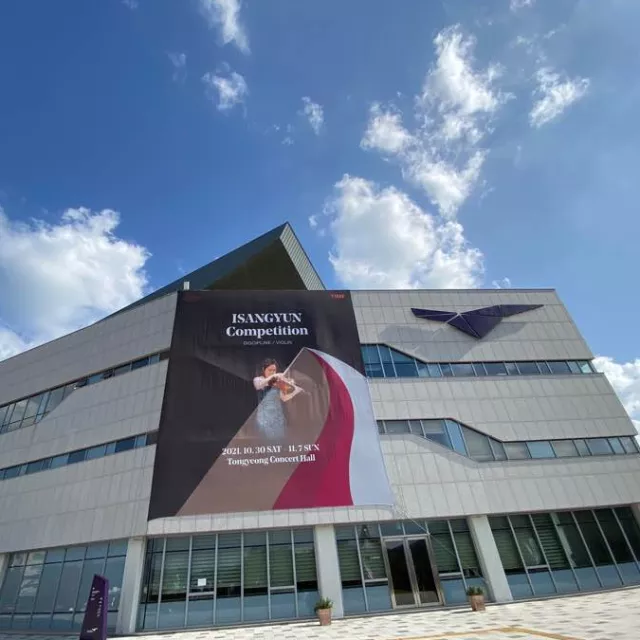
Of course, a great deal has changed since my first visit. The city now has a magnificent concert hall, and the facilities for musicians are excellent. I have heard very positive reports from students who have participated in recent editions of the competition.

What makes the ISANGYUN Competition an interesting experience for a young pianist, particularly someone travelling to Korea for the first time?

First of all, the opportunity to perform in an excellent concert hall is tremendously important. The acoustic environment makes a real difference, particularly for pianists. Then there is the experience of travelling to a completely different part of the world, meeting musicians from other countries and encountering a different musical culture. For a young artist, these experiences can be enormously stimulating. You leave your familiar surroundings and find yourself in a new environment, where you have to concentrate entirely on your music.

And there is the opportunity to listen to other outstanding young pianists. That is something I consider extremely valuable. A competition is not only about your own performance. You can learn an enormous amount simply by listening to others, observing different approaches and discovering new musical ideas.

You have served on juries at some of the world's most important competitions. What do you consider the greatest value of competitions today?

The general standard of piano playing has risen enormously over the decades. There are now so many highly accomplished young musicians, and naturally they all need opportunities to perform. A competition provides something very particular: you have to prepare a substantial programme, bring it to the highest possible level and perform it under considerable pressure.

That is an important experience in itself. You discover how you react to the situation, how you manage your nerves and whether you can communicate your musical ideas when it really matters. From a pedagogical perspective, I consider this extremely valuable.

Of course, prizes can help launch a career. I experienced that myself when I won the Viotti Competition in Vercelli in the 1960s. It led to many concerts in Italy, and those opportunities were enormously important for my development. I would say that the concerts that follow a prize are ultimately more important than the prize money itself. Young musicians need to perform, to travel, to meet audiences and to develop through the experience of being on stage.

That is how an artistic personality grows.


©WFIMC 2026/FR