Cette année à nouveau, votre programme met en avant des compositeurs actuels et fait la part belle aux femmes compositrices. Votre finale avec harpe est également inédite.
En effet, le CIMCL 2026 souligne les caractéristiques évoquées plus tôt en demandant aux artistes de présenter des œuvres de compositrices, largement oubliées ou méconnues, d’une façon générale d’ailleurs. Un accent sera mis sur l’interprétation du répertoire contemporain avec une création de Thibault Perrine et l’obligation de glisser d’autres œuvres récentes dans les différents récitals du concours. Pour la finale, nous allons plus loin encore et demandons aux Quintettes de travailler avec une harpe autour de trois recueils pour piano spécialement orchestrés par le grand harpiste Fabrice Pierre : Ma Mère l’Oye de Maurice Ravel, Children’s corner de Claude Debussy et les 24 préludes op.34 de Dimitri Chostakovitch. Toutes ces partitions ont été éditées chez Klarthe.
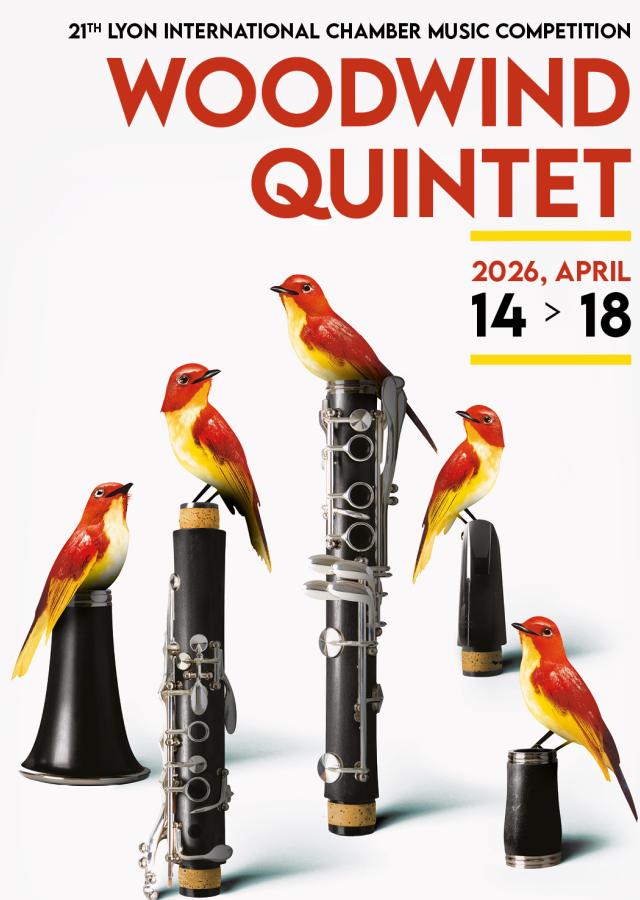
Ce sera l’occasion d’entendre la harpe mais aussi les instruments dérivés du Quintette : piccolo, cor anglais, clarinette mib et contrebasson. Des sonorités qui élargissent les couleurs de la formation originale.
Once again this year, your program highlights contemporary composers and gives pride of place to female composers. Your final with harp is also unprecedented.
Indeed, CIMCL 2026 emphasizes the characteristics mentioned earlier by asking artists to present works by female composers who are largely forgotten or unknown, in general. Emphasis will be placed on the interpretation of the contemporary repertoire with a creation by Thibault Perrine and the requirement to include other recent works in the various recitals of the competition. For the final, we are going even further and asking the quintets to work with a harp on three piano collections specially orchestrated by the great harpist Fabrice Pierre: Ma Mère l'Oye by Maurice Ravel, Children's Corner by Claude Debussy, and the 24 Preludes, Op. 34, by Dmitri Shostakovich. All these scores have been published by Klarthe.
This will be an opportunity to hear the harp as well as instruments derived from the quintet: piccolo, English horn, E-flat clarinet, and contrabassoon. These sounds broaden the colors of the original ensemble.