Utrecht, The Netherlands

Alexander Kashpurin’s Last-Minute Triumph

A reserve candidate becomes the highlight of Liszt Utrecht 2026

Alexander Kashpurin was not meant to be in the spotlight at the 2026 Liszt Utrecht International Piano Competition. In fact, after the preliminaries in early 2025 he was not even on the original list of eight selected competitors. His invitation came only after another pianist had to cancel, a stroke of fortune Kashpurin learned about just before Christmas. With roughly a month to prepare, he stepped into a field that had already been shaping itself for a long time—and ended up defining the entire edition.

By the time the final chords of Liszt’s Second Piano Concerto sounded through the full Grote Zaal at TivoliVredenburg, it was already clear that this “late entry” had seized his chance. Kashpurin not only won First Prize but also the Audience Prize, confirming both jury and public were united in their judgment. Thomas Kelly took Second Prize, and Kang Tae Kim from Korea completed the podium with Third Prize, continuing a strong Korean tradition at this competition.

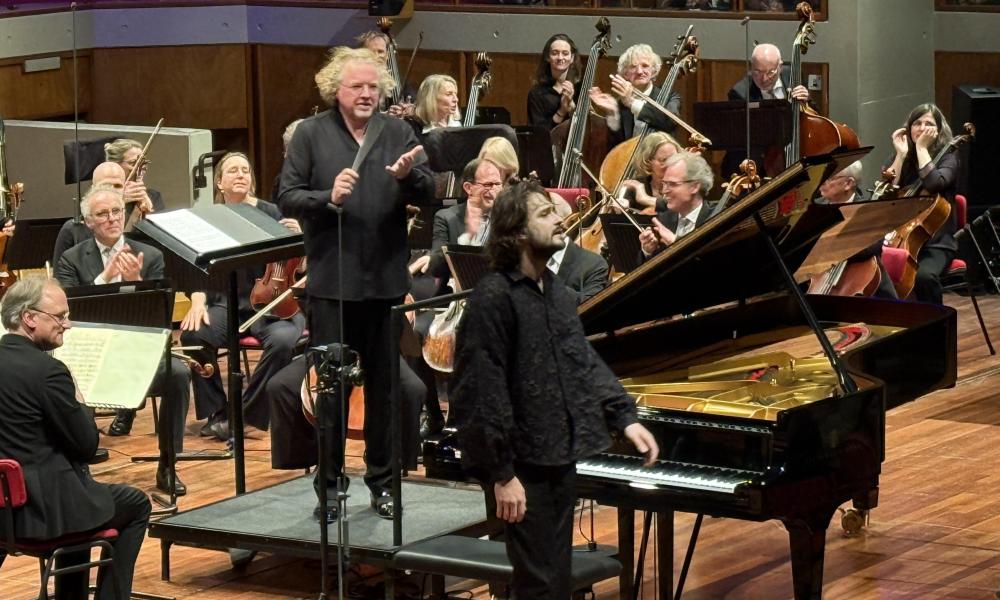
Alexander Kashpurin, Stéphane Denève and the Radio Philharmonisch Orkest

Liszt Utrecht, founded in 1986 and held every three years, is more than a traditional contest. It is framed explicitly as a comprehensive artistic and professional development project. 19 pianists in the first round, livestreamed and judged by a separate jury; eight advanced to the main rounds, and from there the field was narrowed to three finalists.

Before those last three emerged—Kashpurin, Kelly and Kim—the competitors took part in the “Liszt Utrecht Academy,” working closely with renowned Liszt specialists on a broad and demanding program. The structure of the competition is carefully built to test not just virtuosity but versatility and depth: besides the broad Liszt focus and the Weber repertoire (the “Weber Edition” thread), there were distinct performance formats: “Night at the Opera,” devoted to Liszt’s opera transcriptions and operatic paraphrases; “Liszt Stories,” highlighting his narrative and character pieces; a Weber recital, Chamber Music recital and Sonata Recital.
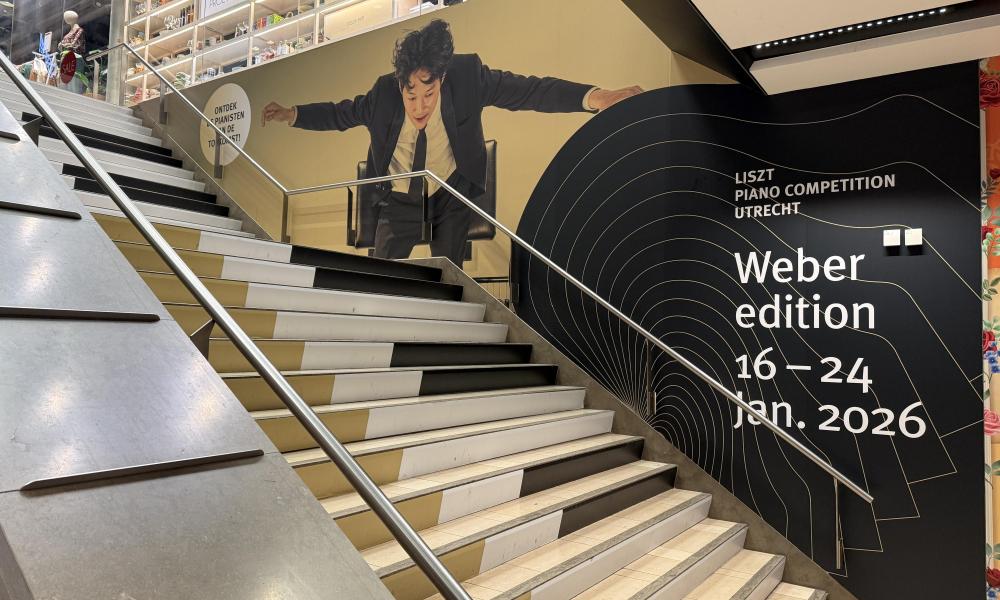
The 2026 edition bore the subtitle “Weber Edition”, highlighting the influence and legacy of Carl Maria von Weber alongside Liszt. This dedication gave the competition a separate dimension: historically, Liszt admired Weber, and Weber’s combination of virtuosity, lyricism and early Romantic drama had a profound effect on pianistic style and on the idea of the piano as a narrative, orchestral instrument.

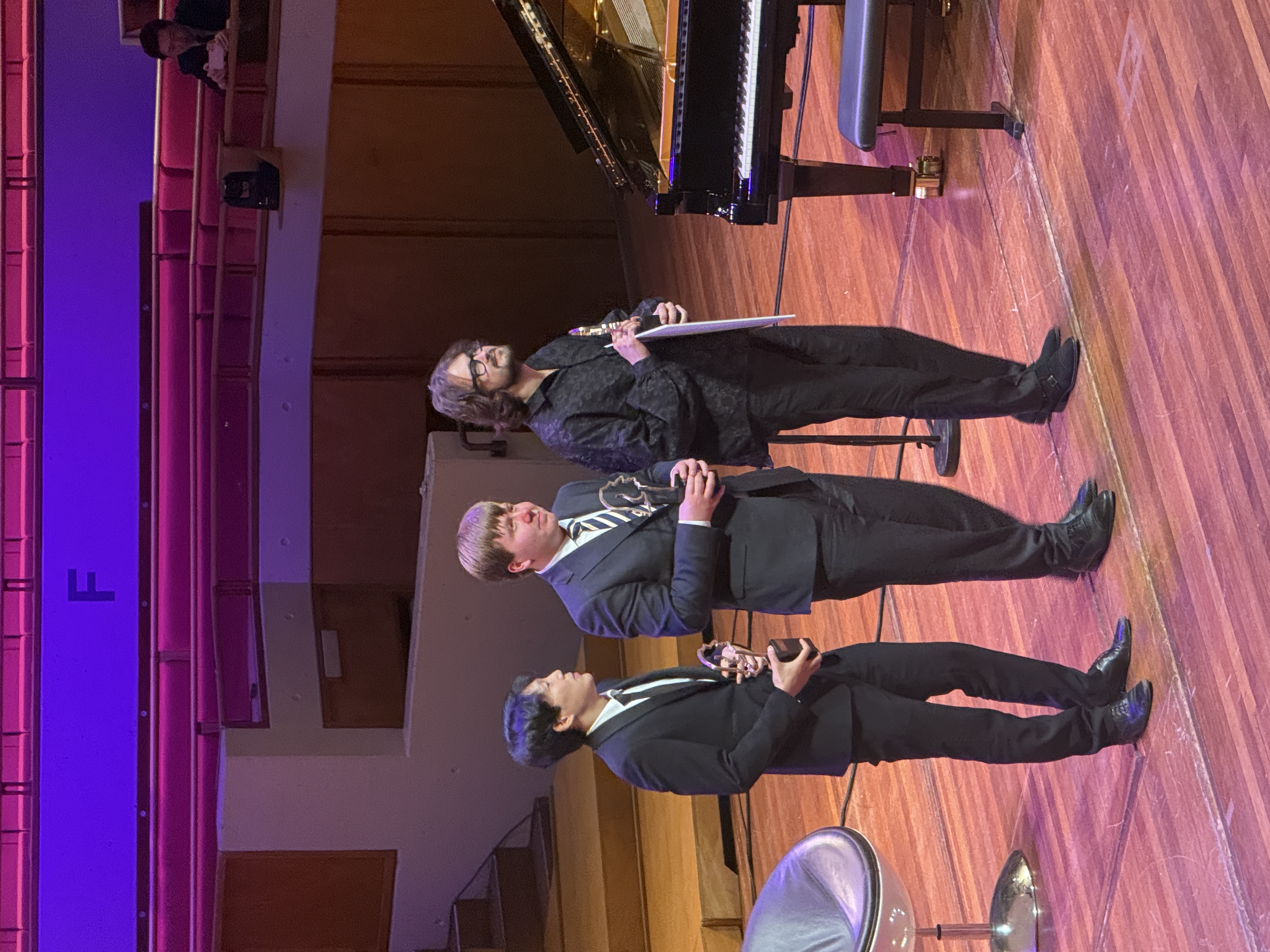
The three winners

Kang Tae Kim, Thomas Kelly and Alexander Kashpurin

An interesting hallmark of Liszt Utrecht 2026 was the deliberate focus on piano choice. Across the earlier rounds, competitors performed on instruments from five makers: Steinway, Fazioli, Bösendorfer, Yamaha and Bechstein. Each round was performed on a different piano, while in the finals with the Radio Filharmonisch Orkest under Stéphane Denève, the competitors could choose their favorite: Kelly and Kim opted for a Fazioli, and Kashpurin performed on a Steinway.

One of the more engaging aspects of the final for many in the audience—especially those watching via stream—was the use of an overhead camera focused on the keyboard and hands. This high, “bird’s-eye” angle gave a strikingly clear view of fingerwork and hand choreography, which was especially fascinating during the Liszt Concertos.

At the awards ceremony, the competition made an effort to bring jury reasoning closer to the public. A video was shown featuring short comments on each finalist from all jury members, a welcome move toward transparency and education. Listeners could hear how seasoned artists and teachers listened: what they valued in sound, structure, personality and risk.
The verdict on Kashpurin was telling: the jury described him as a pianist with “a completely unique view on everything he touches,” praising his creativity and distinct musical voice. They noted that he plays “as if he had written the music himself,” and that it was “moving to see someone so in love with the music.”

Awards
First Prize              Alexander Kashpurin
Second Prize         Thomas Kelly
Third Prize             Kang Tae Kim
Audience Award    Alexander Kashpurin

Jury
Cynthia Wilson (Chair), Andrea Bonatta, Suzana Bartal, Mariam Batsashvili, Severin von Eckardstein, Janina Fialkowska, Saskia Giorgini, Pierre van der Westhuizen, Yingdi Sun


Artists
Radio Filharmonisch Orkest/ Stéphane Denève, Conductor
Joey Roukens, Composer/ Lea Hausmann, Violin/ Ib Hausmann, Clarinet/ Samuel Shepherd/ Cello- Flute/ Dana Zemtsov, Viola


©WFIMC 2026/FR

The famous "Piano Stairs" in Utrecht