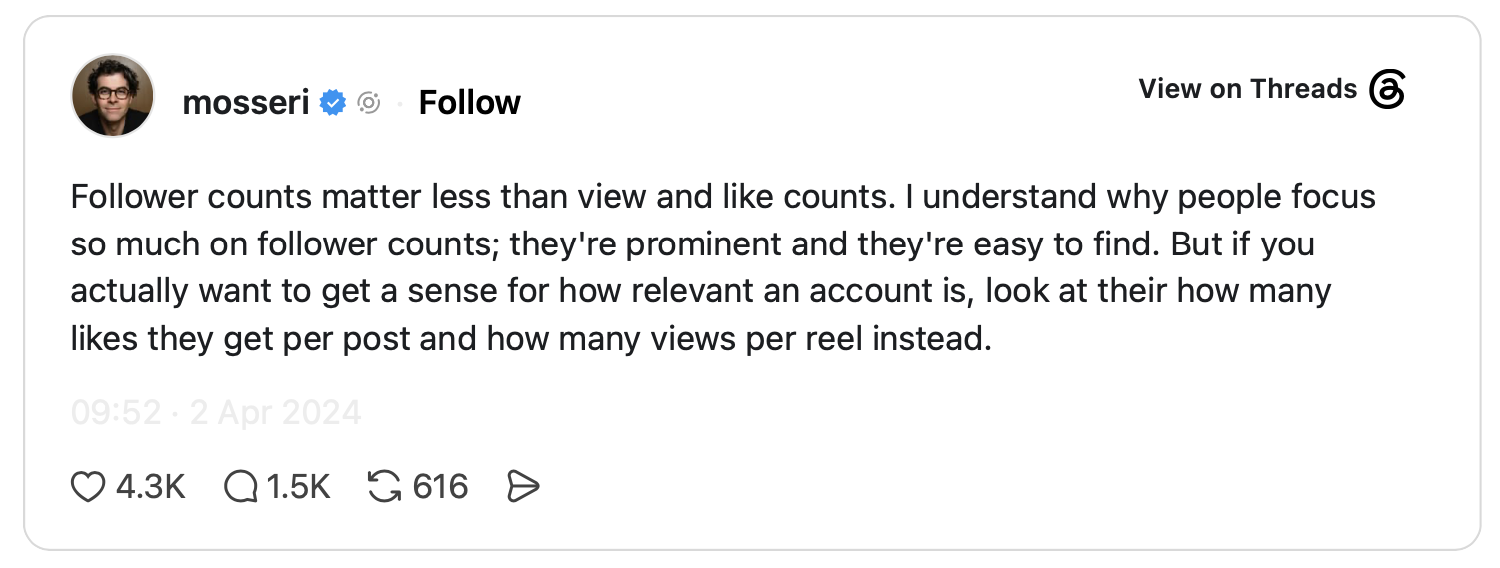
It is now painfully clear. Social media platforms are now only going to show content it thinks users will like based on how it has already performed and the type of content it is. Adam and Instagram are not alone. They have all copied TikTok with a never-ending stream of content that the user has never consciously chosen to see (the slight exception to this is long-form YouTube where search, choice, and subscriptions are still a big factor). Practically, they are taking away your audience and followers.
There are two big problems with this for anyone creative. The first is that to beThere are two big problems with this for anyone creative. The first is that to be successful online now, you can’t create what you want; you have to create what the algorithm wants. Copying formulaic content, chasing trends, being like everyone else, clipping content into shorts, being forced into formats you don’t like. And now this isn’t just competing with everyone else doing this high- engagement but low-depth content, but it’s competing with a mountain of optimised AI slop as well.
¨The second, as Jack Conte put it, is that this has ruined “the creator’s deterministic line of reach to their fans”. We, as musicians and arts organisations, are not going to receive traffic from platforms in the way we used to, and there is a time when this could be zero. It turns out, “they were never our fans. They were Facebook’s users”. For anyone in the creative industries, it is vital to build an audience and grow a community. If you are not the owner of the platform you use to speak with your audience, you do not own your audience.
The frustrating part of all this is that the only place to really reach people or grow an audience is still social media. It is and will continue to be an important part of those initial connections. But it cannot be the only answer now. We need to move these initial connections to somewhere we control.
The good news is that whether you are a musician just starting out or a 100- year-old arts organisation with millions of dollars, there are plenty of options. So, here’s a a speed run of a few of them.
Patreon used to be just a membership platform, but it has now pivoted to being a community and media platform. It allows for text posts, videos, images, audio, podcasts, live streams, newsletters, and even community chats. When you post, it goes directly to fans' feeds and inboxes without being blocked by an algorithm. And now Patreon offers a free tier to fans, so you can truly recreate the experience of a social media platform without potentially putting people off with a paywall. Then you can offer membership tiers for your fans to support your work. If you want an alternative to Patreon, Ko-Fi offers very similar features but without native video, with the option of offering physical products and services and a lower commission fee.