Jeju, Korea

Beyond the Competition

In Jeju, a Competition Becomes Part of a Festival — and Part of the Island’s Cultural Identity

The 21st Jeju International Brass & Percussion Competition has come to a close, bringing together young musicians from around the world for a week of intense competition, collaboration and musical exchange on Korea’s island of Jeju.

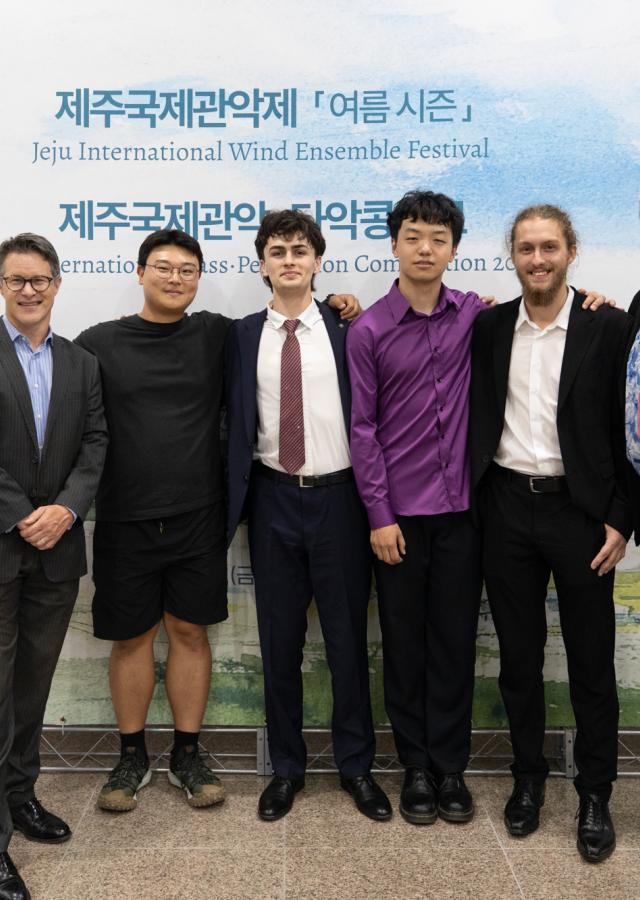
Held from 9 to 14 August 2026, the competition featured four disciplines — Bass Trombone, Euphonium, Tuba and Percussion — and attracted more than 300 young musicians from 20 countries. The First Prizes went to Pilseon Jang  of Korea in Bass Trombone, Spiess Tewinn of France in Euphonium, Dias Henrique of Portugal in Tuba, and Luo Chenxuan of China in Percussion.

But the significance of Jeju lies in something larger than its list of winners.

Since its foundation in 2000, and its admission to WFIMC in 2009, the Jeju International Brass & Percussion Competition has developed within the wider framework of the Jeju International Wind Ensemble Festival. Every August, the island becomes a meeting point for competitions, concerts, wind orchestras, professional ensembles and educational programmes. The competition is therefore not an isolated event: participants arrive not only to compete, but to experience an entire musical environment.

That structure gives Jeju a distinctive character among international competitions.

Winners 2026

A Competition Within a Festival

In many competitions, participants spend several days preparing, performing and waiting for results, often experiencing the event primarily through the lens of competition. Jeju offers a different model.

While the competition is taking place, the island is filled with concerts and performances by wind orchestras and brass ensembles. In 2026, the festival programme included youth and community wind orchestras, international ensembles, an Asia Wind Orchestra Festival, outreach concerts and performances in venues ranging from major concert halls to outdoor stages and even sites connected with Jeju’s natural landscape.

For young musicians, this creates an unusually rich context. They can hear other performers, meet established artists and conductors, encounter different traditions of wind music and experience the atmosphere of a professional festival while simultaneously confronting the demands of an international competition.

The distinction between “competitor” and “festival participant” becomes less rigid.

And that may be one of Jeju’s greatest strengths.

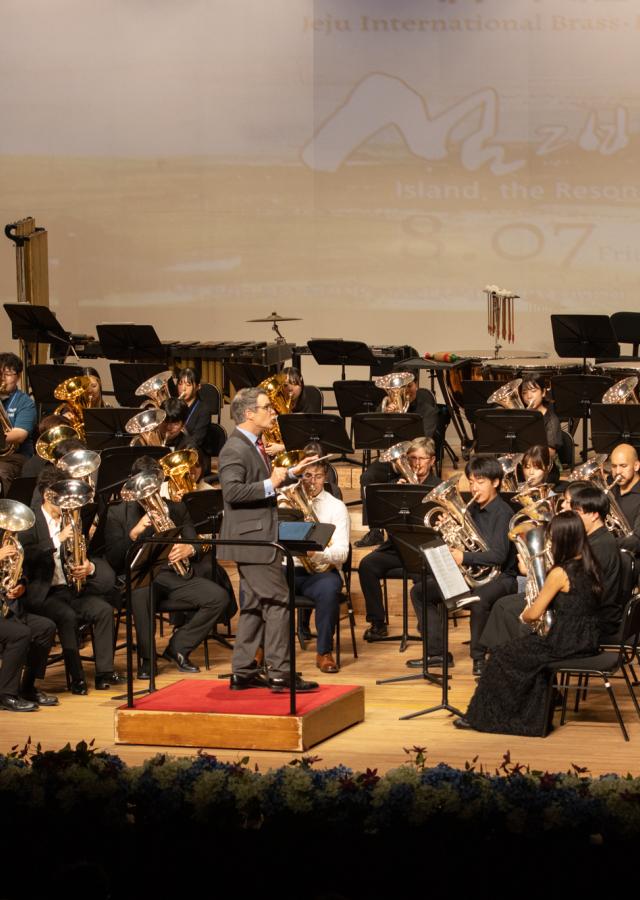
Participants' concert

Not Only the Winners

The 2026 edition also offered a reminder that an international competition does not have to measure its value solely by the number of prizes awarded.

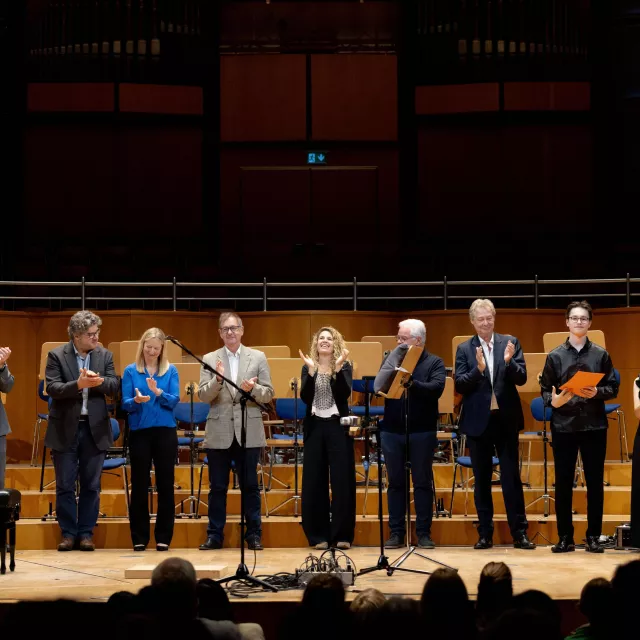
On 14 August, more than 70 Euphonium and Tuba participants who had volunteered to take part formed a Competition Participants’ Choir. Many of them had not reached the final round, but they were invited back onto the stage as performers rather than simply being remembered as unsuccessful competitors.

The initiative was proposed by members of the jury and was presented before the Winners’ Concert. Adam Frey, Chair of the Jury, encouraged the participants by pointing towards their future careers and reminding them that the audience would hear these musicians again.

t was a small but meaningful change of perspective: a competition can eliminate performers from the ranking without eliminating them from the musical community.

That philosophy was also visible in the competition’s wider programme. Participants had access to feedback and educational opportunities, while the finalists were given the chance to perform with professional ensembles in the final round. The Winners’ Concert on 14 August brought the four First Prize winners together with the Jeju Philharmonic Orchestra and Jeju Seogwipo Wind Orchestra, turning the result of the competition into an immediate professional performance experience.

For the winners, this meant that the competition did not end with the announcement of a prize.

It continued on stage.


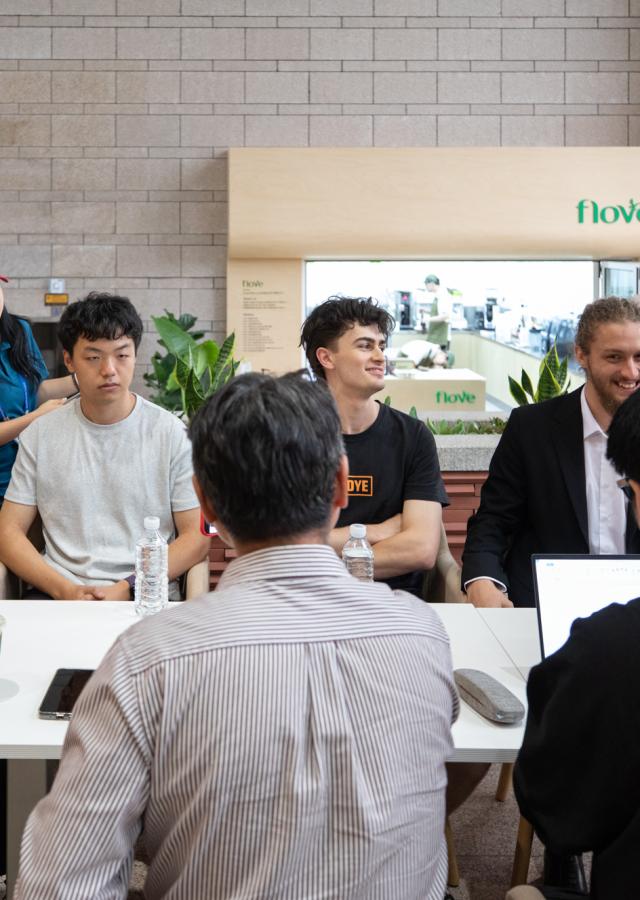
Press Conference

From Competition to Career

The experiences of the four winners illustrate why this matters.

For Bass Trombone winner Jang Pilseon, the result came after his third attempt at the competition. Winning was particularly meaningful because previous Jeju laureates included musicians he had long admired.

Euphonium winner Spiess Tewinn described the experience in broader terms. Rather than focusing only on adding a First Prize to his CV, he emphasised the friendships and musical exchanges created through meeting other Euphonium players. “Music is the language of the universe,” he said, reflecting the sense of connection that runs through the festival.

For Tuba winner Dias Henrique, performing with an orchestra in the final was one of the most valuable aspects of the experience. With more than 100 applicants in the Tuba division, reaching the top was already a considerable achievement; the opportunity to perform as a soloist with an ensemble provided an experience directly relevant to a professional career.

Percussion winner Luo Chenxuan’s victory came after years of preparation and a second participation in Jeju. He described practising for more than ten hours a day in preparation for the competition and saw the experience not simply as a result, but as a renewed source of motivation for his musical development.

Their stories are different, but they point in the same direction: a competition is most meaningful when it opens a door beyond the competition itself.


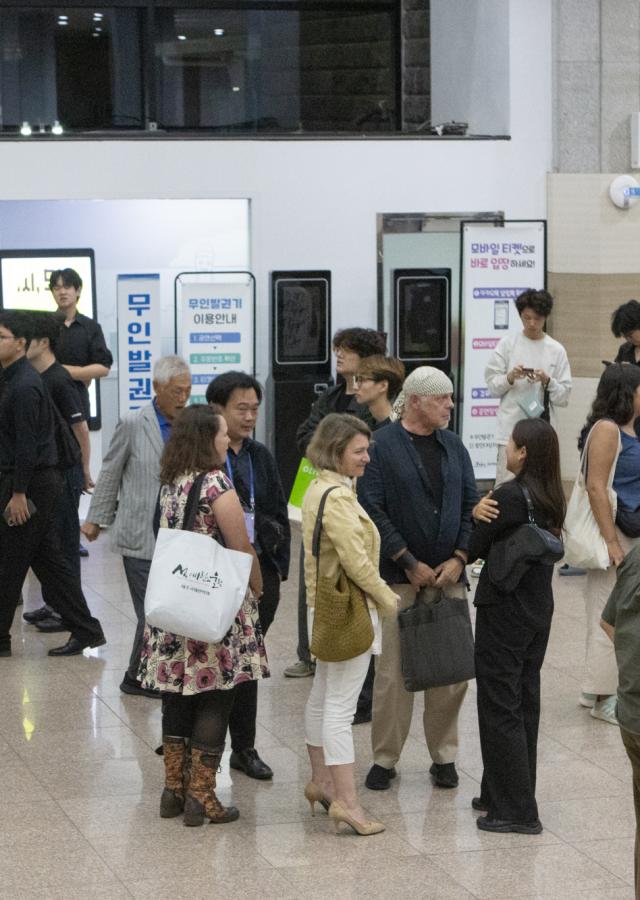
Auditorium

When Place Becomes Part of the Music

There is another element that makes Jeju unusual: the island itself.

The competition takes place in a UNESCO-recognised natural environment, and the organisers deliberately connect the musical programme with Jeju’s landscape. This year, jury members and participants were invited to join a tour of the island’s natural heritage. At Manjanggul, one of Jeju’s famous lava-tube caves, jury members even performed in the extraordinary natural setting.

The experience was more than sightseeing. For international musicians, it offered a chance to encounter the place that hosts their competition — and for Jeju, an opportunity to present its cultural and natural identity to people who will carry their memories of the island back into the international music world.

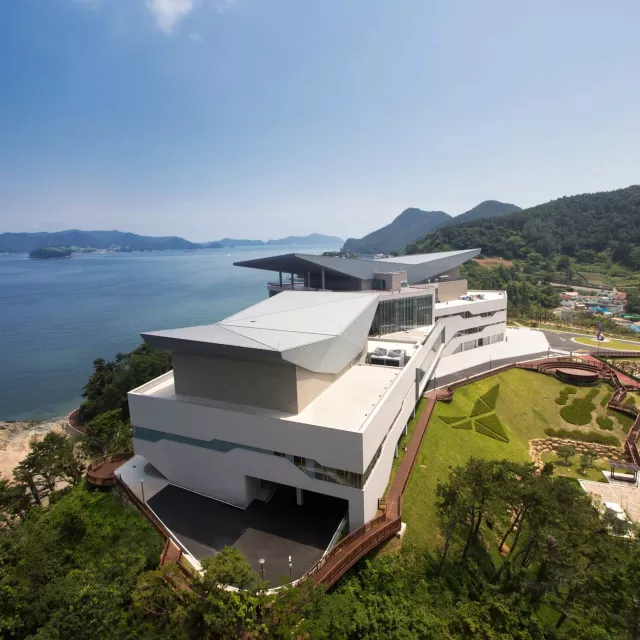
This relationship between music and place becomes particularly important when considering the future of the Jeju Seaside Arts Center in Topdong.

For more than three decades, the beachfront outdoor venue has been closely associated with the Jeju International Wind Ensemble Festival. What began in an undeveloped area has gradually become part of the cultural identity of the city: a place where musicians perform with the sea behind them, where residents and visitors can encounter music without entering a conventional concert hall, and where generations of artists and audiences have shared the same landscape.

Today, the future of the venue is being debated as Jeju considers a major urban regeneration project for the Topdong area. The discussion is not simply about whether an ageing structure should be replaced. It raises a larger question: what happens to the cultural memory accumulated in a place over 30 years?

nternational artists who participated in this year’s festival have also pointed to the venue’s unusual value. Jens Lindemann, Artistic Director of the festival, described a beachfront venue of this kind as exceptionally rare internationally and argued that every possible way of preserving it should be considered. Adam Frey, Chair of the competition jury, similarly emphasised the importance of spaces where large numbers of people can gather and encounter music together.

The question, therefore, is not necessarily whether the venue should remain exactly as it is.

It is whether the character of the place — the openness, the connection to the sea, the accessibility to the public, and the accumulated memory of music-making — can survive whatever comes next.

That distinction matters.

A cultural venue is not only its architecture. Sometimes, its greatest asset is what has happened there.


A Different Kind of Competition

The Jeju International Brass & Percussion Competition demonstrates one possible direction for the future of international music competitions.

The strongest competitions are increasingly expected to do more than identify winners. They can create professional opportunities, build communities, connect artists with audiences, and give young musicians experiences that remain meaningful after the rankings disappear.

Jeju has built these elements into the structure of its event almost organically.

Competition takes place alongside a festival. Young musicians encounter established artists. Finalists perform with professional orchestras. Participants who do not reach the final can still return to the stage. International guests discover the island beyond the concert hall. And the city itself becomes part of the artistic experience.

In this sense, Jeju offers a useful reminder for the international competition community: the real measure of a competition may not be only who wins, but what remains after the winner has been announced.

For the four 2026 First Prize winners, the next chapter begins with a title beside their names.

For the many other young musicians who came to Jeju, the outcome may be less visible — a new friendship, a new musical idea, an experience on an unfamiliar stage, or simply the memory of making music on an island in the middle of the sea.

Those outcomes may not appear in a results table.

But they are part of what makes a competition matter.
Awards 
Bass trombone
First Prize: Jang Pilseon
Second Prize: Wang Zien
Third Prize: Liu Xiaowei

Euphonium
First Prize: Spiess Tewinn
Second Prize: Lamar Julian
Third Prize: Roussel Aurélien

Tuba
First Prize: Dias Henrique (21), Zürich
Second Prize: Monux-Ugalde Andoni (29)
Third Prize: Stine Diego (25), Washington D.C.

Percussion
First Prize: Luo Chenxuan
Second Prize: Chin Sungmin

Jury
Bass trombone
Raymond Lam, Ilan Morgenstern, Vanessa Fralick, Nozomi Kasano Flatt, Darrin C. Milling, Chang Jun-Hwa, Bill Thomas

Euphonium
Adam Frey, Gong Hongliang, Miho Ofusa, Gail Robertson, Steven Mead, Lee Tae Young, Fletcher Mitchell

Tuba
Pablo Fernandez, Joanna Hersey, Chloe Higgins, Yang Yi, Kiyoshi Sato, Yoo Kyungseok, Anne Jelle Visser

Percussion
Tanasit Siripanichwattana, Ivana Kuleric Bilic, Zhou Xiong, Ludwig Albert, Julie Spencer, Jane Boxall, Yoon Geon Sang 

Artists
Bass Trombone and Tuba: Jeju Philharmonic Orchestra/ Park Seungyu (Conductor)
Euphonium and Percussion: Jeju Seogwipo Wind Orchestra/ Kim Eungdu (Conductor)


©WFIMC