KOBE, JAPAN

Winning Together in Kobe

Riccardo Cellacchi and Fabian Egger, the first prize winners of the Kobe International Flute Competition shared their story in Japan


WFIMC: Tell us a little about both of you. Are you both based in Europe?
Riccardo Cellacchi: I live in Bern, Switzerland.
Fabian Egger: I currently live in Munich. I am studying for my bachelor’s degree with Andrea Lieberknecht.


You both studied in Munich. Was it at the same time?
Riccardo Cellacchi: We kind of crossed paths. We were in the same school and class, but we never really met in Munich. When I finished my studies, Fabian was just starting. We were both traveling at that time, I remember. During my studies, I already had a job in Bern, so I wasn’t in Munich most of the time. It was a bit difficult to meet. He was also very young, so it was hard for us to meet. We actually met and spoke for the first time in Kobe.


You spoke for the first time in Kobe! How did you feel about winning first prize together?
Riccardo Cellacchi: It was very nice because we share a common background—same school, same studies. It is very special to share a prize with someone you feel close to. For me, it was wonderful.
Fabian Egger: Absolutely. It was also fun because in the first round Riccardo played first and I played last. We joked about that, and it was funny that we both ended up winning first prize after that.

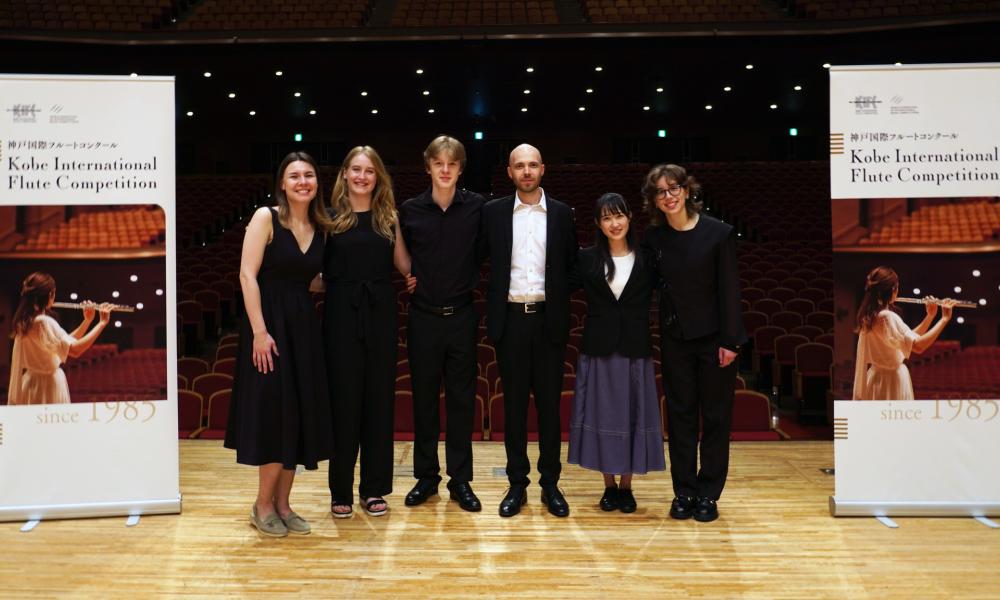
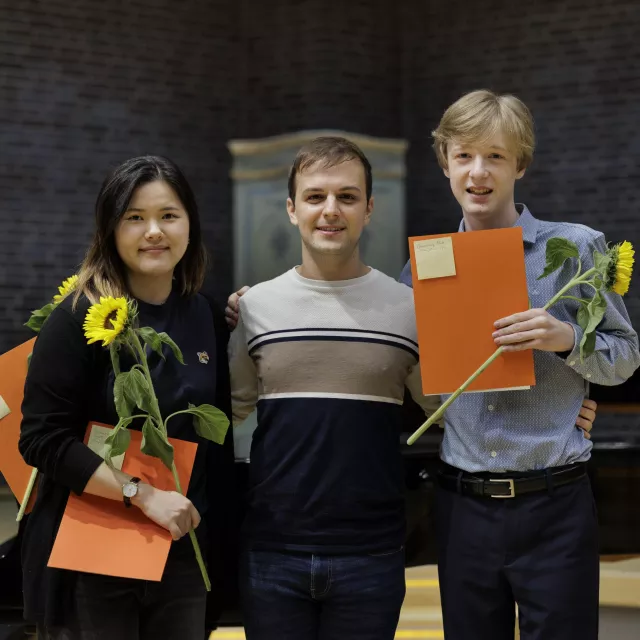
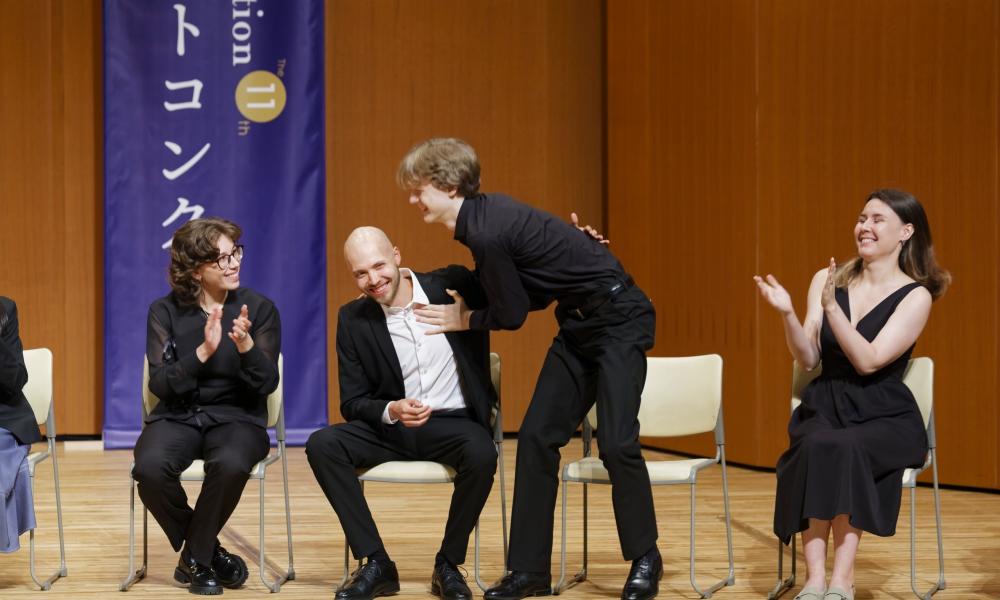
A sweet moment at the award ceremony of the Kobe Competition

Was it your first time visiting Japan?
Riccardo & Fabian: Yes, for both of us.


How did you find Japan and Kobe?
Riccardo Cellacchi: It was amazing. It was my first time in Asia, and I really liked Japan. At the beginning, it was a bit of a shock because everything was new, and it was extremely hot in August. We also had many things to think about, as usual in a competition, and doing it in a foreign country made it more difficult. But overall, the experience was amazing. I can’t wait to go back.
Fabian Egger: For me, it was the first time outside Europe. It was intense to go there for the first time, so I arrived one week before the competition to get used to everything, because I was a bit scared to play in a different environment. But I felt very comfortable, and Japan felt very safe. At the same time, it was challenging, especially for us flutists, to get used to the climate—it was extremely hot. It was a big challenge.


What was the difficult part in Japan?
Riccardo Cellacchi: The biggest challenge for me was practicing. In Europe, it’s normal to practice in a hotel room, but we couldn’t do that in Japan. After 20 hours of travel, the first thing you want is to check if you are still in shape. So that was a shock. It makes sense, but it was difficult. We had to find places to practice, and with the language barrier, it was not easy.
And the time difference- I think it was very smart that Fabian arrived one week earlier, but I didn’t think of that. And we were both a bit unlucky with the schedule—I was the first to play, so I had less time, and Fabian was the last, so he had to wait five days. Maybe we should have switched roles!
Fabian Egger: We were lucky to win first prize because the chances were really low at the beginning.
Riccardo Cellacchi: All these things added difficulty to the competition. But at the same time, they made the experience even richer in memories and challenges, which is very nice.

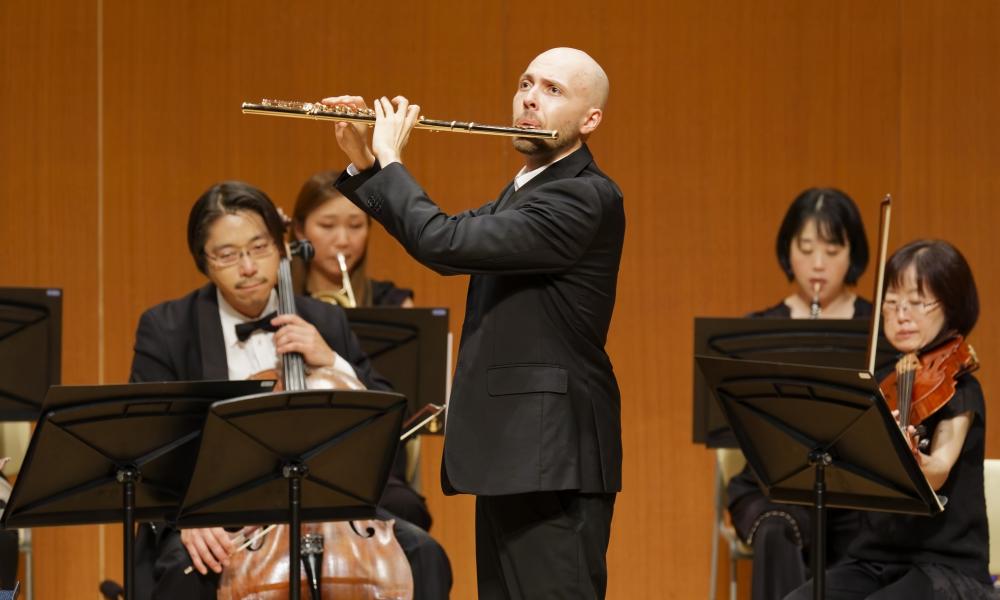
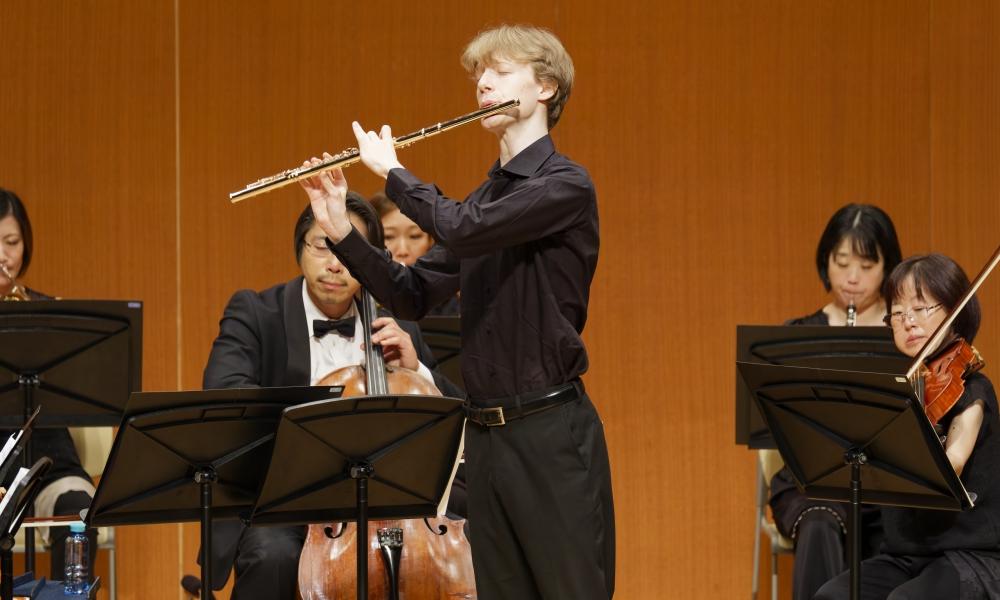
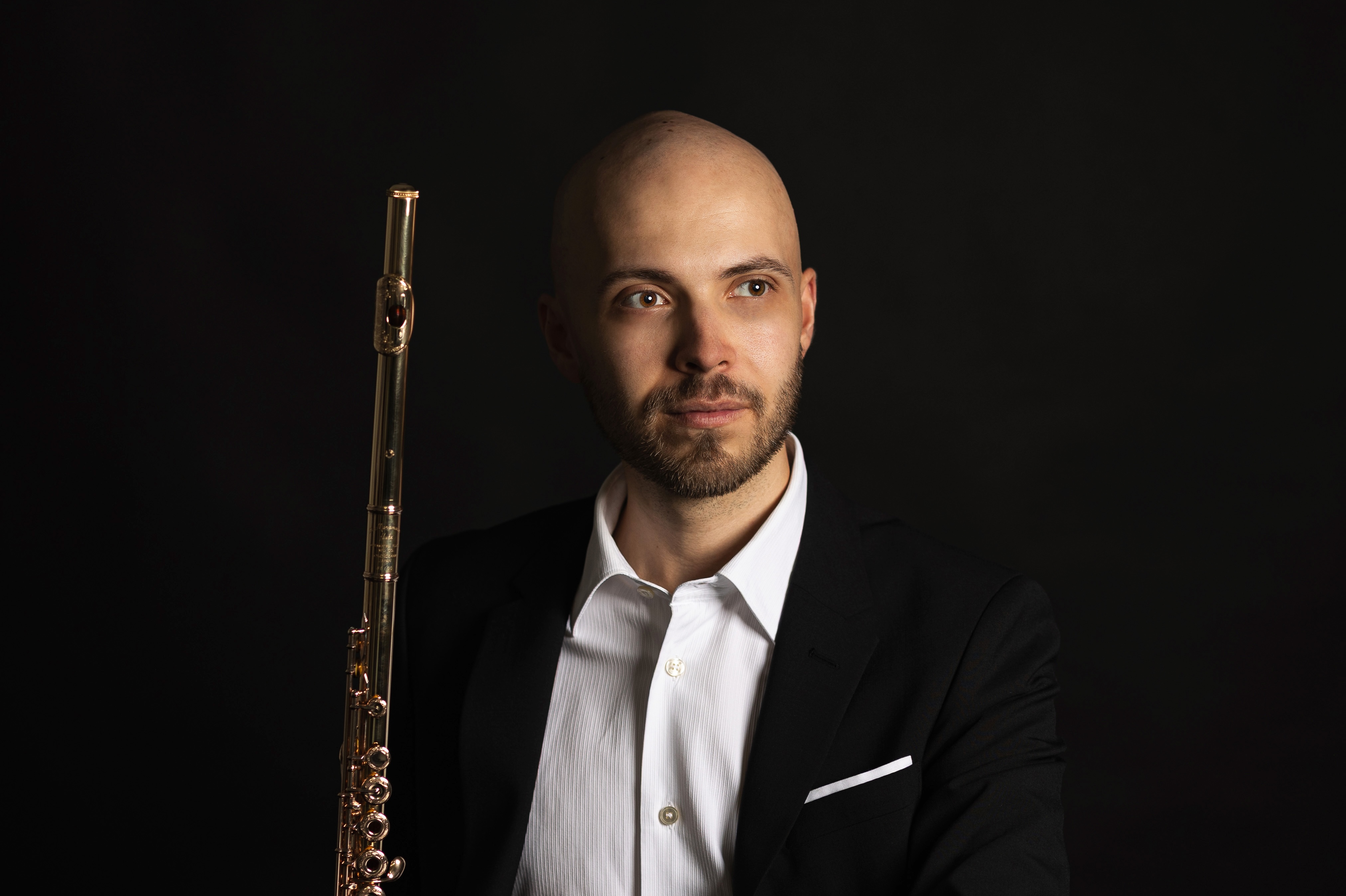
Riccardo Cellacchi performing in the final round of the Kobe Competition

Kobe is quite far from Europe- why did you choose the Kobe Competition?
Fabian Egger: That’s easy. It is one of the most famous flute competitions in the world, so it was natural to try. There are many participants—I don’t know the exact total, but only about 40 reached Japan in the end, so it is very selective. Of course, the competition is very important to us. And it is also amazing to have a reason to come to Japan. It was a great experience for me personally.Riccardo Cellacchi: I agree. Since we started studying flute, Kobe has been one of the top competitions—probably in the top three. It is a goal every flutist dreams of. I followed previous editions as a child, watching these musicians perform in such a big competition, thinking that one day it could be us. Japan is also very important for the flute world—it probably has the highest number of flutists. That is why this competition is so significant.
Fabian Egger: For me, it was funny because, as a child, I watched it and suddenly I was on the same stage. It is very intense and exciting.
Riccardo Cellacchi: What is also special is seeing the history of the competition—many winners were once unknown and later became great musicians, like Emmanuel Pahud and Sébastien Jacot. It makes the competition even more meaningful, regardless of the prize. Of course, we won first prize, but participating is already a great achievement.


Did you stay a few days after the competition?
Fabian Egger: Yes, I stayed there for one week after the competition and enjoyed in Japan. But Riccardo didn’t.
Riccardo Cellacchi: No, I left the day after the competition. I had to work, so I arrived the day before and left the day after. Unfortunately, I couldn’t stay longer, which I regret. Fabian could enjoy Japan more after the competition, which I envy. But it also makes me want to come back even more.

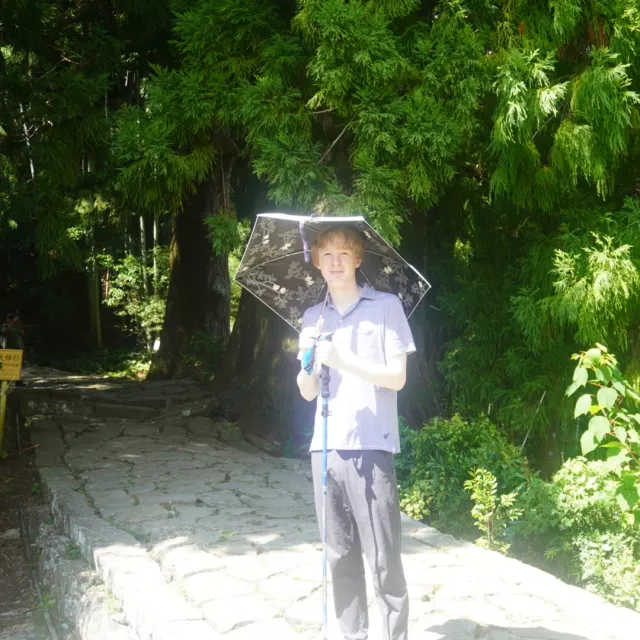
Fabian Egger, memories from Japan after the competition

Do you have any fun or special memories from the competition or Kobe?
Fabian Egger: It was a great honor. At the after-party, we heard traditional Japanese music, which was really nice. During the competition itself, there weren’t really any fun moments—we were too nervous and focused. It feels like you are watching yourself from the outside. It is a very strange experience.
Riccardo Cellacchi: For me, it’s the same. The fun comes after the competition. During it, we were very focused. The pressure builds over time because you don’t want to waste all the preparation. Even after winning, the pressure continues because you still have concerts the next day. It takes a few days to really relax.
The evening after the prize ceremony was very special. We were invited to a beautiful event organized by the competition, with sponsors and traditional performances. It felt almost like a wedding. It was very unique and unexpected for a competition.
Fabian Egger: It felt like the whole of Kobe and Japan were there. We were really surprised.


That’s wonderful!
Riccardo Cellacchi: Yes, and what impressed me most was the warmth of the people. They really wanted to celebrate us. We were seated at different tables with many guests, and even with the language barrier, it was very nice to talk with them. They were very curious and welcoming.
Fabian Egger: The organization was also excellent. I have never seen such a well-organized competition. It was outstanding.


Fabian, you won the Aeolus Competition before. How does it compare to the Kobe Competition?
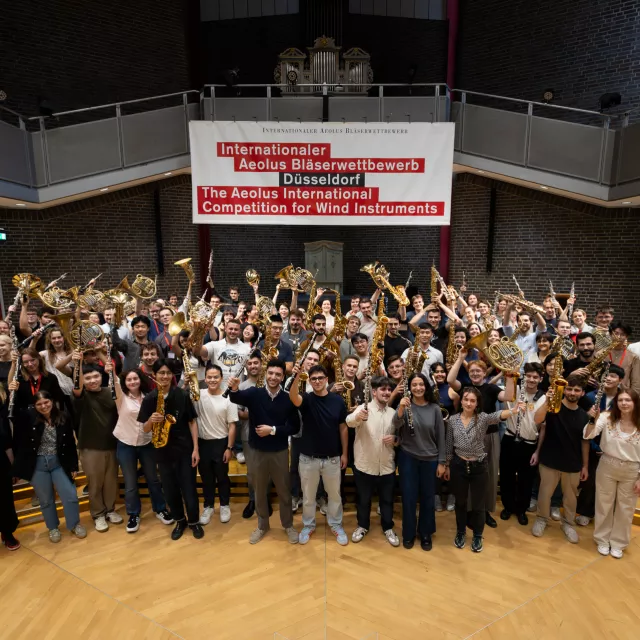
Fabian Egger: It is quite different. Aeolus includes different wind instruments, not only flute. In the final, you compete with other instruments like clarinet and bassoon. So the pressure feels different because you are not directly compared all the time.
Kobe was different because the competition is only for flute, so the pressure was much higher. There is constant comparison. It was really challenging. Aeolus was also easier in a way because it was in my home country and closer. The atmosphere was different, but I felt very welcome in both.

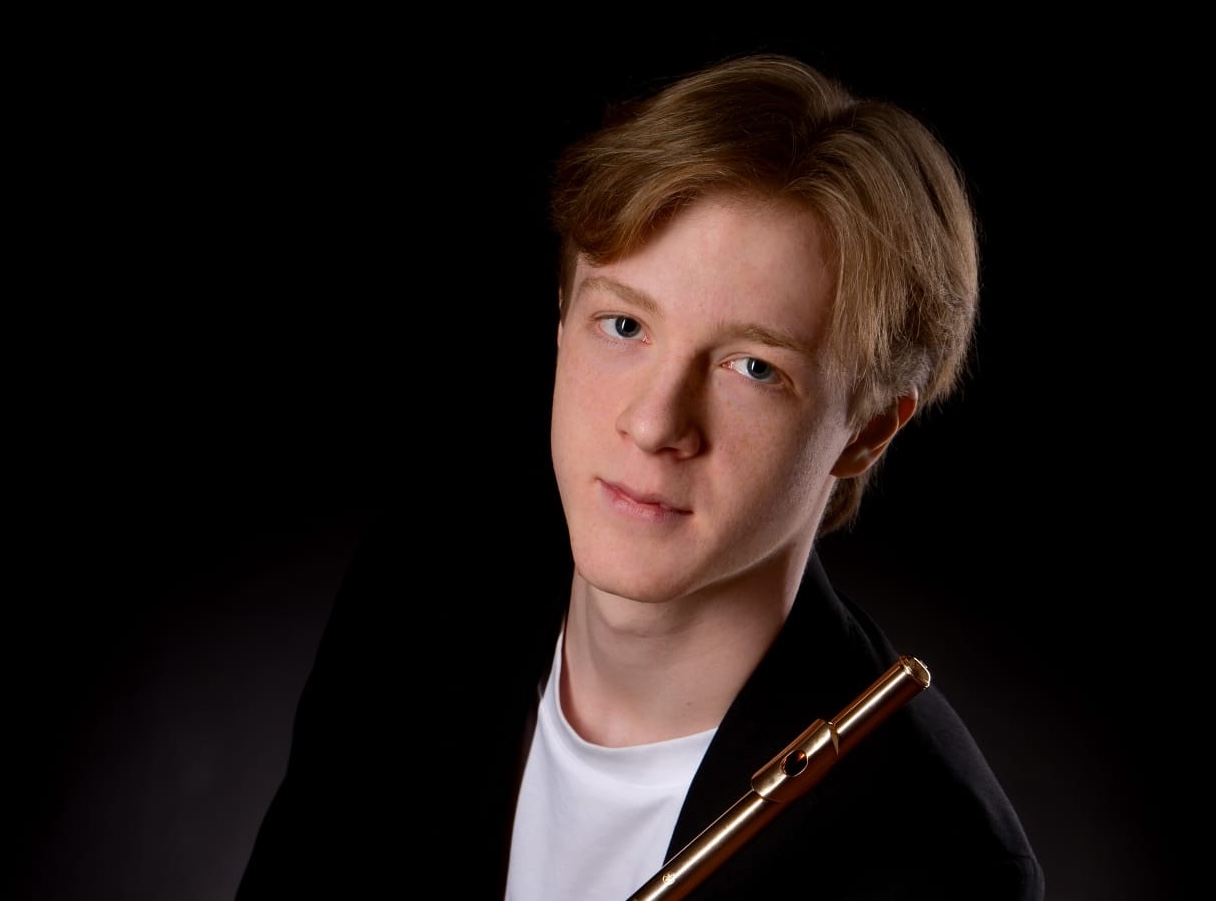
Fabian Egger performing in the final round of the Kobe Competition

Riccardo, you are actively playing in an orchestra. Do you find it difficult to prepare for competitions with your schedule?
Riccardo Cellacchi: Yes. I was very lucky to join an orchestra at a young age and to have a job in Switzerland. But at the same time, it makes competition preparation more challenging. When you are a student, you have much more time to focus only on practice. In the orchestra, you gain experience, but you also have less time.
For me, it worked well because Kobe was in August, during the summer break. For two months, I could focus like a student again, which was wonderful. So it is a balance—less time, but more experience. I don’t think it was a disadvantage. I wish I could have stayed one more month honestly, but I was already very lucky that everything worked out.


Do you have any concerts together coming up in Japan?
Fabian Egger: Unfortunately, no. We will perform separately. The competition prefers to present each winner individually, which is fair.
Riccardo Cellacchi: Yes, that is very nice of the competition. We are treated as individual winners, not a duo. We will both have concert tours in Japan, but at different times. I hope we can perform together one day as well, that would be a lot of fun.
And this kind of support after a competition is quite rare. Here, it feels almost like having an agent—they organize concerts and schedules for us very efficiently. We just choose the repertoire and go, and everything runs smoothly. It’s something I didn’t expect, and we’ll see more as it gets closer.
Fabian Egger: The concert schedule is like a tornado—we will travel to Tokyo, Osaka, and Kobe, and even other countries like Taiwan. It is not just a prize; it is like an invitation to tour Asia. It is outstanding.


Did anything change after winning the competition?
Fabian Egger: Some things changed, but I already had it before. For wind players, it is different compared to string players. Winning doesn’t automatically lead to a solo career or getting an agency. It can help with orchestra positions and auditions, but it is not the same system.
Riccardo Cellacchi: For wind instruments, competitions are more like tools for future opportunities. Even after winning a big competition, you might get one concert or none. It is not predictable.
Fabian Egger:  I once heard in an interview that string players often aim for solo careers, while wind players tend to focus more on orchestral positions. The paths are just different. For example, winning in Kobe is very valuable for orchestra auditions, and it can lead to many invitations. I’ve already noticed that myself.

After the award ceremony of the competition

How do you handle stress during competitions or performances?
Fabian Egger: I try not to think too much about it. But I made one mistake—I listened to the other performances through the live stream because I was the last one to perform, and I had to wait for a long time. That made me more nervous because the level was so high. That was not a good idea.
After the first round, I was too busy to think about nerves, which actually helped. I was the last performer, so I had to wait a long time before the first round, but afterwards everything went quickly. The very next day after my first round performance, I had to play again immediately, so I didn’t really have time to think about it. The first round was really hard for me- I couldn’t calm down and do what I wanted to do—but I was already prepared because I had experienced this kind of atmosphere before, since I had already done the Aeolus Competition, so it was okay. But how you handle it is, I think, really different for each person.
Riccardo Cellacchi: Yes, it is very personal. Stress builds up over months before the competition, not only on the day. You live with it for a long time. The hardest part is maintaining focus over several rounds with waiting periods in between.
Fabian Egger: And I have to add- the live stream makes it more stressful because everything is recorded and stays online. It is very different when there is no live stream. And honestly, the biggest challenge was the heat in Kobe. It was extremely hot, and sometimes we were more focused on surviving the climate than on nerves.
Riccardo Cellacchi: Without a live stream, you can enjoy the performance more. But with recordings, everything stays forever, so you think more carefully, and it is harder to take risks. It was a different feeling between the final and the prize-winning concerts- the prize-winning concert made me much more relieved, not because it was already over the competition, but because there was no live stream. The audience listens only once, and it is more about the feeling than the details. But in a competition, everything is recorded. You can watch it again and start to overthink it. That changes how you play.
Fabian Egger: We also have to remember that other competitors are watching. So we want to show that we really deserve the first prize. That is also pressure.
Riccardo Cellacchi: And future competitors will also watch and analyze it. They will ask why someone won and what was different. Everyone does that. So you think about it too, and sometimes you overthink.
Fabian Egger: In general, a music competition is very difficult. You have to make many artistic decisions and show your personality, especially in the final round. That is not easy, but it is part of the challenge.


Do you have any advice for young musicians?
Fabian Egger: Don’t put too much pressure on yourself. My only mistake was putting too much pressure on myself. In the end, I played more freely, but I always had the thought that I had to play well. Of course, that matters, but in music, the most important thing is to feel free. Winning a competition can help your future, but it is not everything. First of all, try to relax—it’s just a competition. You can never do everything perfectly.
Riccardo Cellacchi: For me, this was not my first competition—I have done many. And often, you learn the most from the ones you don’t win. So my advice is “just do it.” Competitions are not the most important thing, and they won’t change your life. But the way you prepare for them can really change you. If you prepare well each time, sometimes you win, sometimes you don’t. That’s part of our job. It’s not like sport—it’s subjective and depends on the jury. So you shouldn’t base your value on the prize. What you can do is prepare as much as you can. All the work you put in is what makes you better, and in the end, that is what really matters. So I would say: focus on preparation and challenge yourself.
Fabian Egger: Don’t focus too much on the prize itself.
Riccardo Cellacchi: Exactly. You can’t control the result, but you can control how you prepare. So don’t worry too much about the outcome.

 

Riccardo Cellacchi, born in Rome in 1999, gained international recognition by winning the 1st Prize at the 11th Kobe International Flute Competition in Japan, establishing himself as one of the most brilliant flutists of his generation. At a very young age he won the Abbado Prize and the 1st Prize at the “Severino Gazzelloni” International Flute Competition, and has also been awarded at the “Jeunesses International Flute Competition” in Bucharest, the “Audi Mozart International Competition”, and the “7th International Flute Competition” in Kraków. Born into a family of musicians, he began studying the flute at the age of eight with his father.

At 12 he was admitted to the Accademia Nazionale di Santa Cecilia in the class of M° Andrea Oliva, and at just 15 he graduated with honors and distinction from the Conservatorio di Musica “O. Respighi” in Latina. At 16 he entered the Hochschule für Musik und Theater in Munich in the class of Prof. Andrea Lieberknecht, where he obtained his Master of Music with top marks. At 18 he won a position as Academist with the Symphonieorchester des Bayerischen Rundfunks during the tenure of M. Jansons, and at 19 he was appointed Principal Flute of the Berner Symphonieorchester, a position he still holds today.

Fabian Johannes Egger was born in Traunstein, Bavaria, in 2007 and was accepted into the gifted student program at the Leopold Mozart Institute of the Mozarteum University Salzburg at the age of ten. From 2020, he studied with Andrea Lieberknecht at the University of Music and Performing Arts Munich, where he began his bachelor's degree in 2023. 

Fabian is a prizewinner of numerous national and international competitions. At the "Jugend musiziert" competition alone, he won first prize four times, both as a soloist and in various ensembles, achieving the highest possible score. Within a single year, he won first prize, the audience prize, and the prize for the best interpretation of a contemporary work (he performed one of his own compositions) at the International Aeolus Competition, third place at the Eurovision Young Musician competition, the VP Bank Opus Award (in recognition of his artistic personality), and first prize (shared) at the 11th Kobe International Flute Competition – one of the world's most important flute competitions. He gained his first orchestral experience with the vbw Festival Orchestra, the German National Youth Orchestra, and Concertgebouw Young. From May 2026, he will be an academy member of the Herrmann Levi Academy of the Bavarian State Orchestra at the Bavarian State Opera in Munich.

© WFIMC 2026 / HS