Novara, Italy

Remembering a Legend

Cristina Rocca talks about the Guido Cantelli intl. Conducting Competition and its namesake, the conductor Guido Cantelli, on the occasion of the 70th anniversary of his tragic death

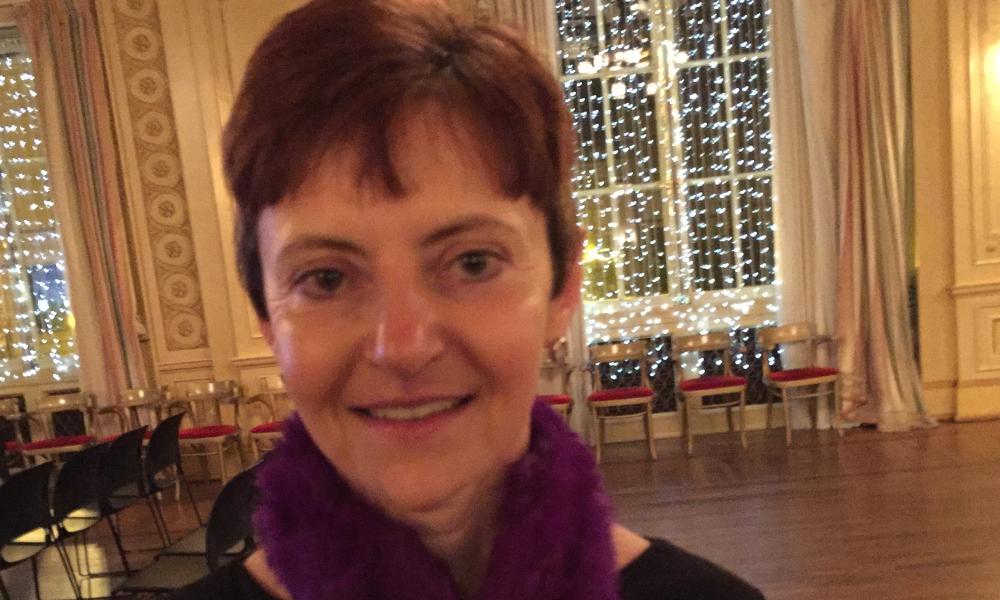
Cristina Rocca is Vice President for Artistic Planning of the Chicago Symphony Orchestra, overseeing programming, artist relations, and long‑term artistic strategy for the CSO and Orchestra Hall. A seasoned international administrator, Rocca has worked in leading roles at the  London Philharmonic Orchestra, Orchestre National de France as well as at The Cleveland Orchestra, the Orchestre philharmonique de Strasbourg, and the Accademia Nazionale di Santa Cecilia in Rome. 
Rocca is widely respected for her rigorous programming, commitment to contemporary repertoire and artist development, and experience on international juries. She will serve on the jury of the Guido Cantelli International Conducting Competition 2026, bringing deep institutional insight and a strong record of mentoring emerging conductors. 

WFIMC: Guido Cantelli is a name many younger listeners may not know well. As an Italian and an experienced music professional, how do you perceive his legacy and his tragic early death?

Cristina Rocca: Cantelli’s legacy is still very much alive in Italy. For anyone who studies or cares about classical music here—particularly young conductors—his name carries real weight. He rose incredibly fast: intense artistry, remarkable technique and communication, and the kind of recognition that suggested he could become one of the century’s leading maestros. That the future of such promise was cut short by a tragic accident makes his story resonant and somewhat mythic. People still talk about what he might have accomplished—the great posts he might have held, the repertoire he could have shaped. We can only speculate, but the initial brilliance was undeniable, and the sense of loss is still present in our musical memory.

You’ve been to the Cantelli Competition more than once. What motivated you to return this time?

Several things. First, Cantelli’s reputation: there are very few conducting competitions with genuine international standing, and Cantelli is one of them. That alone makes it worth attention. Second, it’s about the quality of the experience candidates get—how much time they actually spend on the podium with a full orchestra in real performance conditions. That experience matters enormously for a young conductor’s development and visibility, often more than a single audition or prize. Finally, there’s the curatorial side: the competition’s programming, the jury composition, and the follow-up opportunities matter to me professionally. When colleagues recommended that I go, I accepted; the competition offers a mix of artistic seriousness and practical career relevance that I really value.

Cristina Rocca (©Archive)

In what ways does the competition reflect Cantelli’s spirit, if at all?

“Spirit” is an intangible thing, but the competition honors Cantelli not as a gimmick but through seriousness of purpose. It aims to identify conductors with command, sensitivity, and musical integrity—qualities associated with Cantelli. Also, the setting matters: Novara is a lovely historical city and its theater is a genuine stage, not a make-do rehearsal space. That living theatrical and civic context contributes to the experience. Candidates perform in a real cultural environment, which fosters the kind of artistic encounter Cantelli himself might have appreciated.

The jury often mixes managers and artistic figures rather than being composed only of conductors. Why is that, and what value does it have?

The mix reflects modern realities. Managers, presenters, and artistic administrators bring a career-oriented perspective: programming viability, audience appeal, and what an artist might realistically build into a sustainable career. Conductors bring interpretive and technical judgment. Both perspectives are necessary. Artistic excellence remains the shared criterion, but we also need to consider whether a candidate’s profile can translate into bookings, collaborations, and long-term growth. For a young conductor—often without an agent—those practical views can be crucial. I recommended names to the organizers, but the result is a panel that can evaluate both musical substance and professional potential.

When you first see a conductor walk onto the podium, what are the immediate things you notice?

I look for clarity of musical intent and a sense that the conductor has something specific and personal to say about the repertoire. Stage presence matters: how the person carries themselves, how they greet the orchestra, and whether they project self-assurance without arrogance. Communication with the orchestra—eye contact, economy and clarity of gesture, and the ability to shape phrases—is essential. Emotional engagement that feels genuine is a plus: if I get goosebumps, that’s a powerful indicator. Ultimately, I ask whether the conductor can hold my attention and convincingly transmit an idea to a group of 60–80 musicians. If the musicians believe in the conductor in that moment, that’s a very good sign.

Are there moments where you instantly know someone should win, or is it always an accumulative process?

Both things happen. Occasionally a candidate will make such a striking, immediate impression that you feel confident they should win—and sometimes juries agree unanimously. Those moments are thrilling. More often it’s cumulative: you observe multiple rehearsals, note how a conductor adapts, how they handle different repertoire, and then weigh qualities across rounds. Discussion with the jury helps refine impressions. Instant decisions are possible, but the process usually benefits from sustained observation and comparison.

How does the Cantelli jury arrive at decisions—do you favor discussion or independent scoring?

Cantelli sits in the middle of that spectrum. We value open, candid discussion because it brings perspectives to light that you might not have considered. Hearing another juror explain a point of view can reveal musical or human nuances that influence your judgment. At the same time, no one should feel coerced into changing their vote; persuasion for persuasion’s sake is counterproductive. I appreciate an environment where jurors are collegial and comfortable arguing their case, but where everyone retains responsibility for their own judgment. The best discussions add clarity rather than force consensus by pressure.
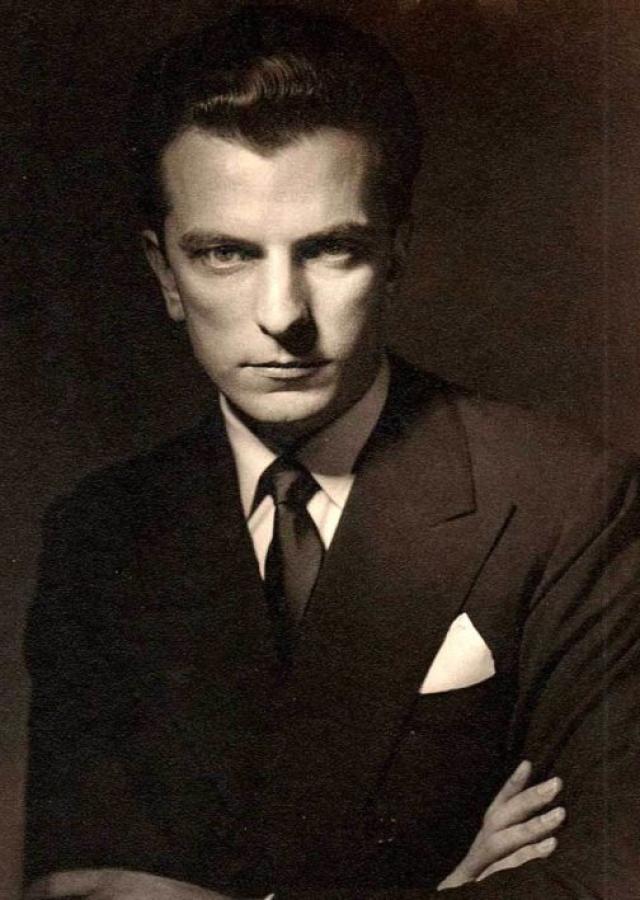
Guido Cantelli

Guido Cantelli (1920-1956)

Guido Cantelli (Nov 28, 1920 – May 24, 1956) was an Italian conductor celebrated for his luminous musicality, precision, and expressive intensity. Born in Novara, he trained at the Milan Conservatory, where his gifts for conducting quickly became apparent. After early successes with regional orchestras, Cantelli rose to international attention in the late 1940s and 1950s, earning the admiration of Arturo Toscanini, who called him a worthy heir. Cantelli held important engagements at La Scala, London’s Royal Festival Hall, and with major orchestras across Europe and the United States, building a reputation for authoritative interpretations of the classical and early romantic repertoire and leaving a small but highly regarded set of recordings. 
His career—and life—were abruptly cut short on May 24, 1956, when the small private plane carrying him crashed after takeoff near Paris, killing him at age 35. The loss stunned the musical world, which had anticipated Cantelli becoming one of the century’s leading conductors.

What kind of conductor is Cantelli trying to discover? Is there a specific profile?

The competition ideally seeks conductors who can bridge repertoire worlds—those who can lead both orchestral and operatic repertoire with equal authority. The truly ideal, all-purpose conductor is rare, but the aspiration is for versatility: someone who can handle major symphonic works, work sensitively with singers and ensembles, and lead contemporary pieces when required. Technical skill is assumed nowadays; what distinguishes candidates is musical personality, communicative power, and the ability to collaborate with singers and instrumentalists. In practical terms, a candidate who understands opera—how to support voices and shape dramatic flow—often has an edge, because that experience fosters deep ensemble leadership. But we also value those who show breadth across symphonic, choral, and contemporary idioms.

How involved is the orchestra in the competition—and how important is that to you?

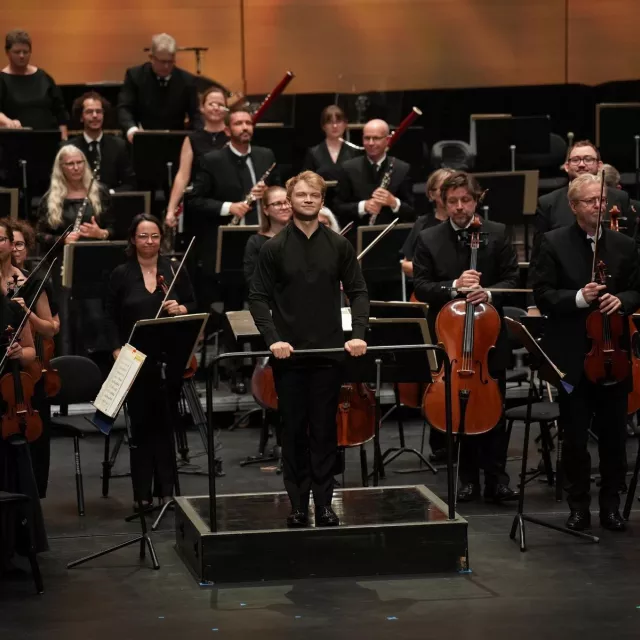
They are a strong partner and are very involved. The Orchestra Sinfonica di Milano shows real commitment: attentive playing, engaged body language, and visible interest. That level of investment matters enormously. Candidates performing on a stage with full orchestral support, rather than in a cramped rehearsal room, can demonstrate their abilities under realistic performance conditions. Also, giving the orchestra a voice—through a vote or feedback—recognizes them as artistic partners rather than mere accompanists. That partnership benefits candidates and produces a more meaningful assessment.

What practical conditions does the competition provide that support young conductors?

We are on a proper stage with professional orchestral conditions—good rehearsal time, full concert setup, and real audience present—so candidates can show their command in situations resembling actual professional engagements. The organizers offer meaningful podium time across all rounds, which is crucial for a conductor’s assessment. These practical provisions—the stage, rehearsal time, professional orchestra, and audience—are how competitions turn auditions into real artistic trials.

So, all in all, for a young conductor, why should they apply for the Cantelli?

First, the name and tradition matter: Cantelli is a recognized international competition, and that brings attention. Second, the competition offers valuable podium time and credible follow-up: winners (and often other finalists) receive continued support, advice, and exposure—things that can be more valuable than the trophy itself. Third, the jury’s composition means candidates are evaluated for both artistic substance and career potential; that can open doors to engagements and mentorship. Even those who don’t win gain meaningful feedback, contacts, and a professional showcase. In a profession where opportunities are scarce and competition is fierce, Cantelli provides visibility, experience, and sustained support—precisely the resources a young conductor needs to build a lasting career.


The 14th Guido Cantelli International Conducting Competition will take place from October 1-4 at Teatro Coccia, Novara. For more information, please visit https://www.fondazioneteatrococcia.it/premio-cantelli-en.html


©WFIMC2026/ FR