STOckholm, Sweden

Remembering Henryk Kowalski

Remembered affectionately as Indiana University’s “Mr. Fix-It,” the great violinist transformed technical obstacles into artistic possibilities—and built a worldwide family of players, colleagues and occasional footballers.

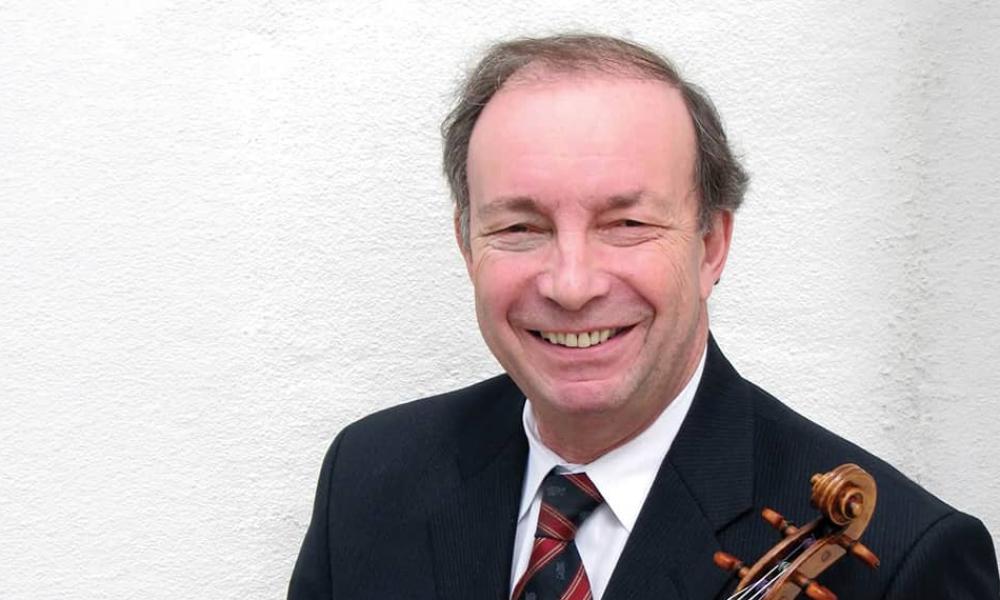
Henryk P. Kowalski’s death at the age of 78 marks the passing of a violinist and teacher of unusual seriousness, generosity and practical genius. Polish-born, proudly Danish by citizenship, and at home in the musical cultures of America, Sweden and Japan, Kowalski belonged to the kind of pedagogue whose influence is most truthfully measured not by publicity but by the number of musicians still hearing his voice at the crucial moment: “No. Again!”

That voice—by turns booming, exacting, affectionate and theatrically exasperated—will be familiar to generations of his students at Indiana University and Stockholm’s Royal College of Music. Yet it would be a mistake to remember Kowalski merely as a formidable technician. He was, rather, a custodian of a very special artistic ideal: that technique only exists to release character, colour, rhetoric and meaning.

Born in Warsaw on 13 December 1947, Henryk Pawel Kowalski grew up in a musical household. His father, Leon Kowalski, performed with the National Philharmonic Orchestra and the Warsaw Operetta orchestra, while his brother Jakob would become a distinguished cellist. At the Warsaw Conservatory, the young violinist studied with Tadeusz Wroński, a central figure in the Polish violin tradition. For a time, he also played jazz, co-founding the ensemble Asocjacja Hagaw in 1964 with Grzegorz Brudko. The group’s mixture of traditional jazz, swing and Eastern European idioms became widely known in Poland.
It was a promising dual life, though one apparently curtailed by advice from his teachers: jazz, he was told, might not be good for his classical playing. Kowalski took the injunction remarkably literally. Former students knew him as a passionate listener and admirer of jazz, but not as a teacher inclined to break into an impromptu improvisation during a lesson. That improvisation had been placed firmly in quarantine—perhaps permanently—but the intensity, rhythmic vitality and individuality of that early musical life stayed with him throughout his life.

Henryk Kowalski (1911-1982)

In 1968, during the Polish government’s anti-Jewish campaign, Kowalski was forced to leave Poland before completing his graduation recital. He resumed his studies at Indiana University, where Wroński was also teaching, and worked with Josef Gingold, receiving an artist diploma in 1974. His chamber-music education brought him into contact with William Primrose, Menahem Pressler, János Starker and György Sebők: an intimidatingly distinguished faculty list, even by Indiana University standards of the era, when a stroll down the corridor could feel like a visit to the backstage of Carnegie Hall.

Kowalski did not merely study among these figures- he became their colleague. After joining Indiana University’s faculty in 1975, he served in a succession of appointments before becoming professor of violin in 1991, a position he held until his retirement in 2011. He was also visiting professor at the Tokyo College of Music in 1990–91, and taught at the Royal College of Music in Stockholm from 1994, becoming professor there in 2006.
His international career as a performer included appearances with the Seattle Symphony, St Louis Symphony Orchestra, Copenhagen Symphony, Warsaw Symphony Orchestra, Belgian Radio Orchestra, Seoul Philharmonic and Bochum Symphony Orchestra, among others. From 1977 to 1989 he was a member of Trio European, formed with his brother Jakob and the Belgian pianist Jean-Claude Vanden Eynden. The trio performed extensively across Europe, Asia, Central America and the United States, broadcast on major European radio networks and recorded for Pavane Records.

Still, it was in the teaching studio that Kowalski found his fullest vocation.
Glen Kwok, Executive Director of the International Violin Competition of Indianapolis and a former student, recalls that within Indiana University’s formidable string department, Kowalski was known as “Mr. Fix-It.” Colleagues sent students to him when an essential technical issue had proved stubborn: an unreliable bow arm, a tense right hand, a wayward shift, a sound that would not carry, or any of the small physical habits that can become large artistic obstacles.
The nickname was affectionate, but it described a rare gift. Kowalski could hear the source of a problem beneath its symptoms and then articulate a route out of it. In an era at Indiana University that included such giants as Josef Gingold, Franco Gulli, János Starker, and, in the piano department, Menahem Pressler, György Sebők and Leonard Hokanson, this capacity made Kowalski indispensable. There were players whose effortless command could leave students awestruck; Kowalski could explain, patiently and in detail, how to build such command from the ground up.

“Some of the most gratifying aspects of teaching are to see a student master the technical and interpretive aspects of playing and learn how to concentrate on listening to and inspiring themselves so they can adjust and improve, ultimately becoming working professionals and their own teachers.”  – Henryk Kowalski

Glen Kwok remembers being advised by fellow students not to be overly dazzled by prestige when selecting a teacher. “Go straight to Henryk,” they told him. The message was not that Indiana lacked illustrious professors—quite the reverse—but that Kowalski offered something particularly valuable: a rigorous, practical education in the fundamentals of playing. He was the teacher who could take a student from wherever they were and move them onwards.
Kowalski himself took great pride in that task. He did not reserve his energy for the already polished, the conspicuously gifted, or the students most likely to flatter a studio’s reputation. He accepted violinists at widely differing levels and regarded their progress as a personal responsibility. As Kwok recalls, students were given not simply their scheduled weekly lesson but as much teaching as they needed to prepare for auditions, competitions, recitals and other important occasions.
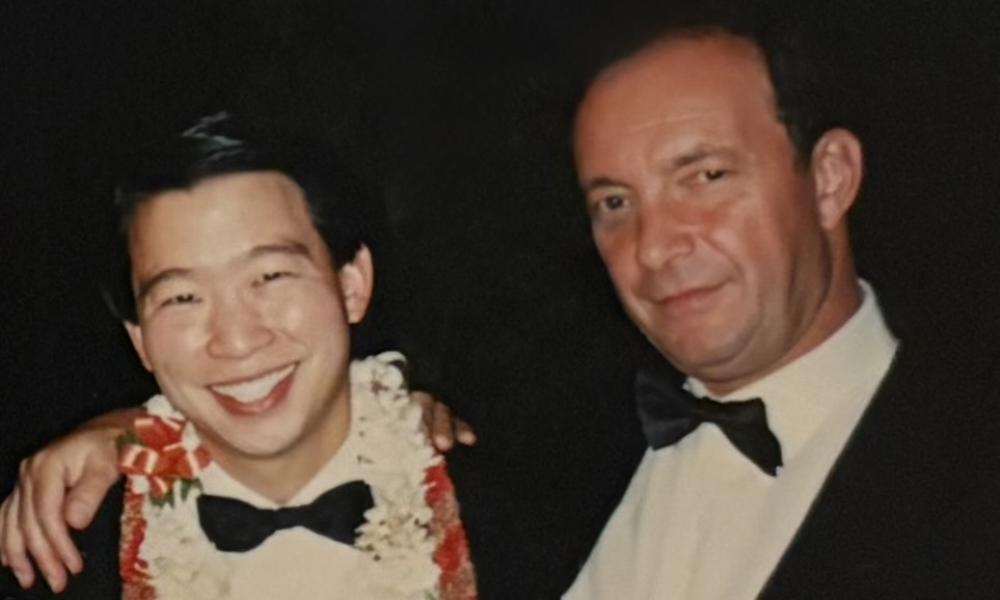
Glen Kwok and Henryk Kowalski at the Opening Ceremony of the 2002 International Violin Competition of Indianapolis

His work on sound production was especially renowned. Students could spend months on open strings, learning to place weight—not pressure—into the string, to sustain an even bow speed, to remove scratches and unintended changes of colour, and to develop a stroke that was both physically free and musically alive. Kowalski heard details most listeners would not register. He expected students to hear them too.
This could be a bracing experience. A passage deemed insufficiently vivid might attract a long silence, a raised eyebrow or a carefully delivered pronouncement of existential consequence. But being theatrical had its purpose. Kowalski wanted students to understand that music could not be played merely correctly. A phrase had to have direction, personality and necessity.

"Henryk is the person that taught me how to truly love music, how to find my own sound and how to be a mensch. I am incredibly grateful to have had him as a central part of my life from an early age. His influence and meaning in shaping who I am, both on and off the fingerboard, can not be overstated. He was a mentor, teacher, father figure and friend."
Andrej Power, Concertmaster, London Symphony Orchestra

For all his mastery of technical diagnosis, Kowalski placed music-making first. He inherited and protected the traditions of Wroński and Gingold, ultimately tracing through Eugène Ysaÿe to Henryk Wieniawski. He believed in individual sound and individual character: the quality by which an artist might be recognised without a name on the recording sleeve. In an age crowded with extraordinary instrumental accomplishment, he worried that this personal stamp was becoming rarer. He wanted his students to play beautifully, certainly; but also recognisably, courageously and with their own voices intact.

There was an irony in his teaching of performance, as Kwok observed. Kowalski himself could suffer intensely from nerves. He invested so much thought in every phrase, slide and colour that public performance could become an almost unbearable burden of possibilities. Even after a successful appearance, he might revisit every choice he felt he had missed. Yet he was remarkably effective in helping students manage their own anxiety, perhaps precisely because he knew its force from the inside. His standards were not abstract: they had been tested against the real, unforgiving pressures of the concert platform.

Kowalski’s academic life was not confined to the practice room. He loved the communal world of a conservatoire—the greetings exchanged in corridors, the attendance at student recitals and orchestra concerts, the collegial rituals of seeing and supporting fellow musicians. He remained an emphatically old-school figure: a handshake mattered, a promise should be kept, and respect for colleagues and teachers was not negotiable. He spoke often of the obligation to treat other people properly, an ideal he practised with a loyalty that students remembered long after graduation.

His studio also had a distinctly social dimension. International students who could not return home for Thanksgiving or Christmas found a place at his table. His home became an extension of the studio: demanding in musical standards, perhaps, but open-hearted in every other respect. Students were family, not just while enrolled but for decades afterwards.

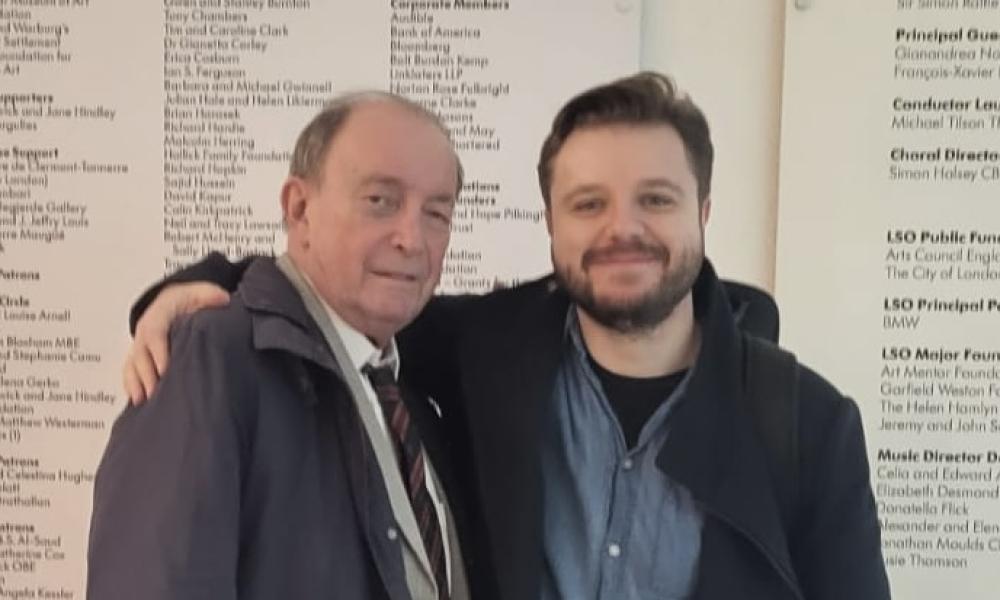
Henryk Kowalski and Anrej Power

In summer, Kowalski’s international reach became particularly visible. Students came to Bloomington from across the United States and abroad, helping to replenish Indiana University’s summer musical life when many regular students had departed. A former dean reportedly joked that Kowalski could almost fill the summer-festival orchestra single-handedly. There was, however, an unofficial condition attached to this influx of violinists: football.
Kowalski loved football and tennis, and he organised regular football games for his students. The summer arrivals became known, affectionately, as recipients of “soccer scholarships.” It was an arrangement characteristic of him: violin study was serious business, but so was joining the community around it—and, apparently, reporting to the pitch. Those less gifted with a football could expect no special protection. Kowalski’s generosity had limits, and sporting incompetence was treated with the same unsentimental clarity as an unconvincing bow stroke.
His life was shaped by several countries and the loyalties they inspired. He received Denmark’s Jacob Gade Prize in 1969 and later became a Danish citizen, an identity of which he remained profoundly proud. Though he spent many years teaching in the United States, he never surrendered that citizenship. Following his retirement from Indiana University, he returned to Sweden, where his wife, the researcher Anna Wiernik, had long been based, and continued his work at Stockholm’s Royal College of Music until mandatory retirement ended his formal appointment.

The retirement was, by all accounts, a loss to institutional music education. Kowalski remained vigorous in mind and spirit, and former students felt he had much more to offer. Private coachings could not replace the environment he cherished: a full studio, masterclasses, faculty concerts, daily contact with colleagues, and the shared momentum of a music school. It was there that he had always been most fully himself.

“Teaching is an expression of the love of music. Every teacher represents a succession of teachers—a long tradition of teaching our students to contribute to the music in a way that we were taught by our masters. Their influence is ever present in my teaching.”  – Henryk Kowalski


His legacy is now embedded throughout orchestras, conservatories and chamber ensembles around the world. Former students include Andrej Power, leader of the London Symphony Orchestra and principal concertmaster of the Royal Stockholm Philharmonic Orchestra; Andrew Ling, principal violist of the Hong Kong Philharmonic Orchestra; Aubrey Murphy, former concertmaster of Opera Australia; Yun Zhang, associate concertmaster of the Virginia Symphony Orchestra; Ami Davolt Campbell, Associate Concertmaster, The Dallas Opera; Chiyuki Rikitaki, Assistant Concertmaster, Osaka Symphony; Kristin Ahlström, Principal Second Violin, Saint Louis Symphony; Miyo Kono Curnow of the Philadelphia Orchestra; Jenny Eklund of the Royal Stockholm Philharmonic Orchestra; Linnea Andersson Meilink of the Royal Swedish Opera Orchestra; John Maple of the Nashville Symphony; Leslie Frey Anderegg of the Phoenix Symphony, and Bartosz Cajler, Professor at the Royal College of Music in Stockholm. In Sweden especially, former colleagues and students have noted the extraordinary number of players in orchestras across the country who passed through his hands.

The artistic world has no shortage of celebrated names. It has fewer teachers who can take a flawed bow stroke, an anxious performer, an underconfident student—or an entire studio of them—and patiently, fiercely, humanely help them discover what their playing might become. Henryk Kowalski did precisely that. He taught violinists to make a sound. More importantly, he taught them that the sound had better mean something.


Florian Riem
©WFIMC 2026