HAMAMATSU, JAPAN

The Piano City’s Signature Stage: Hamamatsu Welcomes a New Chair

Momo Kodama will begin her tenure at the Hamamatsu International Piano Competition with its 13th edition in 2027

Since 1991, the Hamamatsu International Piano Competition has grown into one of the world’s most respected platforms for young pianists. Held every three years in Hamamatsu—UNESCO Creative City of Music and home to Yamaha and Kawai—it has helped launch the careers of artists such as Sergei Babayan, Rafał Blechacz and Seong Jin Cho. 
In “Piano City” Hamamatsu, music is part of everyday life: from school concerts and community events to the famously devoted competition audience, which fills halls from the very first round and follows every stage of the event with almost forensic attention—programs, notes, CDs, photo walls and all. Add to this a truly international, high calibre jury, generous host families, and an increasingly global profile, and it is clear why Hamamatsu ranks so highly.
For the 13th edition, alongside with great monetary awards, new career support structures are being developed, and the repertoire now includes violin sonatas in the third round, underlining the competition’s efforts to be more comprehensive and sustainable. At the artistic helm stands a new Chairperson of the Jury: pianist Momo Kodama. 
We spoke with her about her own competition memories, the challenges of today’s young pianists, and what makes Hamamatsu unique. 

WFIMC: What is your earliest memory of piano competitions, and how did they shape you as a young artist?
 
Momo Kodama: My first international experience was in Épinal, in France—I won there when I was 13 or 14. Later came the Chopin Competition in Warsaw, when I was 18, where I reached the semifinals and received a diploma, and then the ARD Competition in Munich in 1991, where I won second prize at the age of 19. Looking back, those events marked important stages in my development. But interestingly, I never really thought of them as “battles.” I was focused on my program, on discovering repertoire. 
The atmosphere was also different then: there was much less media coverage, no livestreams, no instant social media reactions. That changed the psychology. For me, competitions were more like a way of testing myself and less about ranking myself against others.

Were those experiences mostly positive for you, or did you also encounter difficult moments?

They were overwhelmingly positive. Of course, I was nervous—everyone is—but I never felt as if I were taking an exam with a right or wrong answer. Perhaps I was a little naïve, but what helped was how I saw the jury. For me, they were never “point giving machines.” They were musicians. 
My teachers and mentors were all people who were never fully satisfied with their own work; they were always searching, developing new ideas, questioning themselves. Because of that, I saw the jury as a group of artists engaged in the same lifelong process, not as some external authority passing judgment from above. 
Now that I’m on the other side, I still feel it should be that way. A competition is a meeting between musicians. Yes, we vote and give prizes, but fundamentally we are listening to how someone thinks, feels and imagines through sound.

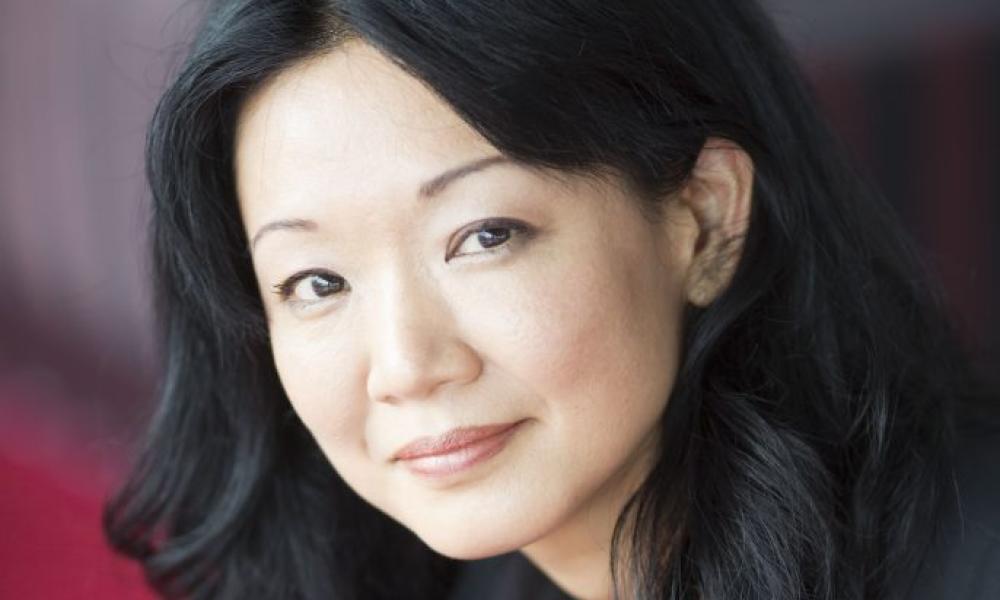
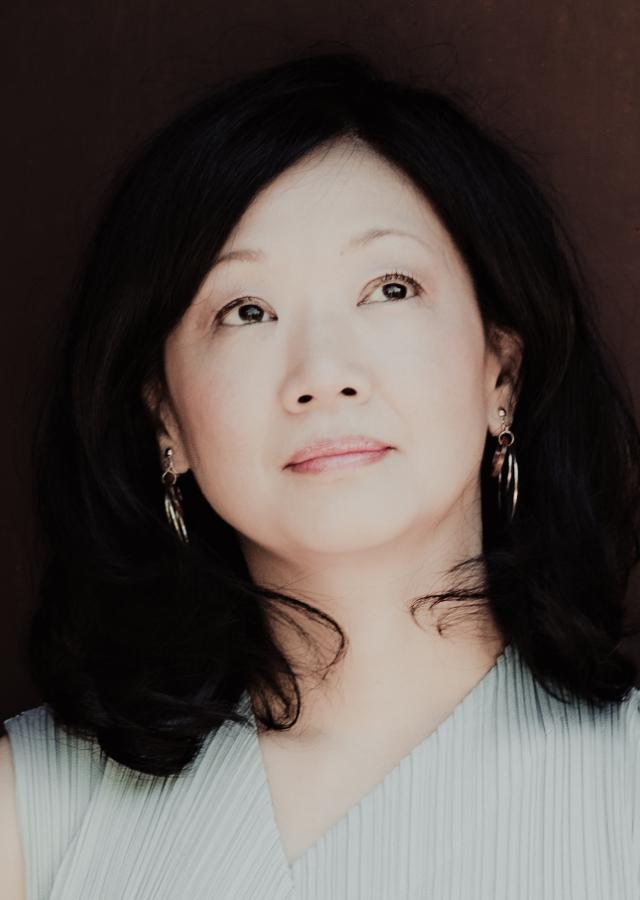
Momo Kodama ©L. Kaneko

How did the ARD Competition in Munich change your career path?

It changed a lot. After ARD, I had my first substantial concert engagements. I began working with an agency in Japan, and soon afterwards I debuted with the Tokyo Philharmonic and the NHK Symphony Orchestra. Before that, I might have had one concert a year; suddenly it became a real concert life. 

Through ARD I also met Seiji Ozawa, who invited me to perform with him in the United States and made it possible for me to perform at the Waldbühne in Berlin. Those opportunities opened up whole new worlds—musically and personally. When I look back now, I can clearly see a few turning points that allowed me to move forward; ARD was one of the most important of them. 

At the same time, my teacher, Tatiana Nikolayeva, gave me very wise advice: not to play too much before the age of 25, but to use that time to build and deepen my repertoire. I followed that as best I could. So competitions were doors, but they were not the whole house.

Competitions in the early 1990s and today’s competitions take place in very different environments. What do you see as the biggest changes for young pianists now?

The presence of media and technology has transformed everything. In 1991 there were no livestreams, no YouTube, no instant comments. Now, from the very first bar of the first round, you are potentially being watched by the entire world, with opinions circulating immediately. That creates enormous pressure. 

The positive side is obvious: people from anywhere can follow these young musicians, discover them, support them. But it also means you have to learn to protect your concentration under very demanding conditions—jet lag, different time zones, early‑morning or late‑night stages, cameras, microphones. To focus purely on music at 9:00 in the morning or 11:00 at night, under that level of scrutiny, takes great inner strength. 

I don’t think the core mission has changed, though. Music is still about sharing: sharing your joy, your love for the repertoire, making others happy through sound. Leonard Bernstein and others did this already through television, teaching, writing—long before social media. The tools change, but the fundamental responsibility remains: to offer something genuine that you truly believe in.

You’ve served on several juries in recent years. From that perspective, how do you see the role of competitions today?

For me, a competition can be a powerful tool for self‑discovery. It is not only about winning first prize and booking a hundred concerts. Of course, that can happen, but there are other valuable outcomes: clarity about who you are artistically, encounters with colleagues, exposure to different audiences and musical cultures. 

In an ideal world, a competition helps you to understand yourself better: what you love, what you need to work on, how you react under pressure. It’s also a place where you can meet mentors, organizers, future collaborators. Sometimes someone who doesn’t win a prize still touches a jury member deeply and later receives an invitation—that happens more often than people think. 

So I see competitions as intense laboratories. They can be painful; they can be exhilarating. But if approached with the right mindset, they can be very nourishing.

Turning to Hamamatsu: when did you first become aware of this competition, and what was your impression?

I remember hearing about the very first Hamamatsu Competition in the early 1990s, when Sergei Babayan won. I was living in Europe but stayed closely connected to Japan through a yearly music magazine—Chopin—which I subscribed to from abroad. It reported in detail on Hamamatsu, and I followed the results and stories from there very closely. 

Later I discovered that other remarkable pianists had also won: Rafał Blechacz, Seong‑Jin Cho, and many more who either reached the finals or not, but who went on to important careers. So even before I was personally involved, I sensed that Hamamatsu was a serious, artistically oriented competition. 

When I was first invited to join the jury, and now to become Chairperson, it was a big surprise for me, because I did not grow up or study in Japan. I felt very honored that the city and the foundation placed this trust in me.
Kodama Hipic

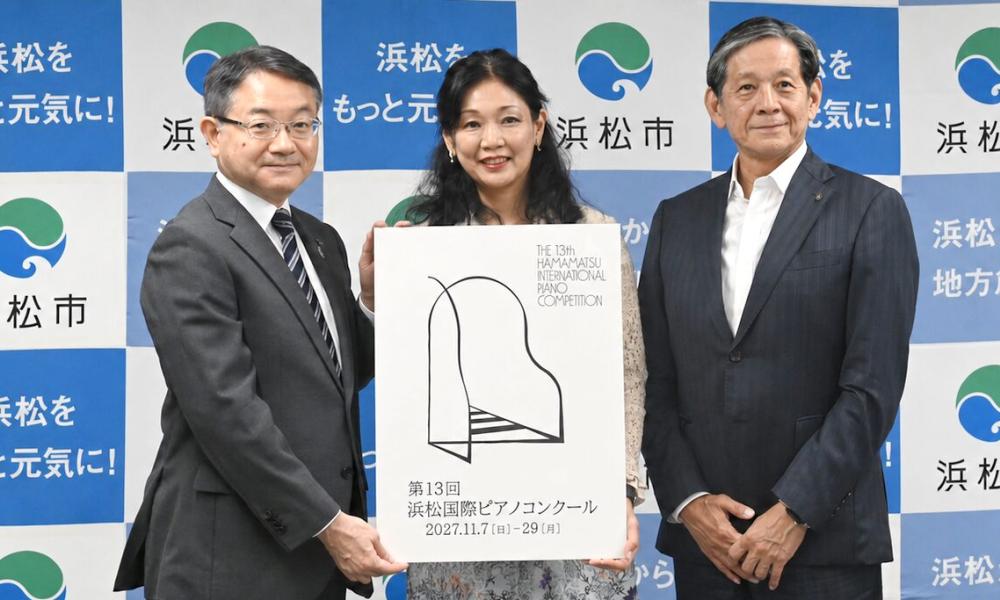
Momo Kodama with Yusuke Nakano, Mayor of Hamamatsu City, and Tayuka Nakata, Rep. Director of the Hamamatsu Cultural Foundation. ©HIPIC

What makes Hamamatsu special among international competitions, from the inside?

First, the human aspect. The competition is organized by the city of Hamamatsu and its Cultural Foundation, and they form a truly wonderful team—very professional, but also very warm. In a context where everyone is under pressure, that human dimension is essential. I felt it strongly when I served on the jury last time, and it is something I dearly want to preserve. 

Second, the audience. Hamamatsu is a UNESCO Creative City of Music for a reason. From the very first round, the halls are full. People line up, they study the big photo boards that show who has advanced, they collect CDs from all rounds. They follow every pianist, every stage. It is highly organized, very Japanese in the best sense—lots of details, lots of care—but above all, it reflects genuine curiosity and devotion. 

Third, the host‑family system. This is very unusual in Japan, where such structures are not common. In Hamamatsu there are actually more volunteer host families than the competition can accommodate. For participants who don’t advance, it means they can stay a bit longer, experience everyday life, give small concerts at schools, and slowly come down from the emotional high of the competition. That transition time—after intense preparation and adrenaline—is extremely valuable.

Hamamatsu also has a strong reputation within Japan. How do you see its international impact, and what is being done to support winners after the competition?

Within Japan, Hamamatsu is already considered very prestigious, and many past prize winners continue to return regularly. They play in some of the country’s best halls with excellent orchestras and conductors. Over three years, they can build a loyal following there. 

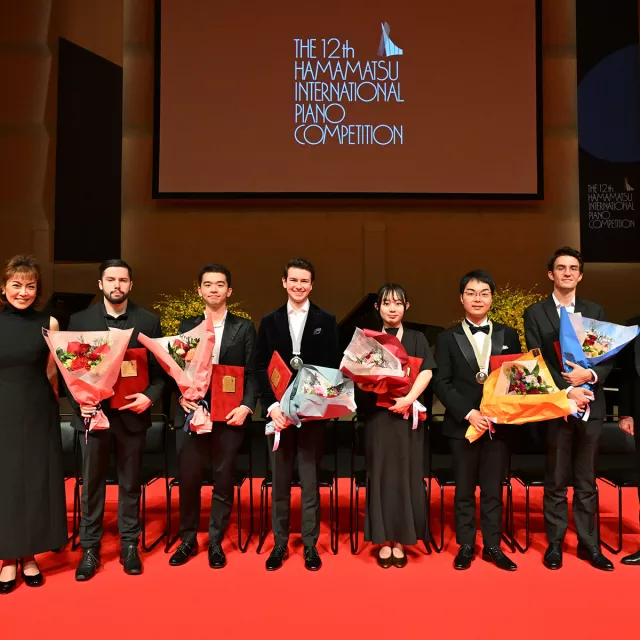
Internationally, visibility is also growing. After the last edition, there were articles in major international magazines in the UK, for example, and the first‑prize winner had a London debut and a recording with a well‑known label. For the next edition, we are planning further engagements in Europe—in France, Germany, possibly Lithuania—and there will be an internationally promoted CD. 

In addition, we are working with management to support the first‑prize winner for two or three years, depending on individual needs. Not every winner already has an agent, so this guidance can be crucial. And of course, other prize winners are also invited back to Japan for concerts, not just the first. 

The goal is that Hamamatsu is not just an isolated event every three years, but the beginning—or continuation—of a real artistic journey.

You mentioned that the repertoire will now include violin sonatas. Why this change, and what does it say about your vision for the competition?

From the third round onward, we now include violin sonatas, performed with invited violinists of roughly the same age as the pianists. This reflects the idea that we are not only looking for virtuosos, but for complete musicians who can listen, react and shape a dialogue. Chamber music reveals many aspects of artistry that a solo program alone may not show. 

There is also a symbolic dimension. Hamamatsu is a UNESCO City, and we are exploring connections with other “music cities.” For example, Hannover—another UNESCO music city—hosts its own major violin competition. We are discussing possibilities for creating bridges: perhaps inviting a prize‑winning violinist from Hanover to play in Hamamatsu, or sending a Hamamatsu laureate there. These exchanges can open doors in unexpected ways.

How did you shape the jury, and what kind of perspectives did you want represented?

I wanted a jury composed not only of great pianists and teachers, but of people who have experienced music from several angles. All of them are artists at heart—they have studied, performed, lived the life of a musician—but many have gone on to become artistic directors, festival organizers, artistic advisers to orchestras, or recording producers. 

This mixture of generations and roles gives a broader view of what a young pianist might need to build a life in music today—not only how they play a fugue, but how they might fit into festivals, orchestral seasons, recording projects. Encounters with such people can be just as important as the prize itself.

Momo Kodama ©L. Kaneko

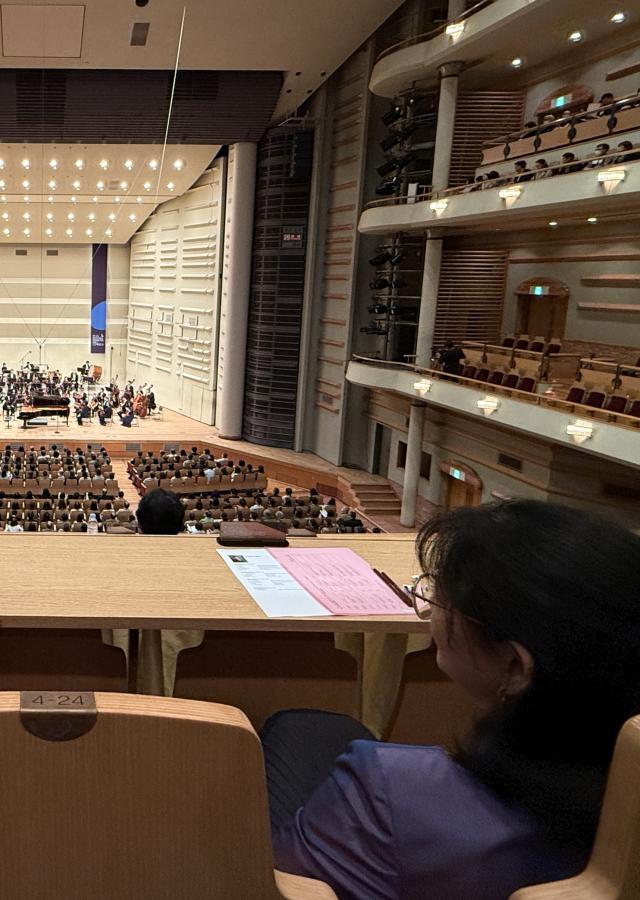
Jury's view: Momo Kodama at the 2024 Hamamatsu Intl. Piano Competition

What is your ideal Hamamatsu winner? Are you looking for a fully formed artist, ready to go on tour, or for someone with great potential still to be developed?

Ideally, both. Given the opportunities that open up after Hamamatsu—concerts in Japan and abroad, recordings, visibility—I think it is fair to expect that the winner already has a certain repertoire and is ready to step onto professional stages without cancelling everything to “study for five more years.” If that is what someone needs, it may be better to wait before entering. 

At the same time, no artist is ever “finished.” Even someone like Martha Argerich, who has played the Prokofiev concertos countless times, continues to search and develop. So I hope we can recognize not only present achievement but also future potential: authenticity, a deep engagement with the score, an individual voice that can grow over time. 

In an ideal case, the jury feels that this person is very much themselves on stage, and that there is still room for them to blossom. We cannot predict careers—no famous conductor or jury member can—but we can sense when someone carries a strong inner necessity to make music.

Pre‑selection has become a huge task for major competitions. How will Hamamatsu handle the large number of video applications while remaining fair?

This is something we are working on very seriously. Last time there were more than 600 applications, and we expect at least as many this time. Previously, four juries watched the videos; some of us, including myself, also reviewed them independently when we could not be in Tokyo for the group sessions. 

For the next edition, we are considering a two‑stage process, with several groups of jurors so that each person can maintain focus and avoid fatigue. I will participate in all groups as Chairperson to ensure a consistent standard. Last time, applicants were completely anonymous to us—no names, ages or nationalities, only numbers. That led to some surprises later when people asked why certain well‑known names did not pass; we genuinely did not know who they were. 


If you were talking directly to a young pianist choosing between competitions in Brussels, Warsaw, Fort Worth… and Hamamatsu, what would you say? Why Hamamatsu?

If I were speaking to a young pianist choosing between Brussels, Warsaw, Fort Worth, and Hamamatsu, I would begin by saying that each of these competitions represents a remarkable tradition. They differ in history, repertoire, and artistic perspective, and each can offer something meaningful at a particular moment in your development. The real question is not which is “better,” but which aligns with who you are right now as an artist.

What I believe is that Hamamatsu can leave a lasting imprint on your musical life—whether you win a prize or not. It is a demanding competition, but also an open one. After the video stage, you have real freedom to choose a program that reflects your artistic identity.

You will play for a jury that listens from multiple perspectives, and for an audience that is deeply engaged from the very first round. And you will experience a unique environment: Hamamatsu is a city shaped by music, home to great piano makers , where the connection to the instrument is part of daily life.

At the same time, the competition is known for its atmosphere—serious, but respectful—and for the strong support it offers to participants, both artistically and practically.

So rather than placing it in opposition to other great competitions, I would simply say: if you are looking for a place where high standards meet genuine openness to individuality, Hamamatsu can be a deeply meaningful experience.

Momo Kodama ©Marco Borggreve

Any final words for potential applicants to the 13th Hamamatsu International Piano Competition?

Choose your repertoire carefully so that it speaks for you. Prepare with dedication, but also with curiosity and joy. When you come to Hamamatsu, you won’t only be playing “for a jury”—you will be playing for a city that truly loves the piano, and for people who are eager to discover you. 

I wish all applicants good health, good focus and, above all, the happiness of making music. If you carry that with you, whatever the result, you will gain something important.


Born in Osaka and raised in Europe, pianist Momo Kodama is renowned for her refined touch and luminous, poetic interpretations. A laureate of major competitions including the ARD International Music Competition in Munich, she has appeared with leading orchestras and at major venues across Europe, Asia and the Americas. Particularly admired for her performances of French and contemporary repertoire, she has premiered numerous works and built close collaborations with composers such as Toshio Hosokawa and Jörg Widmann. Alongside her international concert career, she teaches and serves on juries worldwide. In 2026 she was appointed Chairperson of the Jury of the Hamamatsu International Piano Competition.


©WFIMC2026/FR