NEW ORLEANS, USA

Looking for inspiration in life

2026 New Orleans winner Evgeny Konnov shares the insights he's gained through his competition journey

WFIMC: Could you tell us a bit about yourself?
Evgeny Konnov: My name is Evgeny Konnov. Im a concert pianist based in Augsburg, Bavaria, and I also teach at the university there. Right now, Im preparing for a tour in the United States in about three weeks. Ill perform solo recitals, play Rachmaninoffs Second Piano Concerto with the Louisiana Philharmonic Orchestra, and give masterclasses in New Orleans. I still take part in competitions, although at 33 there are fewer opportunities left. Many competitions have an age limit, usually around 30 or 32. So New Orleans was one of the last competitions for me, which makes winning it even more meaningful.

You live in Augsburg. How do you like it there?
I really like Augsburg. Its a beautiful city, large enough to have everything you need, but still small enough to feel comfortable. Ive lived here since 2013, almost 13 years now. Before that, I lived in Moscow, which is a completely different experience. Augsburg feels quieter and more intimate. It also has a strong musical history. Leopold Mozart was born and lived here for most of his life, and I live only a couple of minutes from his former home. Sometimes its nice to think about that connection. I could imagine staying here for the rest of my life. I really feel at home in Augsburg.

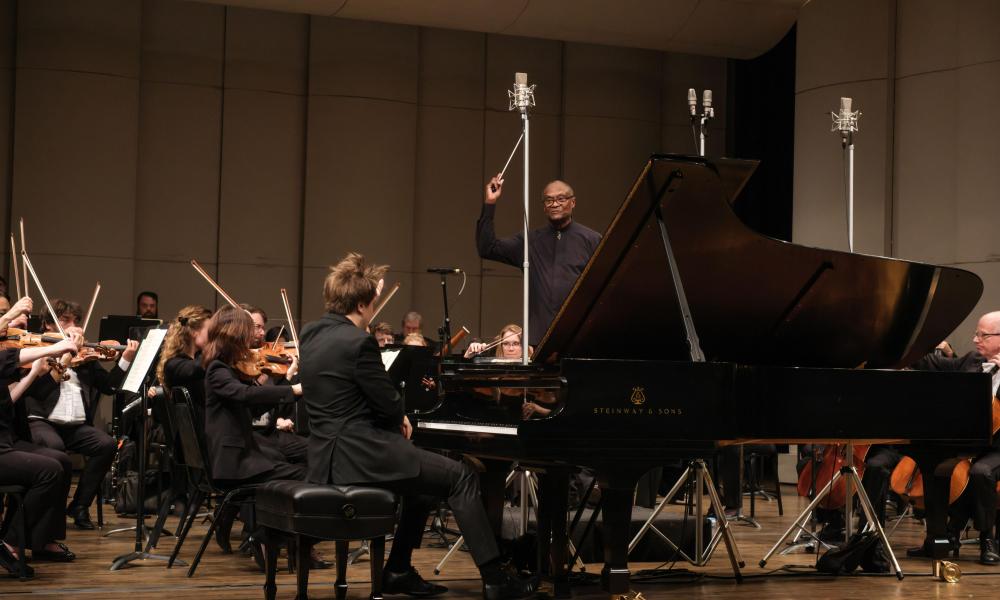
Evgeny Konnov, performing in the Final round of the 2026 New Orleans Piano Competition

Tell us a bit about the New Orleans Competitoin. Was it your first time in New Orleans?
Yes. It was my first time in New Orleans and also my first time in the United States. Visiting America had been a dream of mine since childhood. I grew up watching American movies, so actually being there felt almost as incredible as going into space. I never really imagined that I would visit the United States. And New Orleans lived up to my expectations. Its a fascinating city with a rich history and a very strong musical identity. The jazz tradition was especially inspiring for me. I listened to a lot of jazz while I was there and had the chance to visit some jazz places after the competition.

How did you feel there during the competition? Was it very exciting, or was there a lot of stress?
Of course, competitions are always stressful, but somehow I had a very good feeling in New Orleans. I had a feeling that things were going my way from the very beginning. Even small details can matter. Before the competition, I really wanted to draw number 9 or 10. Somehow, I drew number 9 and was very happy about that. Then, before the final, we had another draw, and my dream was to perform last. Again, I somehow managed to draw the last number. It sounds like a small thing, but when youre in a competition, these details can give you a certain feeling of confidence. 

The organization was wonderful. Everything was well arranged, which allowed me to focus almost entirely on practicing and performing. My host family played a huge role as well. They were incredibly kind, made me feel at home, prepared wonderful food, and gave me the perfect environment to practice. All of these things created a very positive atmosphere. I felt that I could simply concentrate on the music.

Do you have any big memories from the competition?
One of the funniest memories actually happened before the competition had even started. I arrived in New Orleans around 1 A.M., and only a few hours later, at about five, I had to be ready for a live television interview where I also had to play the piano. The funny thing was that the broadcast had only about a ten-second delay. I remember thinking, If I mess this up, its going to be on television for the whole week.” I was completely jet-lagged, of course, so it wasnt exactly the ideal condition for performing. Afterward, we literally ran to the kitchen to watch the broadcast and see how it had turned out. Looking back, it was actually very funny. It was an interesting feeling because it was literally the beginning of my American experience. Everything felt almost like a dream.

It was the very beginning of your journey at the competition.
Yes. They wanted to introduce the competition and the participants, so they asked me how I felt about being in America, what my goals were, and what I wanted to do outside the competition. I said I wanted to visit some sports venues, watch basketball and rugby, eat American burgers, and discover some jazz clubs. In reality, I spent almost all my time practicing, focusing, and reading, so I never made it to a game. But I did manage to visit some jazz places.

They also asked me what I expected from the competition. Of course, I said I wanted to win. But more importantly, I wanted to use that moment to really show myself, to save my energy and give it to the audience through my performance.

Looking back, its interesting to think about those questions now. At that point, simply being selected as one of the 12 semifinalists was already a dream come true. I had wanted to visit America my whole life, and suddenly I was there, taking part in a major competition. Everything that happened afterward felt like an incredible bonus.
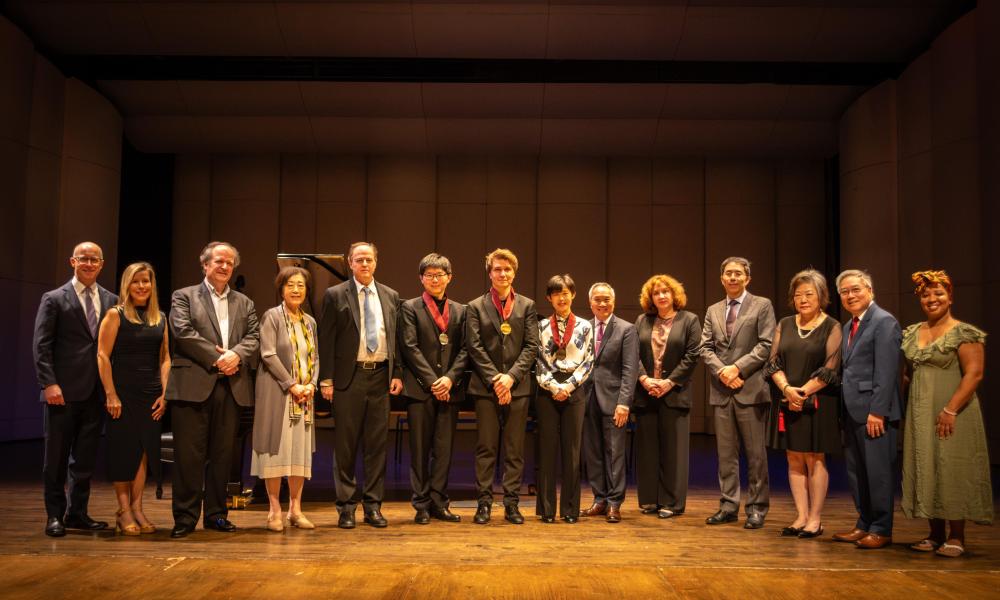
 

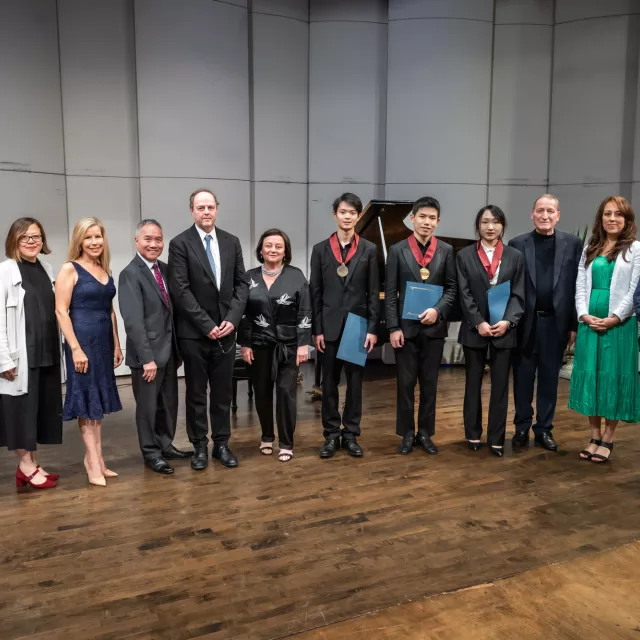
After the award ceremony of the New Orléans Competition

There might be many difficulties for competitors coming from another country, especially from so far away. Did you feel any difficulties during the competition?
The biggest challenge was probably the time difference. I knew that if I arrived in America and had to perform immediately, it could be difficult for my body and mind to adjust. So I prepared for it in advance. At home in Europe, I started practicing very late at night, sometimes until eight in the morning. 8 A.M. in the morning in Europe is around 1 A.M. in the morning in New Orleans, so I was trying to shift my routine before I even arrived. For roughly ten or eleven days, I was practicing through the night. It was a little crazy, but I think it worked. When I arrived in New Orleans, my body was already much more prepared for the schedule.

Why did you choose to take part in the New Orleans competition?
I had always dreamed of visiting America, and I already knew that the New Orleans competition had a very good reputation. So for me, it was a natural choice: it was an important competition, and it was in America. I was very happy when I found out that I had passed the video selection. There were around 240 applicants, and only 12 pianists were selected, so becoming a semifinalist was already a big moment for me. Then I had to get an American visa, which was quite stressful because it didnt seem like an easy process. Fortunately, the organizers were extremely supportive. They gave me a very good invitation and helped me with the process, which made a big difference. So I didnt have to think too much about it: a major competition in America, with no age limit. Two things that were very important to me came together.

You have won many competitions. Did you prepare differently this time for the New Orleans competition, or did you follow any particular routines from competitions you had won before?
I prepared differently this time. My main focus was inspiration. Of course, we all work on technique, memorization, phrasing, form, and all the details that are necessary to perform at a high level. But I wanted to do something beyond that. I wanted to inspire myself. So I read books, looked at paintings by great artists, listened to different kinds of music, and spent time listening to great pianists and symphonic music. I wanted to bring something of all these experiences into my playing.

My previous competition experience definitely helped me. After winning several competitions, you understand better how to manage your time and energy, how to prepare for different rounds, and how to save something for the final. But there is another side to it. When you have won competitions before, people have certain expectations of you. You can feel pressure to prove that you are still at the same level. So there are really two sides: experience gives you confidence, but it can also create expectations.

You were focusing on inspiring yourself.
Exactly. Today, simply playing the piano very well is not enough anymore. There are so many musicians who have an extraordinary level of technique and knowledge. We all know how to work on phrasing, form, and technical details. But in a major competition or festival, I think you also need to bring something personal to the stage, something that makes the performance feel unique. For me, inspiration became the most important thing. I felt that this was a moment happening for the first time, and perhaps also for the last time.

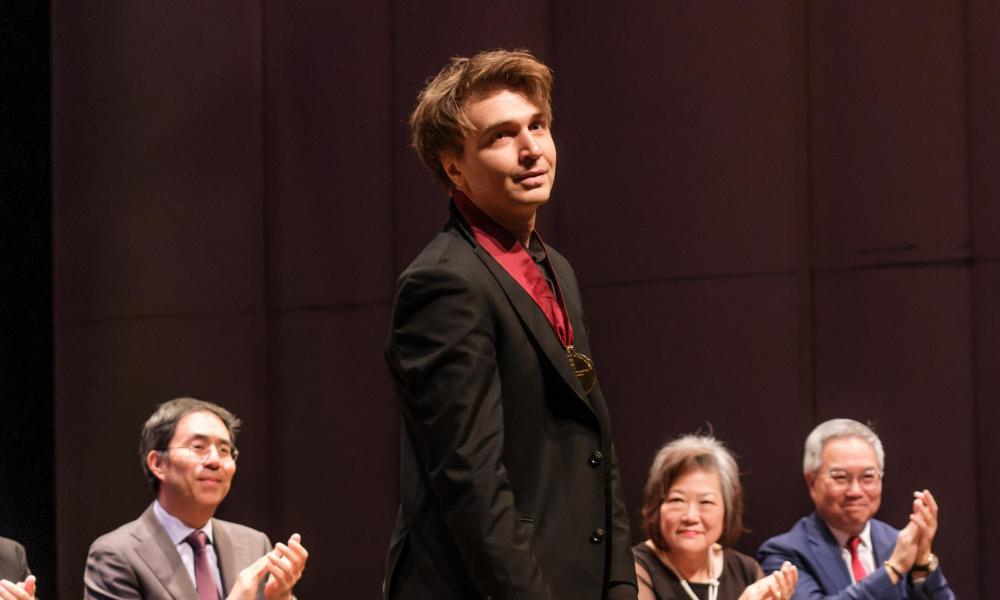
During the award ceremony at the New Orléans Competition

Do you have any particular reasons for choosing the repertoire?
I usually choose repertoire that I feel a strong connection with. I want to play music that genuinely speaks to me and through which I can express something personal. One of the advantages of the New Orleans competition was that we had a lot of freedom in choosing our repertoire. Apart from the commissioned piece, we could decide what we wanted to play. Some of the repertoire I performed there was completely new for me in a competition setting. For example, I played Medtners Fairy Tales for the first time in a competition. But the biggest decision was the final, when I chose Rachmaninoffs Third Piano Concerto. I had performed it with an orchestra before, but I had never played it in a competition. It was a risk. In the beginning, I wasnt even sure whether I wanted to choose such a difficult piece for a final. But I felt that it represented me very well at that particular moment, and in the end, I think it was the right decision.

Will you play the same pieces for the prize winner's tour?
As the first-prize winner, Ill be performing Rachmaninoffs Second Concerto in September. The second-prize winner is scheduled to play Beethovens Fourth in 2027, and the third-prize winner will play Clara Schumanns Concerto. What I particularly appreciate about the New Orleans competition is that they give the winners real opportunities beyond the competition itself. There are concerts and masterclasses in the United States, and there is also a first-prize recording with Steinway in New York. So Im very grateful, but I also have a lot of work ahead of me now.

Which city will you go to for the concerts this time?
For this American tour, Ill be returning to New Orleans, and there are also several concerts and masterclasses planned for the future. Some of the dates still need to be confirmed because I also have concerts in Germany and elsewhere in Europe. We need to find a schedule that works for everything. There are already some concerts planned for July 2027, including performances and masterclasses, so Im very excited to see how this American chapter develops.

How many days are you going to stay in New Orleans next time?
This time Ill stay for about a week because I have commitments in Germany. I would love to stay longer. During the competition, I didnt have much time to experience the city because I was practicing almost constantly. This time Ill have a little more freedom, but Ill still have to fly back to Germany. Im sure Ill return to New Orleans again, though, and hopefully next time Ill be able to stay much longer.

Visiting after the competition without the stress.
Absolutely. Its very different when you can experience a city without having a competition hanging over you. After the competition, I finally managed to visit some jazz places in New Orleans. It was nice to discover that side of the city. Ive had similar experiences with other competitions. After the UNISA Competition in South Africa, for example, I had only one day after the final, but we managed to go on safari before my flight. I had performed late the night before, so I was exhausted, but it was such a memorable experience. Ive always been lucky with my host families. They wanted to show me something about their city or their country, and those experiences have become an important part of my memories from competitions.


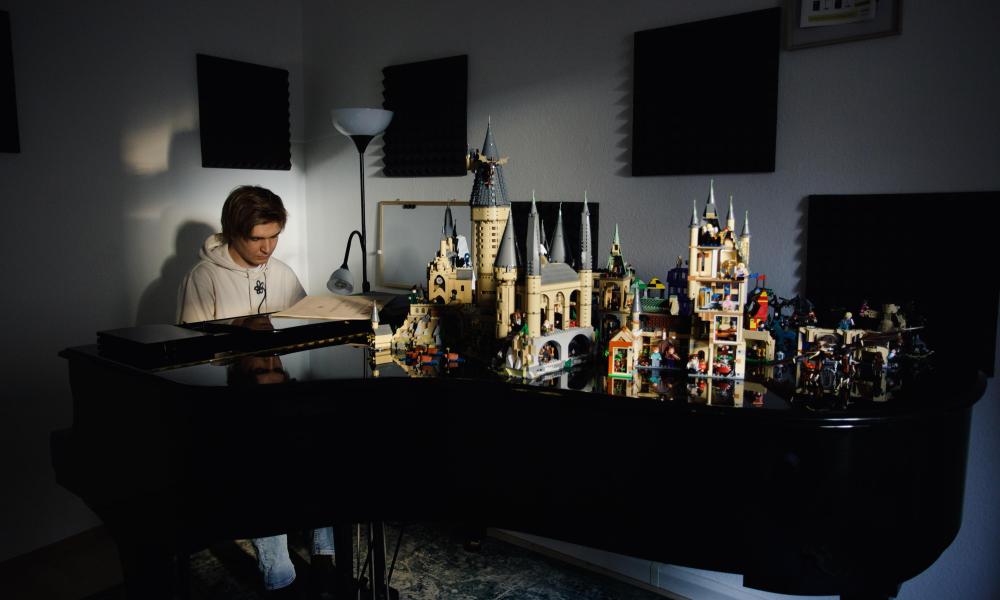
Evgeny Konnov, performing at the UNISA International Music Competition in 2020

Do you find any differences between the competitions?
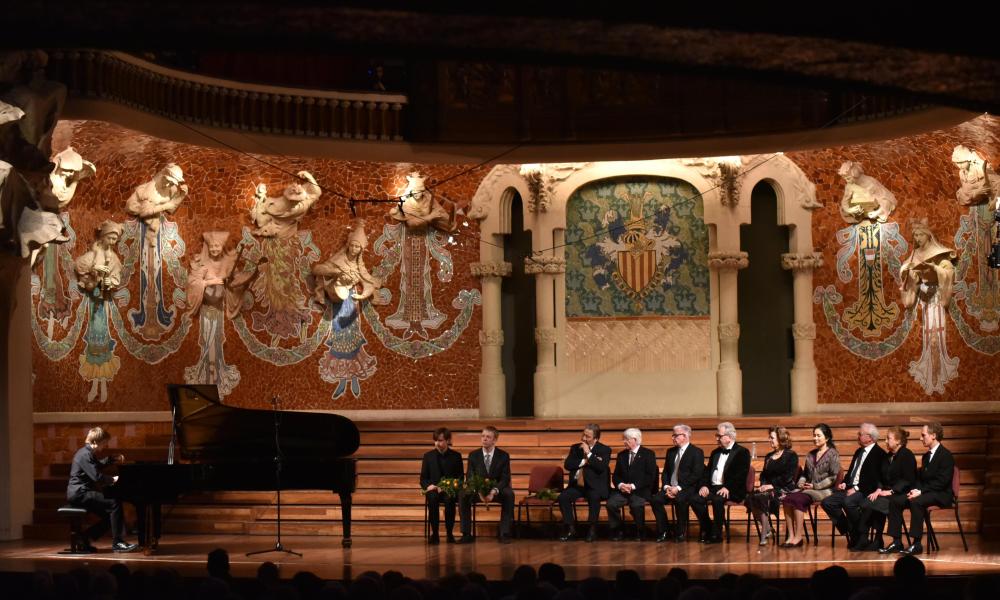
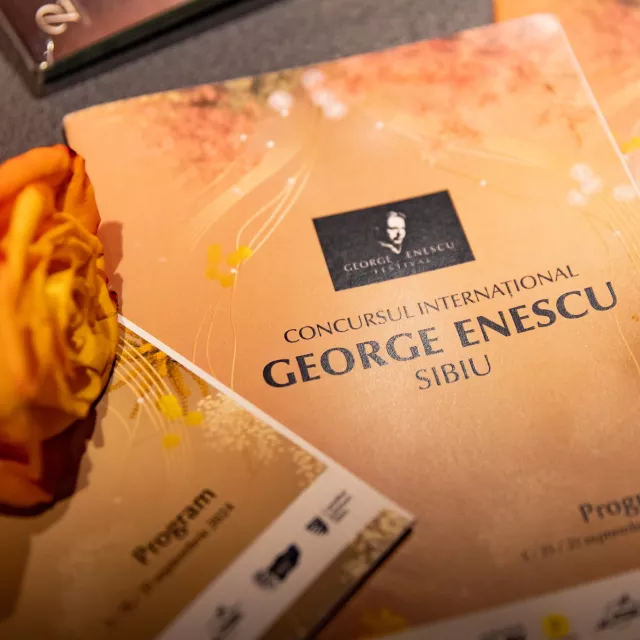
Definitely. Every competition feels different, and I think part of that comes from the country, the city, the people, and the atmosphere. For example, my first major competition victory was the Maria Canals Competition in Barcelona. I was 27 at the time, eight years younger than I am now, and I had completely different things on my mind. There was so much energy and excitement, and the Spanish and Catalan atmosphere influenced me as well. Interestingly, I played some of the same repertoire there that I later played in New Orleans, including Rachmaninoffs Second Sonata. But the experience was completely different. Playing the same piece in Spain, America, or Romania can feel like playing a different piece. Im very grateful for all the competitions Ive taken part in. Maria Canals gave me many opportunities to perform in Spain with important orchestras. UNISA allowed me to experience South Africa and perform there. And the George Enescu Competition brought me to Bucharest and the Enescu Festival, which was one of the great memories of my recent career. Now America has opened another chapter for me, and Im very curious to see where it will lead.

Which competition was the best for you?
Thats difficult to answer because each one has a different place in my life. If I think about the memories, Maria Canals probably has the most special place because it was the first major competition I won, and it marked the beginning of an important period in my career. UNISA is very special because of the experience of South Africa. George Enescu is connected with Bucharest and the festival, which was an incredible experience. And now New Orleans has become another major memory for me because it was my first experience in America and also the beginning of this new professional chapter. These four competitions probably represent the biggest milestones in my competition career.

You experience a lot and feel differently in each place.
Exactly. When I arrived in America, I thought, Okay, I already have so much experience from competitions. I know how this works.” But at the same time, I felt like a child again. Everything was new: the country, the city, the people, even the smallest things. And I think that feeling was very important for me. It brought back a sense of curiosity and inspiration, and that ultimately helped me on stage.

During the Maria Canals Competition in 2018

Do you have any recipes to deal with stress before going on stage? Or do you have any routines?
Honestly, I still get very nervous before going on stage. Even after many concerts and competitions, that hasnt disappeared. But I think the adrenaline is also part of what helps me perform. It gives me energy and keeps me focused. I never feel bored on stage, although mentally it can still be quite difficult. I do have a few routines. I need to sleep for at least an hour during the day before an important performance. Im also quite careful about what I eat because it can be difficult to eat properly before going on stage. Pasta works very well for me. Sushi with avocado is another good option. And I usually have an energy drink before performing. I know its probably not the healthiest routine, but concerts arent every day, so I allow myself that little ritual.

Does routine work for you when you play in different situations?
There are definitely things that need to remain consistent: technical preparation, memorization, understanding the structure of the music. But the artistic side cant really be reduced to a routine. Every competition and every performance requires something slightly different. For example, in New Orleans, my preparation was very much about inspiration. I wanted to experience everything around me and bring those emotions onto the stage. Of course, playing the right notes is important. But ultimately, the beauty of the music has to come first. That was what mattered most to me.


You are a teacher as well- how does teaching inspire or affect your performance?
Teaching inspires me enormously because every time I teach, I also teach myself. When I explain something to a student — how to use the pedal, how to phrase a passage, how to shape a musical idea — I sometimes realize that I have been doing the same thing intuitively without ever really asking myself why. Teaching forces me to think about those things consciously. I also really enjoy the discussions with students. They have their own ideas, their own personalities, and sometimes they make you question things that you thought were obvious. Classical Viennese music, for example, has its own rules. But one of the beautiful things about music is that it can also be a little crazy. You have rules, but sometimes you have to break them. There is always a discussion, and I love that. Teaching makes me think differently and, in turn, inspires me to play differently.

Do you have any goals for your life after the competition?
Right now, Im very excited about this new American phase of my career. Over the next few years, Ill have opportunities to perform in the United States, and that gives me a lot of motivation to work on new repertoire, new concertos, and new solo programs. I also have a professional recording in New York with Steinway, which is another very important opportunity for me. At the same time, I want to continue teaching and I would like to keep a balance between teaching, practicing and performing. For me, its a very good balance at the moment. I want to continue performing in America and Europe, teaching beautiful music, and sharing what Ive learned with younger musicians.

Do you have any messages for young artists?
I would say: look for inspiration in life. Find it in the smallest things. The sun outside, a beautiful painting, a book, a conversation, music that moves you. Anything that makes you feel something. I think this is one of the most important things about being a musician and, ultimately, about becoming a great pianist. Music is not simply a job. It becomes part of your life. The wonderful thing about being a musician is that you have to keep developing your personality every day. You have to grow as a person, not only as a pianist. We dont just spend our lives moving our fingers and practicing technical exercises. We need to experience the world, to remain curious, and to notice its beauty. I believe that the more you grow as a person, the more you have to give as a musician.

Evgeny Konnov, born in 1992 in Chirchiq, Uzbekistan, studied with Natalia Suslova, Georg Friedrich Schenk, Evgenia Rubinova, Jan Gottlieb Jiracek von Arnim, Albert Mamriev, and Christoph Hammer at leading institutions in Moscow, Düsseldorf, Vienna, Hannover, and Augsburg.

He is the winner of numerous international competitions, including First Prize at the 18th Compositores de España International Piano Competition in Madrid (2017), First Prize and the Public Prize at the 64th Maria Canals International Music Competition in Barcelona (2018), First Prize and the Public Prize at the 31st Ettore Pozzoli International Piano Competition in Seregno (2019), First Prize at the 14th Unisa International Piano Competition in Pretoria (2020), Second Prize at the Santa Cecilia International Competition in Porto (2022), Third Prize at the George Enescu International Competition in Bucharest (2024), and First Prize at the New Orleans International Piano Competition in the USA (2026).

He has performed at leading venues around the world, including the National Auditorium of Music in Madrid, the Musikverein in Vienna, the Palau de la Música Catalana in Barcelona, the Great Hall of the Moscow Conservatory, the Romanian Athenaeum in Bucharest, Salle Cortot in Paris and Casa da Música in Porto. He has collaborated with orchestras such as the Orquesta Sinfónica de Tenerife, Orquesta Sinfónica de Madrid, Orquestra Filarmonica Portuguesa, Orquesta Sinfónica de Bilbao, Louisiana Philharmonic Orchestra, and Johannesburg Philharmonic Orchestra.


© WFIMC 2026/ HS