Barcelona, Spain

Barcelona in Spring: a Piano Capital

The 71st Maria Canals International Piano Competition in Barcelona 2026 just ended after ten days of memorable music at the Palau de la Música Catalana

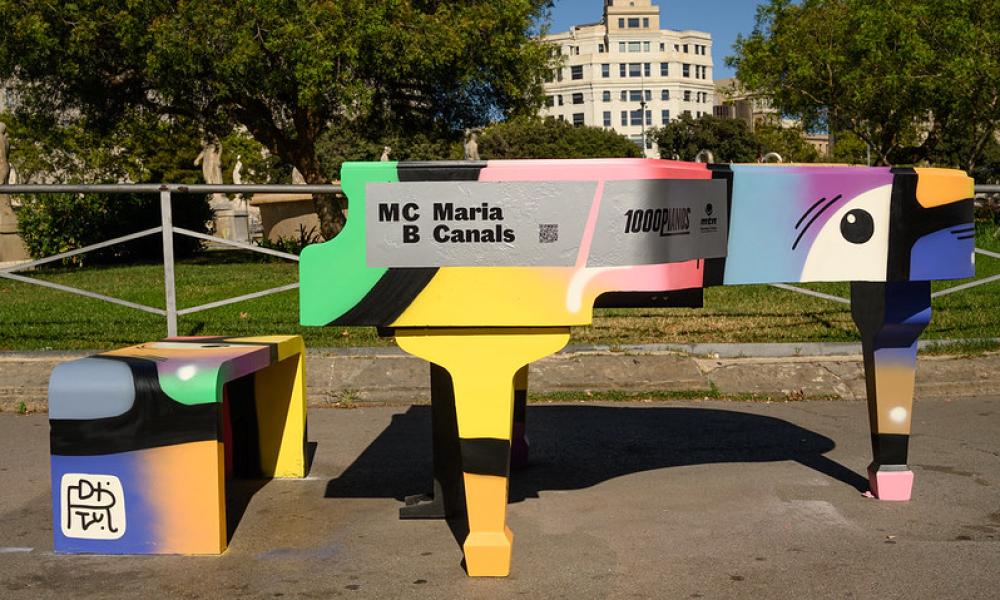
When Maria Canals i Cendrós (1914–2010) — driven by her passion for the piano — promoted landmark projects such as the Ars Nova Music Academy and the prestigious Maria Canals International Music Competition in Barcelona, she likely did not foresee that her vocation for teaching young musicians, her commitment to public service, and her love for Barcelona would inspire a wide range of activities aimed at breaking down the social, cultural, and ideological barriers that limit access to music, especially classical music. The OFF Competition runs year‑round and presents initiatives that promote music access as essential to personal development: new educational programs, community musical activities in diverse venues, music classes for hospitalized children and people with disabilities, permanent pianos in public spaces, open recording sessions for beginners and professionals, and masterclasses given by Competition contestants.

Each March, as spring blooms, the city fills with the sound of pianos played by contestants across every neighborhood before they gather at the Palau de la Música Catalana, which has hosted the Maria Canals Competition since its founding in 1954.


Permanent pianos in the streets of Barcelona

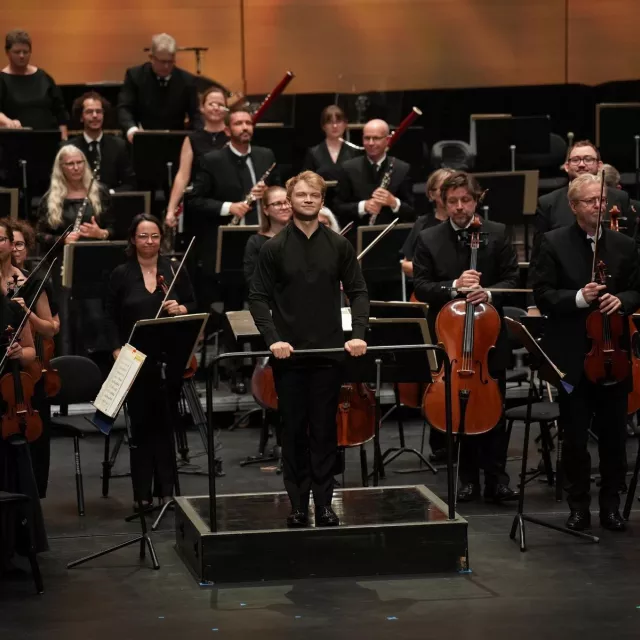
While they were in town for about ten days, our three young finalists gathered for the Grand Finale and charmed an enthusiastic audience that cheered them on and shared their excitement. They were accompanied by the JONC (Jove Orquestra Nacional de Catalunya), an ensemble of musicians aged 19–25 that provides professional orchestral training and offers the public music of the highest quality, under the direction of Manuel Valdivieso.

Interestingly, the program rules required that at least two works by Spanish composers — including a minimum of one by a Catalan composer — be included in the audition repertoire. The commissioned piece, Corpi Liberi, was assigned to Anna Bofill. Other works by Mompou, Blancafort, Carlos Bianchini and J. A. Medina were also featured. In addition, at least one work by a female composer had to be performed during the various rounds.

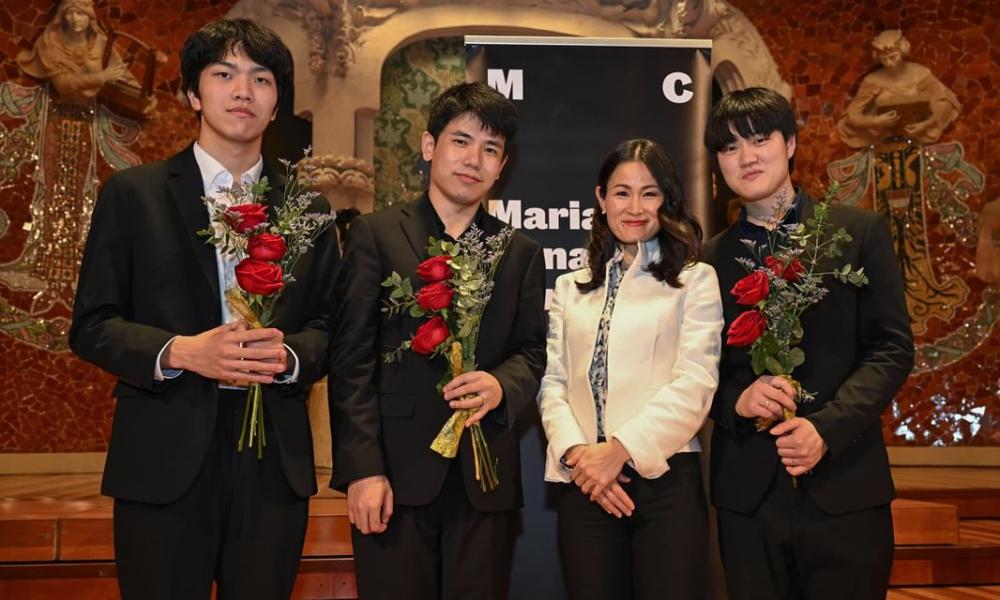
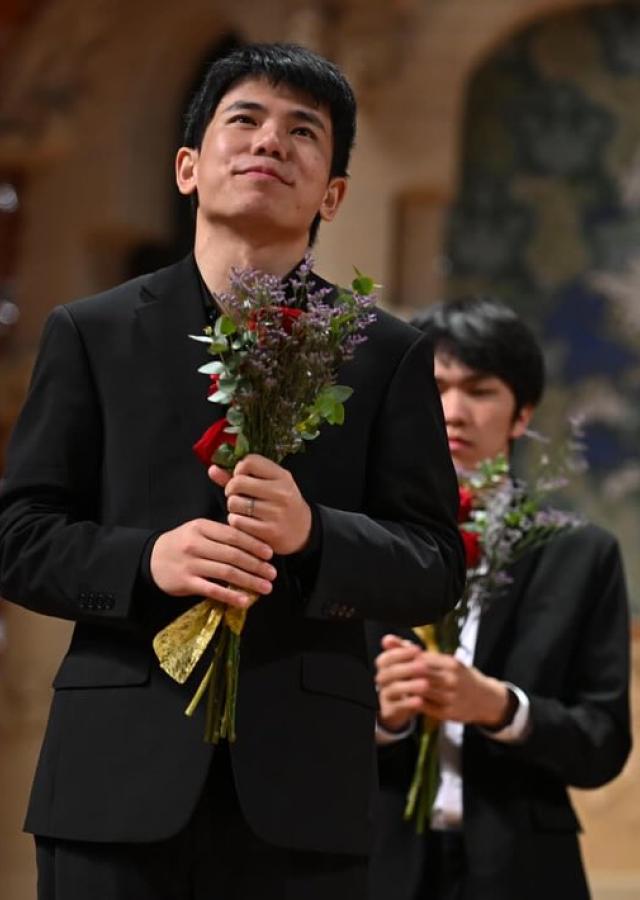
The jury awarded 28‑year‑old pianist Zhu Wang the First Prize (Fundació Occident Prize); he was praised for his rendition of Rachmaninoff’s Concerto No. 2. Junho Cha, who played Prokofiev No. 3 in the final round, received the Second Prize (Maria Font de Carulla Foundation), while Zhiqiao Zhang was granted Third Prize (Vila Casas Foundation) for his performance of Rachmaninoff No. 3. Junho Cha also received the Palau de la Música Prize, and Zhu Wang won both the Audience and Student Jury Awards.
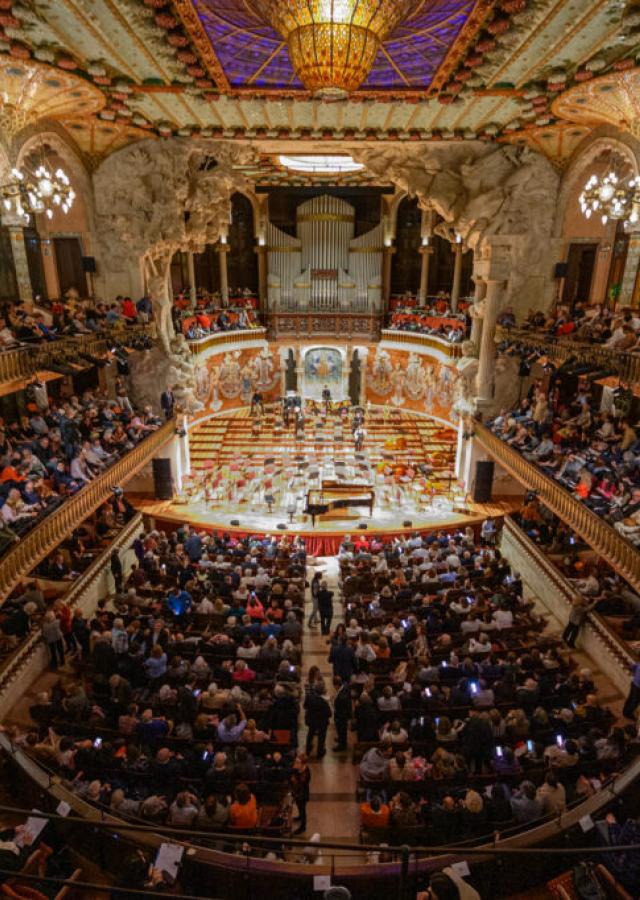
The Palau de la Música Catalana

1st Prize winner, Zhu Wang

Laureates: 
First Prize: Zhu Wang
Second Prize: Junho Cha
Third Prize: Zhiqiao Zhang

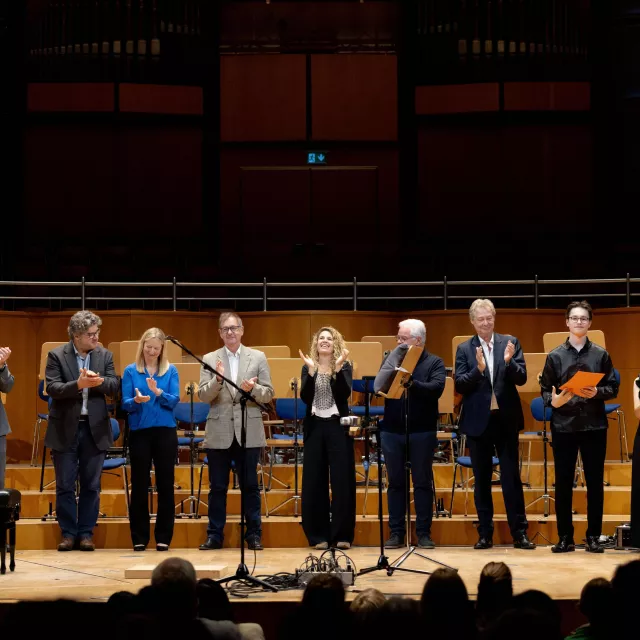
Jury: 
Yukiko Akagi, Gustavo Díaz-Jerez, Billy Eidi, Sira Hernández,  Pascal Le-Corre, Alexandre Moutouzkine, Pavel Nersessian, J.Y. Song, Catherine Vickers

Artists: 
JONC (Jove Orquesta Nacional de Catalunya), Manuel Valdivieso conductor


Junho Cha, 2nd Prize, Zhu Wang, 1st Prize and Zhiqiao Zhang, Third Prize