BUCHAREST, ROMANIA

A New Generation Takes the Stage

BU tutile

With a record field of entries, an historic violin victory and outstanding laureates across four categories, the 2026 George Enescu International Competition brought performance, composition and artistic development together in Bucharest.

For nearly a month, Bucharest became a meeting place for emerging musicians, celebrated performers and composers exploring the future of classical music. Held from 23 August to 19 September under the theme “In Pursuit of Excellence”, the 20th George Enescu International Competition combined the intensity of competitive performance with a broader commitment to education, collaboration and the development of lasting artistic careers.
Founded in 1958, the Competition welcomed a record 819 entries from 58 countries and territories in 2026: 756 for its competitive sections and 63 for its masterclasses. Its four categories—Cello, Violin, Piano and Composition—offered distinct perspectives on musical achievement, bringing interpretative insight and contemporary creation into the same artistic conversation.

The opening gala established that connection between generations. The three First Prize winners of the 2024 edition—violinist Mayumi Kanagawa, cellist Yo Kitamura and pianist Roman Lopatynskyi—returned for a programme featuring Dan Dediu’s Brahmsodia, a triple concerto for violin, cello, piano and orchestra. Alongside it were George Enescu’s Symphony No. 1 in E-flat major and The Stone and the Ivy by Diego Santamaria, recipient of the Competition’s 2024 Originality Award. The evening also introduced the first laureates of the anniversary edition through the Composition awards ceremony.
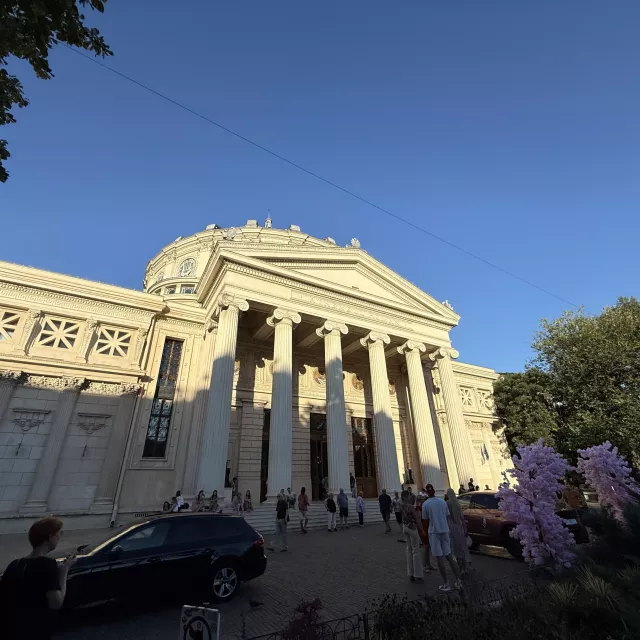
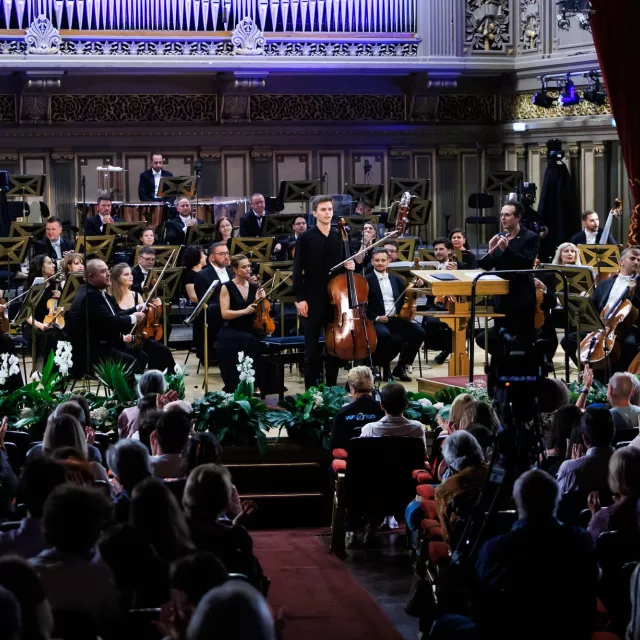
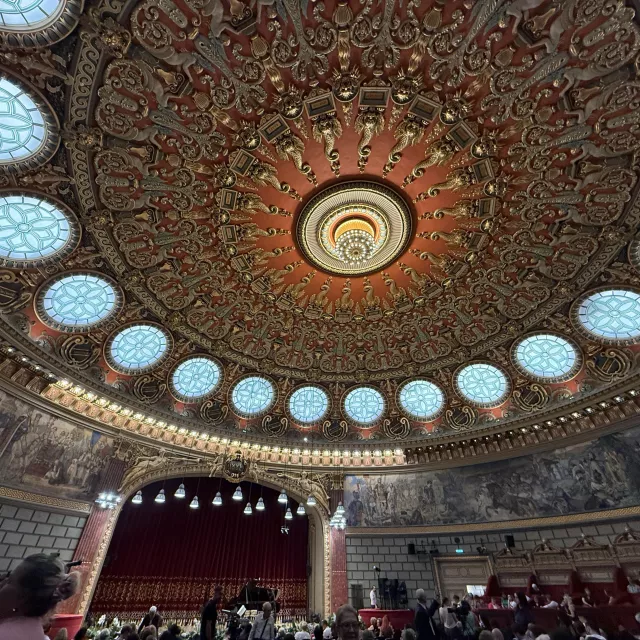
Across the following weeks, six major symphonic concerts, six chamber recitals and a programme of masterclasses placed the competitive rounds within a wider musical setting. At the Romanian Athenaeum, the three instrumental finals brought that journey into focus, culminating in performances with leading orchestras and, in the Violin Section, a milestone in the Competition’s history.

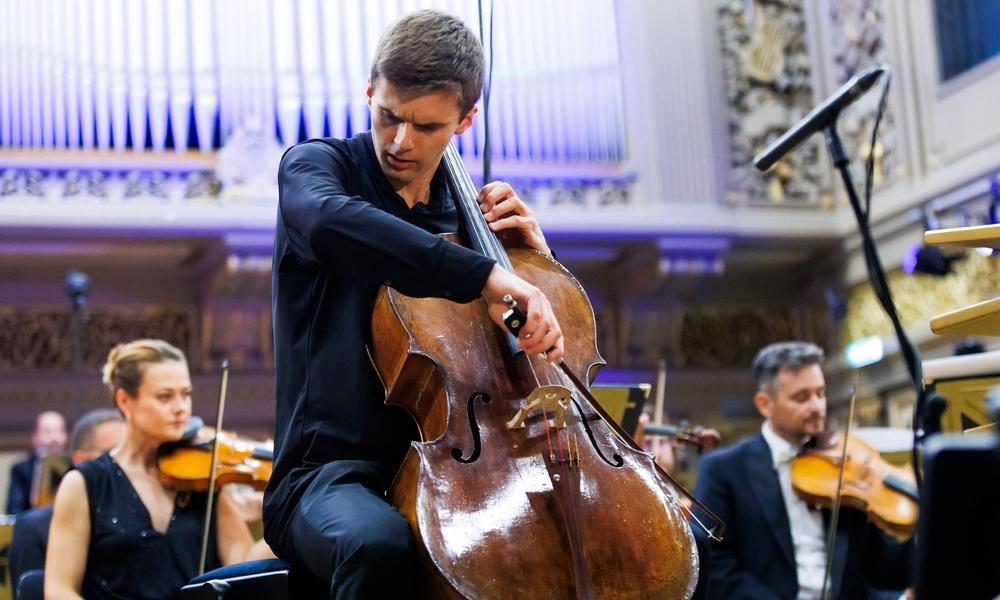
Samuel Niederhauser ©Cristina Tanase

Cello: Interpretative Range


The Cello Section concluded on 7 September with three contrasting artistic personalities performing alongside the Romanian Radio National Orchestra under Case Scaglione. Samuel Niederhauser chose Shostakovich’s Cello Concerto No. 1 in E-flat major, Op. 107, while Joshua Kováč and Sanghyeok Park each performed Dvořák’s Cello Concerto in B minor, Op. 104.
The jury, chaired by Arto Noras, awarded First Prize to Niederhauser, Second Prize to Kováč and Third Prize to Park. Niederhauser also received the Audience Prize and the award for the best performance of the imposed work, Malika Kishino’s Waves of Gravel—recognition spanning his contemporary repertoire, concerto performance and connection with listeners.
For Noras, the Competition’s importance lies particularly in its educational value. Preparing extensive programmes requires young musicians to develop not only technical command and interpretative range, but also an understanding of how to pace themselves and respond to pressure. The process, he emphasised, provides a platform for identifying both artistic strengths and areas for further development.
Alongside Noras, the jury comprised Frans Helmerson, Elena Dubinets, Marin Cazacu, Enrico Dindo, Inbal Segev, Claudio Bohórquez, Dan Prelipcean and Valentin Răduțiu.

It is often said, that a great and attractive music competition must possess three fundamental qualities.
First: The Right Repertoire:
The pieces must serve and benefit the students at their current stage of studies. The competitor’s
teacher must also be convinced, that a long-term focus on refining these specific works is
beneficial for the student at this exact moment.
Second: An Expert Jury:
Competitors and their teachers must be able to trust on the jury’s ability to carry out its duties
with distinction, fairness and wisdom.
Third: A Professional Organization:
The team behind the scenes must operate at the highest level, creating a supportive and serene
environment for the participants so they can succeed in delivering their best possible
performances.
Here at George Enescu Cello Competition I believe these three requirements are fulfilled perfectly.

Arto Noras


Based in Lucerne, 28-year-old Samuel Niederhauser combines an international career as a soloist and chamber musician with his position as Principal Cello of the Lucerne Symphony Orchestra. His Bucharest success adds to distinctions at two major competitions: he was among the laureates of the Queen Elisabeth Competition in 2022 and received Third Prize at the Paulo International Cello Competition in Helsinki in 2023.
At the Enescu Competition, his three awards reflected the breadth of his achievement across the rounds. He performs on a 1690 Carlo Giuseppe Testore cello, provided on loan.
Nineteen-year-old Joshua Kováč, based in Tennessee, arrived in Bucharest with a growing record of competitive and concert successes. In 2025, he won First Prize at both the Johansen International Competition and the Mahler Competition. He was also among the leading prize-winners at the 2025 Irving M. Klein International String Competition and the 2024 Stulberg International String Competition.
His solo appearances have taken him to Carnegie Hall, the Ravinia Festival, Nashville’s Schermerhorn Symphony Center and the Isabella Stewart Gardner Museum in Boston. He has performed twice as a soloist with the Nashville Symphony and has collaborated with the SEEN Chicago Orchestra, Avanti Orchestra, West Michigan Symphony Orchestra and Kinnor Philharmonic. He plays an 1848 Jean-Baptiste Vuillaume cello on loan from a private collection.
Listed as based in Seoul, 21-year-old Sanghyeok Park has already earned distinctions at several major international cello competitions. These include Third Prize at the 17th Tchaikovsky International Competition, Second Prize at the fourth Krzysztof Penderecki International Cello Competition and Second Prize at the Antonio Janigro International Junior Competition.
He also received the Grand Prize at the David Popper International Cello Competition and an Honourable Mention from the jury of the 2025 Prague Spring International Music Competition. After graduating from the Korea National University of Arts, he continued his studies with Ivan Monighetti at the Reina Sofía School of Music in Madrid.
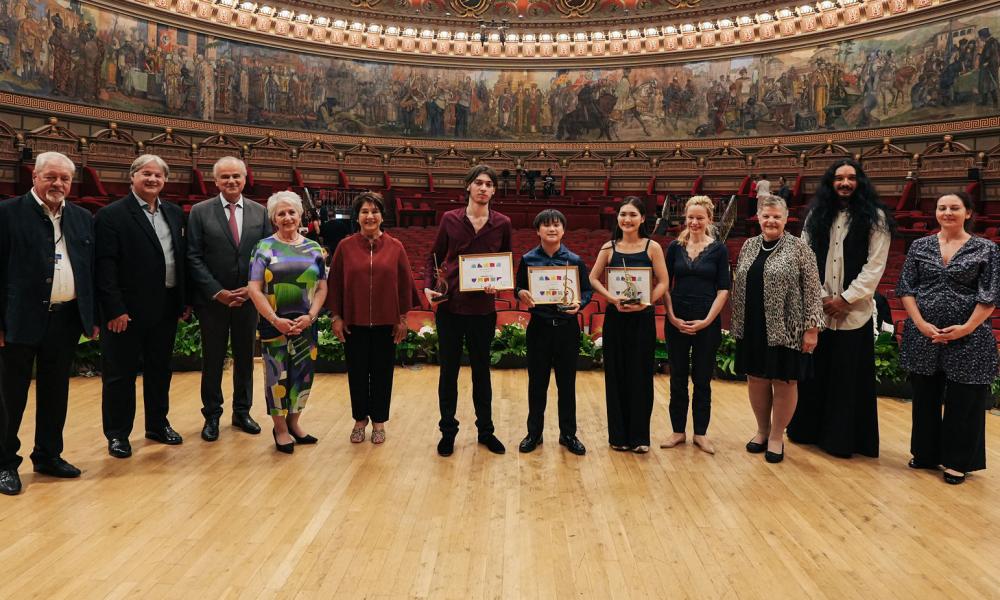
Violin Winners and Jury ©Alex Damian

Violin: A Historic First Prize
 

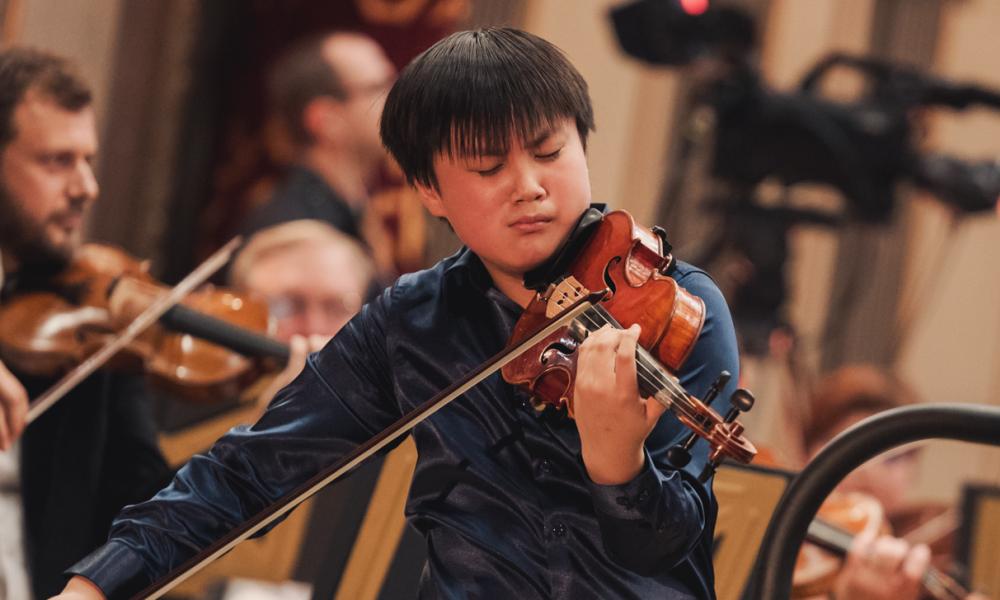
The Violin Final on 13 September produced the defining statistical milestone of the 2026 edition. At just 11, Jayden King became the youngest First Prize winner in the history of the George Enescu International Competition. He surpassed the previous record held by cellist Jaemin Han, who won his section at the age of 15.
Performing with the George Enescu Philharmonic Orchestra under Harry Ogg, King presented Tchaikovsky’s Violin Concerto in D major, Op. 35. Francesco Papa and Eun Che Kim, who received Second and Third Prizes respectively, both chose Sibelius’s Violin Concerto in D minor, Op. 47.
Jury chair Mihaela Martin highlighted the strength of the section’s international appeal: 185 violinists had entered despite September’s crowded competition calendar. For her, the preparation itself represents an important stage in a young musician’s development, demanding an extensive repertoire and bringing participants closer to the realities of professional concert life.
Martin was joined on the jury by Ida Kavafian, Alissa Margulis, Vladimir Nemțanu, Nora Pötter, Bujor Prelipcean, Liviu Prunaru, Nemanja Radulović and Kathleen Winkler.

Jayden King ©Pavel Andrada

New York-based Jayden King was the youngest participant in the 2026 Competition. He began studying the violin at three, made his orchestral debut at six and entered the Juilliard School’s Pre-College Division at seven. He currently studies with Masao Kawasaki.
Despite his age, King has already appeared as a soloist at Carnegie Hall, Lincoln Center and Merkin Hall. His achievements in 2026 also include Second Prize at the Henri Marteau International Violin Competition, a semi-final appearance at the Stulberg International String Competition and victory at the Goldene Note competition. His First Prize in Bucharest marks a new chapter both in his development and in the Enescu Competition’s history.

Based in Rome, 20-year-old Francesco Papa began violin studies at five. In 2018, he became concertmaster of the Youth Orchestra of the Accademia Nazionale di Santa Cecilia, and from 2019 studied with Silvia Marcovici at the University of Music and Performing Arts in Graz. He completed his bachelor’s studies at the Santa Cecilia Conservatory in Rome in 2026.
Papa’s previous distinctions include First Prizes at the Arthur Grumiaux International Competition, the Concours Marie Cantagrill and Premio Crescendo, Second Prize at the Concorso Andrea Postacchini and Third Prize at the Concorso Vittorio Veneto. He has participated in masterclasses with Maxim Vengerov and Uto Ughi and has performed widely as a soloist.

Berlin-based Eun Che Kim, 28, has appeared with the KBS Symphony Orchestra, Copenhagen Philharmonic, Baden-Baden Philharmonic, Odense Symphony Orchestra, Hungarian State Opera Orchestra and Hungarian Radio Symphony Orchestra.
Her musical development also includes participation in the Krzyżowa Music Festival and the Menuhin Festival and Academy in Gstaad. She is completing a master’s degree with Ulf Wallin at the Hanns Eisler School of Music in Berlin, where she previously studied with Kolja Blacher. She performs on an 1885 Enrico Rocca violin.

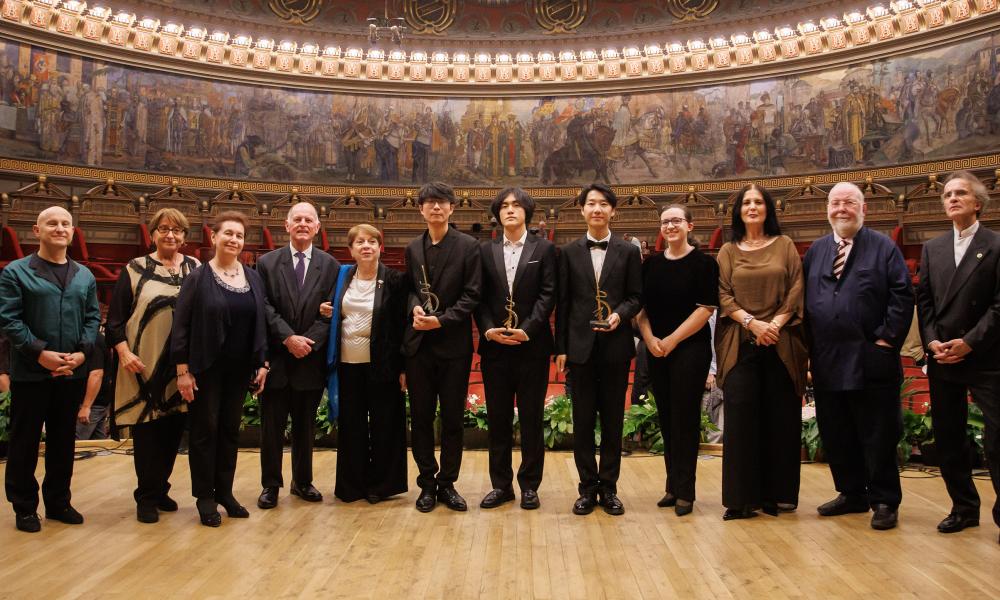
Piano Winners and Jury ©Andrei Gindac

Piano: A Distinctive Voice in the Closing Final
 

The Piano Final on 19 September brought both the section and the 2026 Competition to a close. With the George Enescu Philharmonic Orchestra conducted by Daniela Candillari, the finalists offered three markedly different concerto programmes.
Jeongwoo Lee performed Chopin’s Piano Concerto No. 2 in F minor, Op. 21; Yiming Guo chose Prokofiev’s Piano Concerto No. 3 in C major, Op. 26; and Pin-Hong Lin presented Brahms’s Piano Concerto No. 2 in B-flat major, Op. 83. The jury awarded them First, Second and Third Prizes respectively. Lee also received five special prizes.
Jury chair Lilya Zilberstein praised the quality of all three finalists, while drawing particular attention to Lee’s artistic identity. She described him as “a special personality: remarkably mature, as though he had been born at the piano”.
The Piano jury also included Nelson Goerner, Rena Shereshevskaya, Marie-Ange Nguci, Vovka Ashkenazy, Didier de Cottignies, Dana Borșan, Anthony Fogg and Raluca Știrbăț.

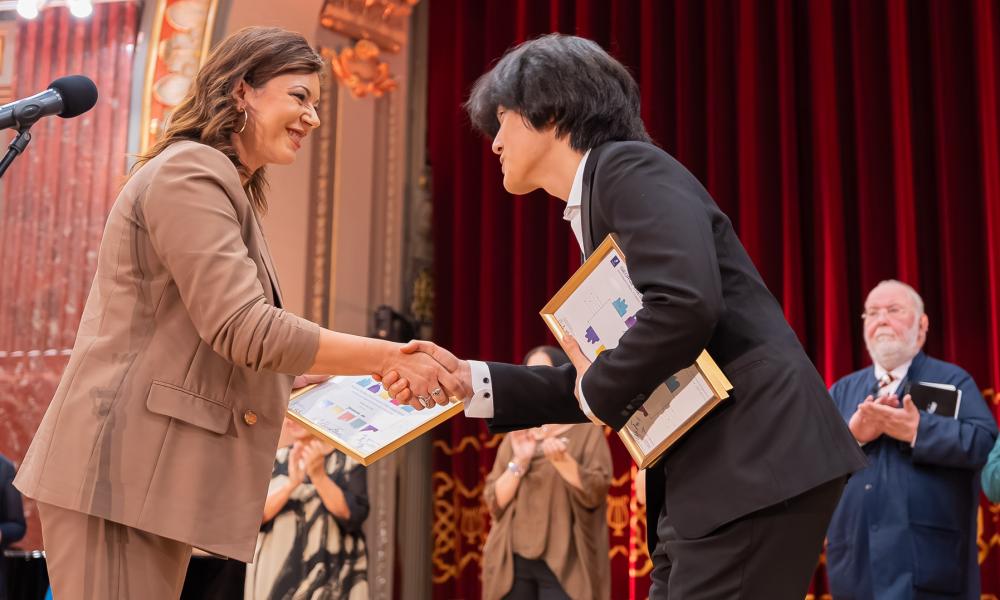
Jeongwo Lee and Cristina Uruc, Executive Director of the Enescu Competition ©Andrei Gindac

Eighteen-year-old Jeongwoo Lee is based in Boston, where he is pursuing bachelor’s studies with HaeSun Paik at the New England Conservatory. He won First Prize at the Ewha Kyunghyang Music Competition in 2020 and graduated from Yewon School with a distinction for exceptional performance, also appearing as a concerto soloist with the school orchestra.
In 2024, Lee won First Prize at the Ettlingen International Competition for Young Pianists and participated in the Morningside Music Bridge programme at the New England Conservatory on a full scholarship. His First Prize and five special awards in Bucharest add substantial recognition to this developing career.

Beijing-based Yiming Guo, 24, is a postgraduate student at the Central Conservatory of Music, studying with Danwen Wei. His competition record includes prizes at the Long-Thibaud Competition in 2022 and the Xiamen International Piano Competition in 2024.
He received an additional distinction at the 2025 Paderewski Piano Competition and reached the semi-finals of the Takamatsu International Piano Competition in 2026. 

Based in Indiana, 25-year-old Pin-Hong Lin is an artist diploma candidate at the Jacobs School of Music, studying with Norman Krieger. He also receives artistic guidance from Xin Wang, artistic director of the Euregio Piano Award.
His recent distinctions include Third Prize and the award for the best performance of a classical sonata at the Paderewski International Piano Competition, as well as the Hastings Prize at the Hastings International Piano Competition. He has also received Third Prize at the Maria Canals Piano Competition.
Lin’s orchestral collaborations include appearances with the Royal Philharmonic Orchestra, Pomeranian Philharmonic, Barcelona Youth Symphony Orchestra, Sinfonia Smith Square, Taipei Symphony Orchestra, Taiwan National Symphony Orchestra and New Music Ensemble.

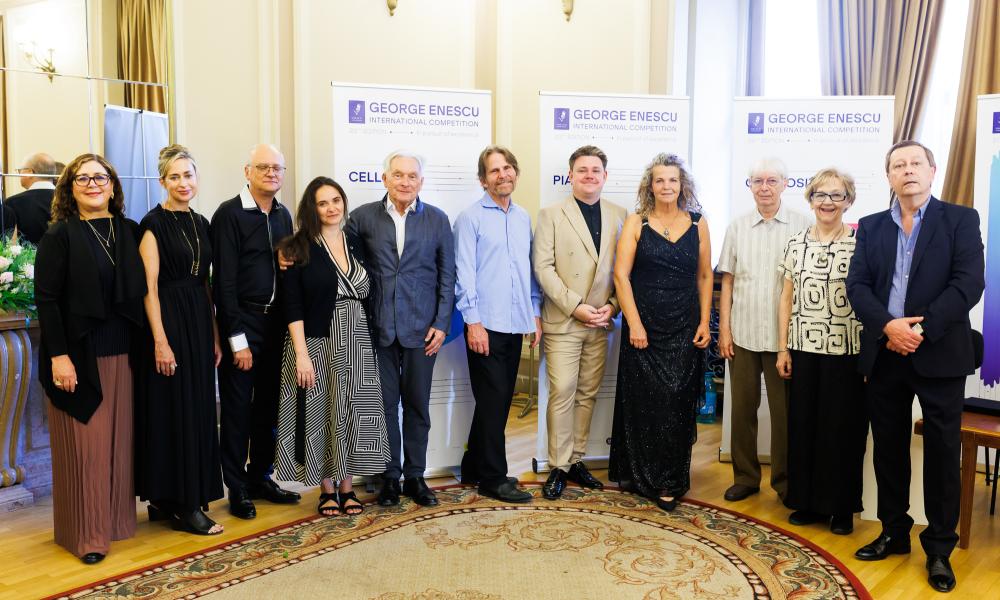
The Composition Jury ©Patricia Tanase

Composition: Recognition for New Work


The Composition Section placed the creation of new repertoire alongside the interpretation of established works. Its results were announced during the opening gala on 23 August, with three awards shared by two composers: Jinhan Xiao and Adrien Sassier.
The Symphonic Music Prize went to Xiao’s Quadruple Blue: Four Odes to the Abyssal Seas. Sassier received both the Chamber Music Prize for Les Ailes du Désespoir and the Originality Prize for a separate work, Rêves en Fleur. Unlike the instrumental sections, the announced results therefore recognised two laureates rather than three ranked winners.
Chaired by Zygmunt Krauze, the jury brought together composers and representatives of contemporary musical life: Elsa Vautrain, Johanna Doderer, Sarah Kirkland Snider, Steven Mackey, Mark Simpson, Gabriela Ortiz, Dan Dediu, Adrian Pop, Adrian Iorgulescu and Doina Rotaru.
Contemporary composition also had a prominent place in the public concert programme. On 27 August, Marin Alsop conducted the Romanian Radio National Orchestra in a concert dedicated to the section, featuring music by Snider, Mackey, Rotaru and Krauze. Krauze appeared as soloist in his own Piano Concerto No. 3, Fragments of Memory, connecting the jury’s evaluative role with active participation on stage.

Jinhan Xiao was recognised for Quadruple Blue: Four Odes to the Abyssal Seas. The award places Xiao among the composition laureates of the 20th edition, with a work whose title invokes the depths of the ocean through a four-ode conception.

Adrien Sassier received two distinctions for separate compositions. Les Ailes du Désespoir earned the Chamber Music Prize, while Rêves en Fleur received the Originality Prize. This double recognition made Sassier the recipient of two of the section’s three announced awards.


From Recognition to Lasting Careers
 

The Competition’s wider programme underscored that an award is a point of departure rather than a complete professional destination. ARTEXIM’s performance opportunities connect laureates with concerts and recitals at the 2027 George Enescu International Festival and the 2028 Competition, as well as engagements during the 2026–2028 seasons of partner institutions. Those partnerships extend across orchestras and philharmonic institutions in Brăila, Arad, Bacău, Craiova, Iași, Oradea, Pitești, Ploiești, Râmnicu Vâlcea, Satu Mare and Sibiu, together with the Chișinău National Chamber Orchestra. They offer an important next step: opportunities to turn competition recognition into experience before new audiences.

Personalised mentoring and consultancy with curator and music strategist Andreas Vierziger provide another form of support. Tailored to the instrumental winners’ and laureates’ individual goals, these sessions address artistic positioning, strategic career development, relationships with the music industry and the identification of relevant professional opportunities.

Education and exchange were equally visible throughout the edition. The masterclasses, introduced in 2024, brought conducting, composition and instrumental study to the Romanian Athenaeum, Sala Radio and the National University of Music Bucharest. Their public culmination included the 28 August concert in which Cristian Măcelaru and three selected young conductors led the Romanian Youth Orchestra.

Meanwhile, six chamber recitals between 4 and 18 September brought jury members, established soloists and former laureates together. Artists including Mihaela Martin, Claudio Bohórquez, Nemanja Radulović, Marie-Ange Nguci and Nelson Goerner shared the series with former Competition laureates Ștefan Cazacu and Hyeonjeong Lee, making intergenerational exchange an audible part of the programme.

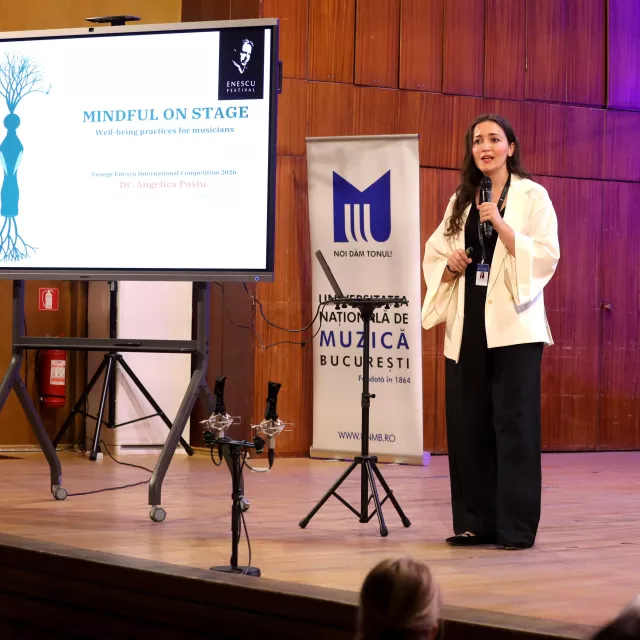
The continuing “Mindful on Stage” initiative, led by Dr. Angelica Postu, complemented this professional and artistic support by giving participants space to address the emotional demands of competition. Building on its introduction at the previous edition, it reinforced the principle that artistic excellence and a healthier, more sustainable approach to music-making belong together.

The 2026 Competition will be remembered for its record participation and the extraordinary achievement of its youngest-ever First Prize winner. Its longer-term significance, however, will emerge through the careers, collaborations and new works that follow—when the musicians recognised in Bucharest return to the stage not as competitors, but as artists shaping the next chapter of concert life.


CELLO

Awards
First prize: Samuel Niederhauser (28), Lucerne
Second prize: Joshua Kováč (19), Tennessee
Third prize: Sanghyeok Park (21), Seoul

Jury
Arto Noras (Jury), Frans Helmerson, Elena Dubinets, Marin Cazacu, Enrico Dindo, Inbal Segev, Claudio Bohórquez, Dan Prelipcean, Valentin Răduțiu

Artists
Romanian Radio National Orchestra/ Case Scaglione (Conductor)

**********

VIOLIN

Awards
First prize: Jayden King (11), New York
Second prize: Francesco Papa (20), Rome
Third prize: Eun Che Kim (28), Berlin

Jury
Mihaela Martin (Chair), Ida Kavafian, Alissa Margulis, Vladimir Nemțanu, Nora Pötte, Bujor Prelipcean, Liviu Prunaru, Nemanja Radulović, Kathleen Winkler

Artists
George Enescu Philharmonic Orchestra/ Harry Ogg (Conductor)

*********

PIANO

Awards
First prize: Jeongwoo Lee (18), Boston
Second prize: Yiming Guo (24), Beijing
Third prize: Pin-Hong Lin (25), Indiana

Jury
Lilya Zilberstein (chair), Vovka Ashkenazy, Dana Borșan, Didier de Cottignies, Anthony Fogg, Nelson Goerner, Marie-Ange Nguci, Rena Shereshevskaya, Raluca Știrbăț

Artists
George Enescu Philharmonic Orchestra/ Daniela Candillari (COnductor)

*********

COMPOSITION

Awards
Symphonic Music category: Jinhan Xiao (26), Shanghai
Chamber Music prize and prize for originality: Adrien Sassier (29), Brussels

Jury
Zygmunt Krauze (Chair), Dan Dediu, Johanna Doderer, Adrian Lorgulescu, Sarah Kirkland Snider, Steven Mackey, Gabriela Ortiz, Adrian Pop, Doina Rotaru, Mark Simpson, Elsa Vautrain


©WFIMC 2026