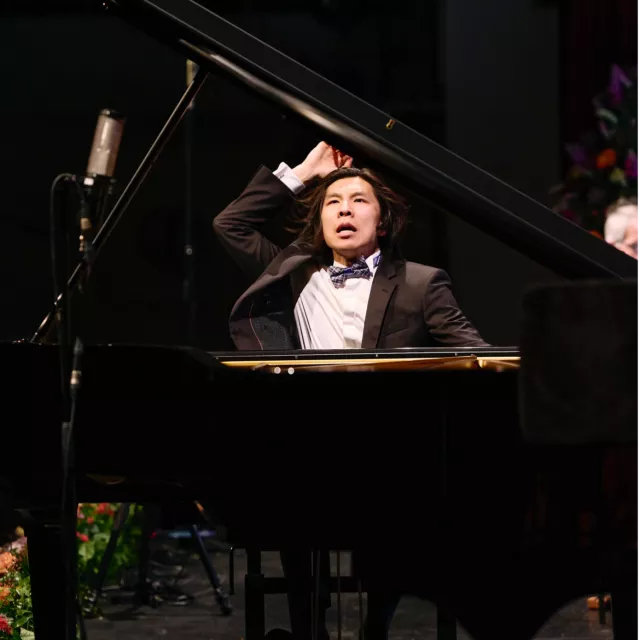
Hastings is different from other places because it’s a smaller town and the competition is a major event for the community. Many people told me quite openly that they had barely ever been to a classical concert, or that this was a completely new experience. Their reactions were very genuine—they would simply say whether they liked something or not. There’s something very honest in that.
In a big city, the audience may be more experienced, but in a smaller place you feel that the whole town has a stake in making the competition happen. That creates a kind of warmth and involvement that I really appreciated.
You mentioned staying in the countryside. Did the setting affect your experience?
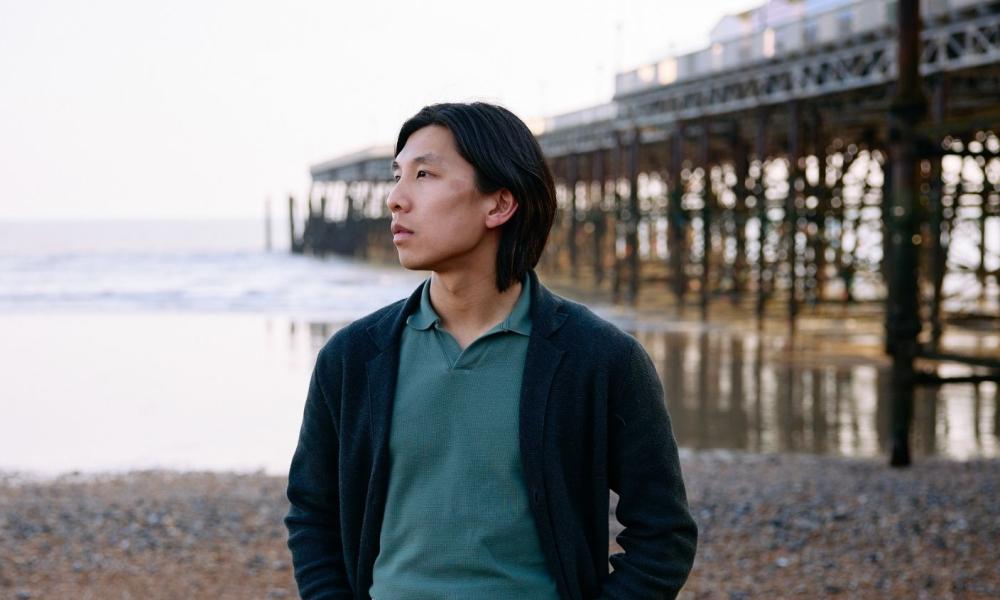
Yes, in a way. I had expected typical English February weather—cold, gray, maybe rain. But when I arrived, it was around 23 degrees and felt like the south of France. There are palm trees on the beach in Hastings, so visually it also looked that way.
Quite a few of the days I played were sunny, which was a really nice psychological boost. Between the weather, the sea and the countryside around my host family’s house, it created a very welcoming atmosphere in what could otherwise have been a rather stressful period.
How far in advance did you start preparing, and how do you choose repertoire for a competition like this?
The preparation in earnest started in the latter half of last summer, but that doesn’t tell the whole story. I’m quite hesitant to put completely new pieces into a competition program. Some risks are necessary, but I prefer to bring works that have been living with me for some time.
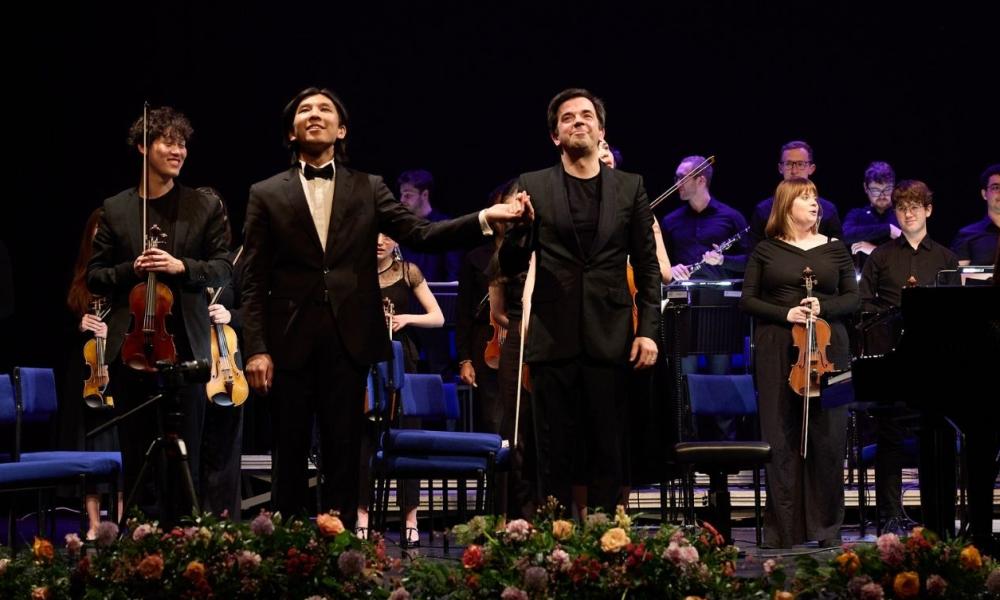
Several of the solo pieces have been maturing for years and changed a lot as I prepared them specifically for Hastings. Prokofiev’s Second Concerto, which I played in the final, is a good example. I had started it a long time ago, but I’d never really brought it fully to performance level until this competition. So a lot of it was “relearning” rather than learning from scratch.
Everyone’s approach is different. Some people treat it very much as a “competition,” others as just another performance. I do better when I think of it as a performance—trying to shape a meaningful musical arc—while still recognizing that a 35-minute solo round with a commissioned piece is not the same as a full-length recital. You have to structure that 35 minutes differently from a one-hour or 90-minute program.
Do you feel differently about preparing concertos versus solo programs?
They’re different challenges. In some ways, a concerto can feel slightly easier to prepare, not in terms of difficulty, but because it’s closer to a “normal” performance situation: full work, orchestra, audience, you’re not thinking about time limits in the same way as in a competition round.
At the same time, I love playing solo because you are responsible for everything. You control every aspect of the performance: pacing, sound, timing, the narrative of the whole evening. If something goes wrong, it’s your responsibility, but that also means you have the tools to fix it. There’s a strange comfort in knowing that everything you need is in the score and in your own hands.
You’ve already done several major competitions. How do you deal with pressure and nerves?
Pressure definitely exists; it never really goes away. I’ve now taken three big competitions, two of them in fairly quick succession in 2024, and I found that each one became a kind of catalyst. After each competition I felt I had changed a lot as a musician in a short time.
There was a period when I struggled quite a bit with memory. Looking back, my mindset was in the wrong place: I was worrying too much about playing everything correctly, instead of focusing on the music itself. My teachers reminded me that technique—no matter how advanced—exists to serve the music. When your attention shifts away from that, all kinds of problems appear.
Now I try to put my energy into playing with imagination and spirit, into creating something special in that moment. If I can really commit to that in practice and on stage, it starts to overshadow the more material concerns. It’s not foolproof, of course, but it’s a direction.
And it’s also personal. I know people who have decided they simply don’t want to do solo competitions anymore, and that’s completely fine. In my case, I seem to thrive under competition conditions, so I’m willing to work with that pressure instead of fighting it.