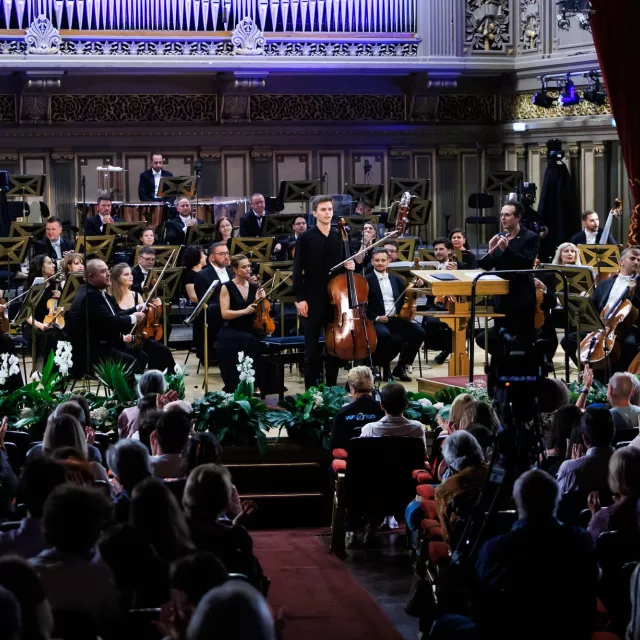
Munich, Germany

Excellence in Many Voices

Returning to four categories, the 75th ARD International Music Competition brought emerging artists to Munich for two weeks of demanding performances, memorable encounters and decisions that sparked debate.

What distinguishes a prize-winning performance when everyone on stage commands an exceptional level of skill? At the 2026 ARD International Music Competition, that question ran through four very different disciplines. Technical assurance was only the starting point. Musical personality, communication and the ability to draw listeners into a performance proved equally significant—and did not always lead juries and audiences to the same conclusions.

Following a reduced edition the previous year, the Competition returned to four categories: Organ, Percussion, String Quartet and Bassoon. Altogether, 184 musicians from 32 countries took part, performing across six venues in central Munich. These included the Jesuit church of St Michael, appearing as a Competition venue for the first time, alongside the Amerikahaus and Literaturhaus.

The programme offered an unusually broad spectrum of music-making, from the scale and colour of the organ to the intimate exchange of a string quartet. Organ returned after a 15-year absence, while bassoon and percussion—categories presented only every seven years—gave their emerging performers a particularly significant opportunity for international exposure.

For artistic director Meret Forster, the ambition reaches beyond the results. She wants the Competition to belong to Munich’s cultural life as naturally as the Berlinale belongs to Berlin or the major book fairs to Frankfurt and Leipzig. In 2026, strong audience interest, distinctive performances and lively discussion around the awards demonstrated the event’s capacity to engage listeners as well as identify talent.

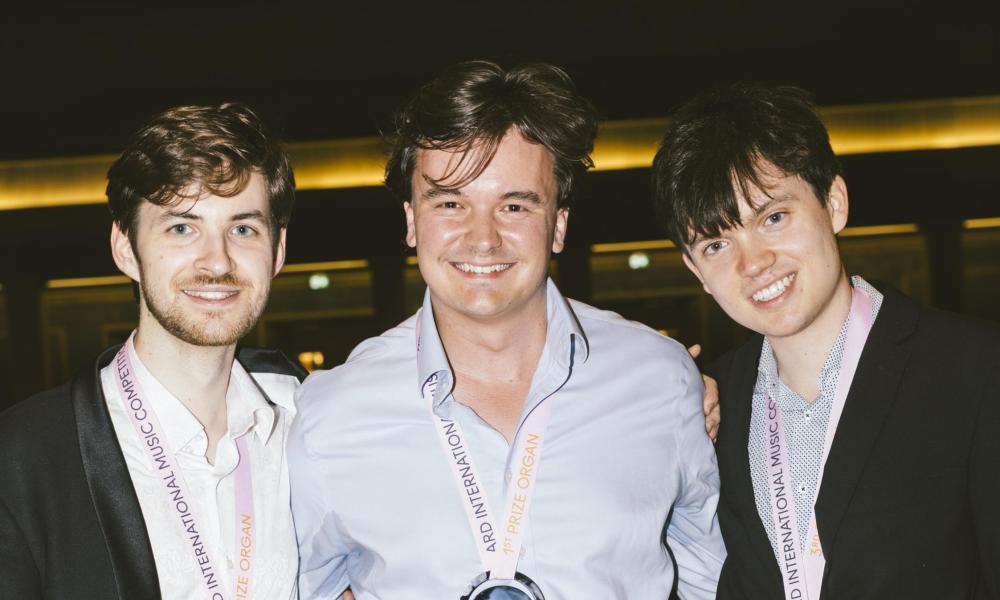
The Winners in the category organ: William Fielding, Alexis Grizard and Julian Emanuel Becker ©Daniel Delang

Organ: A Return with a Full Audience


The organ’s return was one of the defining features of the 2026 edition. Twenty participants entered a category that had not appeared at the Competition for 15 years, bringing renewed attention to an instrument whose expressive possibilities depend on an intricate relationship between performer, repertoire, acoustics and the instrument itself.

Born in 1999 in Blackburn, UK, William Fielding (First Prize) is a distinguished young organist who began his musical life as a cathedral chorister. He received his early training at St Mary’s Music School in Edinburgh before pursuing advanced studies in Paris. A prizewinner at several international competitions, Fielding combines a rigorous technical foundation with a refined approach to programming.

Second Prize: Alexis Grizard is a French-German organist studying with Martin Schmeding in Leipzig. He performs at major venues and festivals across Europe, including the Philharmonie de Paris and Toulouse les Orgues. His honours include first prize at the 2025 St Albans International Organ Competition and the 2023 Grand Prix d’Orgue Jean-Louis Florentz.

Third Prize: Julian Emanuel Becker is an award-winning organist and pianist studying in Leipzig. He has performed at major venues and festivals across Europe, including the Gewandhaus Leipzig and Schleswig-Holstein Musik Festival. Besides many national competitions, he has won First Prize at the 2024 International Bach Competition Leipzig.
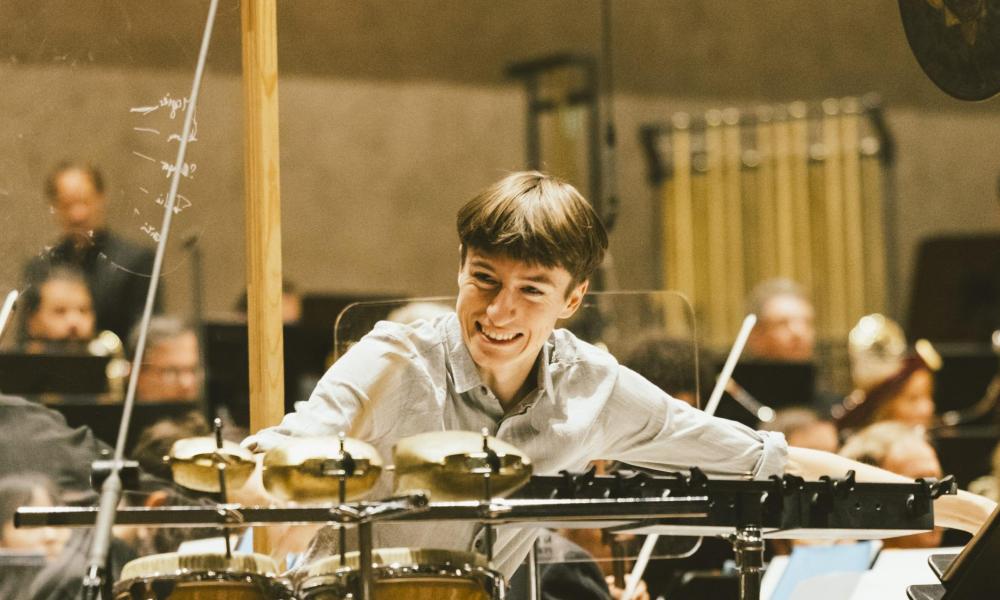
Gabriel Michaud ©Daniel Delang

Percussion: Looking for the Spark

No category illustrated the difficulty of the jury’s task more clearly than Percussion. Only two participants advanced to the final, and no Third Prize was awarded.
For jury chair Martin Grubinger, the decision reflected a demanding conception of the contemporary percussion soloist. Besides technical mastery, the jury was looking for musicians who could captivate an audience, inspire an ensemble and sustain a substantial percussion concerto.
Does a spark pass from the performer to the listener? Can an individual musical idea become a shared experience? These were central questions in a category that tests physical coordination, rhythmic precision, sonic imagination and stage presence in unusually visible ways.
Grubinger described the ARD Competition as the “Olympic Games” for percussionists—a rare event of particular importance in a field with relatively few comparable opportunities. Its seven-year cycle heightened the significance of the occasion.
First Prize went to Gabriel Michaud, while Yuan Xia received Second Prize. Alongside Grubinger, the jury included Camille Baslé, Johannes Fischer, Sanja Fister, Timothy Genis, Marta Klimasara and Vassilena Serafimova.

Gabriel Michaud is a French percussionist and composer who graduated with highest honours from the conservatoires of Geneva and Paris. He performs internationally as a soloist and chamber musician, including with the Orchestre de la Suisse Romande. His honours include first prizes at the 2022 TROMP International Percussion Competition and the 2025 World Marimba Competition.

Chinese percussionist Yuan Xia is studying with Marta Klimasara and Klaus Dreher in Stuttgart. He has performed across Europe and Asia, including as a soloist with the Royal Concertgebouw Orchestra. Awards include first prize at the 2024 TROMP International Percussion Competition and second prize at the 75th ARD International Music Competition.

The Viatores Quartet (First Prize) ©WFIMC

String Quartet: Four Voices, One Identity


The String Quartet category offered a different kind of test. Here, musical individuality had to coexist with a collective identity: four independent voices listening, responding and shaping an interpretation together.
Twenty ensembles took part across four rounds, with performances moving from the Amerikahaus to the final at the Prinzregententheater. The repertoire demanded both structural understanding and expressive flexibility, drawing on a tradition in which the relationship between the players is inseparable from the music itself.

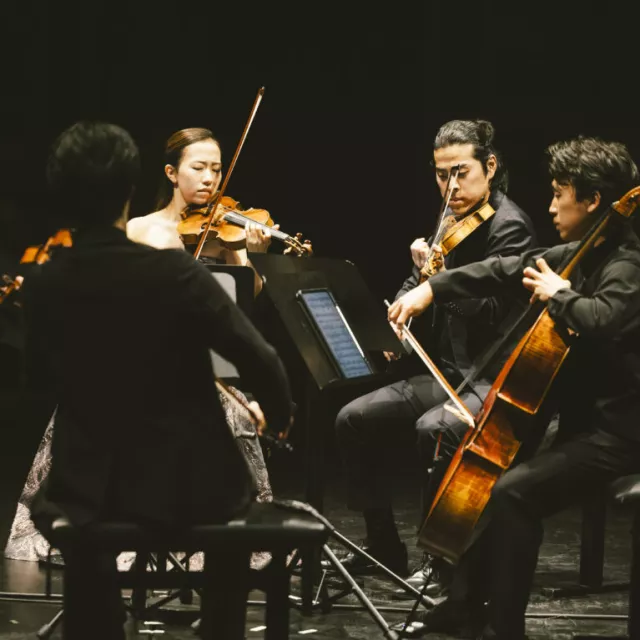
The Viatores Quartet received First Prize and the Audience Prize, bringing jury and listeners into agreement. No Second Prize was awarded. Instead, Quartet Fugue and the Katarina String Quartet shared Third Prize.
Those decisions prompted debate in the accompanying critical coverage, particularly over Quartet Fugue’s placing. Its performances were praised for their energy, commitment and dramatic force—a reminder that a competition ranking cannot fully represent the different artistic qualities heard across several rounds.

Chaired by Vineta Sareika, the jury brought together musicians with extensive quartet experience: Pierre Colombet, Veronika Hagen, François Kieffer, Asbjørn Nørgaard, Arnau Tomàs Realp and Pawel Zalejski.


The Berlin-based Viatores Quartet (first Prize) comprises violinists Louisa Rose Staples and Johannes Brzoska, violist Miguel Erlich and cellist Umut Sağlam. Formed in 2023 at the Hanns Eisler School of Music in Berlin, the ensemble subsequently studied with Tabea Zimmermann in Frankfurt and now works with Oliver Wille at the Hanover University of Music, Drama and Media. Its previous distinctions include prizes at the Mendelssohn-Bartholdy Competition in Berlin and the Wigmore Hall International String Quartet Competition in London.

Quartet Fugue ©Daniel Delang

Katarina String Quartet ©Daniel Delang

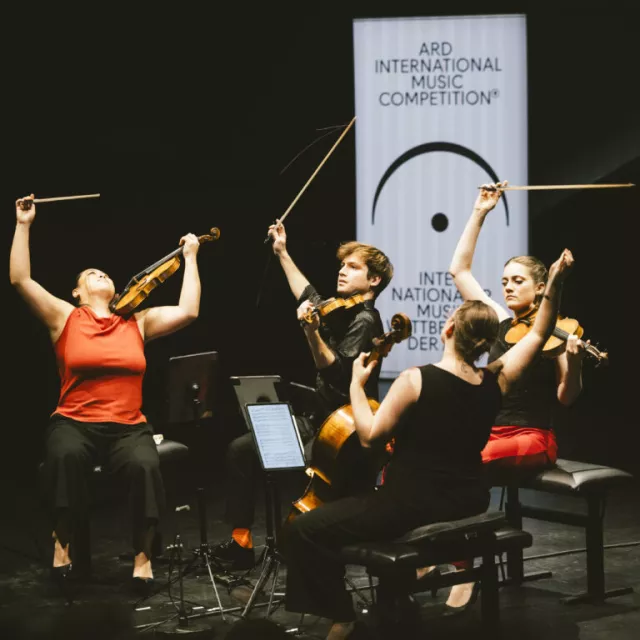
Based in Hanover, Quartet Fugue (Joint Third Prize) consists of violinists Mako Ochiai and Kentaro Konishi, violist Soichiro Kawabe and cellist Soichiro Matsutani. The ensemble formed in 2023 at Tokyo University of the Arts and now also studies with Oliver Wille in Hanover. Its performances throughout the Competition were noted for their fire, energy and commitment.
The Katarina String Quartet (Joint Third Prize) was founded in 2022 at McGill University in Montreal and comprises Jeanel Liang and Jérôme Chiasson (violins), Celia Morin (viola), and Maya Enstad (cello). Following its residency at the Juilliard School, it is currently Quartet in Residence at the New England Conservatory. The ensemble has performed at venues including Carnegie Hall and Wigmore Hall.


Bassoon: Personality and Connection


The Bassoon category brought the relationship between jury assessment and audience response into particularly clear focus. Enrico Bassi received First Prize, while Jappe Dendievel won both Second Prize and the Audience Prize. Third Prize went to Laure Thomas.
Dendievel offered a revealing explanation of his approach to performance: he chooses someone in the audience and imagines playing for that individual. The pleasure, he said, lies in seeing listeners respond emotionally. His comments captured something essential about the Competition as a live event—however exacting the preparation and evaluation, its meaning ultimately depends on communication.

The category also reflected the Competition’s expanding repertoire. Jury member Johannes Schwarz, of Ensemble Modern, welcomed the opportunity to exchange perspectives with colleagues whose work is more closely associated with the classical repertoire. That dialogue between traditions is increasingly embedded in the event’s programming.
Gustavo Núñez chaired the Bassoon jury, joined by Sophie Dervaux, Krisztina Faludy, Andrea Merenzon, Maria José Rielo Blanco, Johannes Schwarz and Eyal Streett.

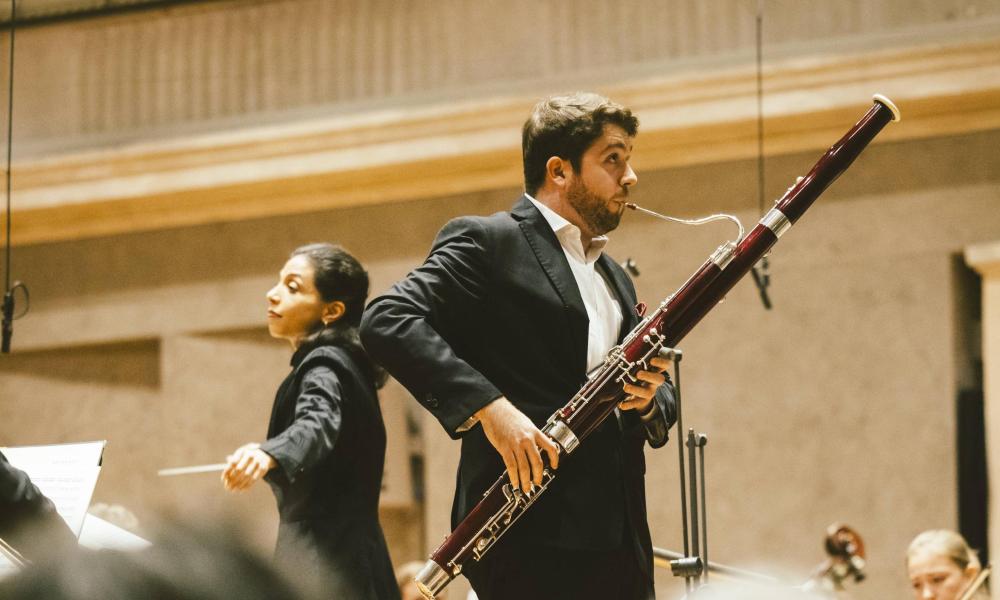
First Prize (Bassoon): Enrico Bassi ©Daniel Delang

Enrico Bassi is an Italian bassoonist and has been principal bassoonist of the NDR Elbphilharmonie Orchester since August 2025. He studied in Parma and Zurich and previously held the same position with the Orchestra della Svizzera italiana from 2022 to 2025. His awards include first prizes at the 2021 Rossini International Bassoon Competition and the 2023 Muri Competition.

A Belgian bassoonist currently serving his probationary year as principal bassoonist of the Deutsche Kammerphilharmonie Bremen Jappe Dendievel graduated with top honours from the University of Music and Theatre Munich in 2026, having studied with Dag Jensen and Katrin Lazar. Active internationally as a soloist and chamber musician, he also performs with leading European orchestras. He won first prize at the 2021 Prinses Christina Concours and received the 2025 DAAD Prize for founding the Mahler Student Festival Orchestra.

Laure Thomas is a French bassoonist who studied with Gilbert Audin at the Paris Conservatoire and Dag Jensen at the University of Music and Theatre Munich, graduating with highest honours. She won first prize at the 2024 Fernand Gillet–Hugo Fox International Bassoon Competition and performs regularly with leading European orchestras, including the Paris Opera and the Orchestre Philharmonique de Radio France. Particularly dedicated to chamber and contemporary music, she co-founded the Pentagone wind quintet in 2020.

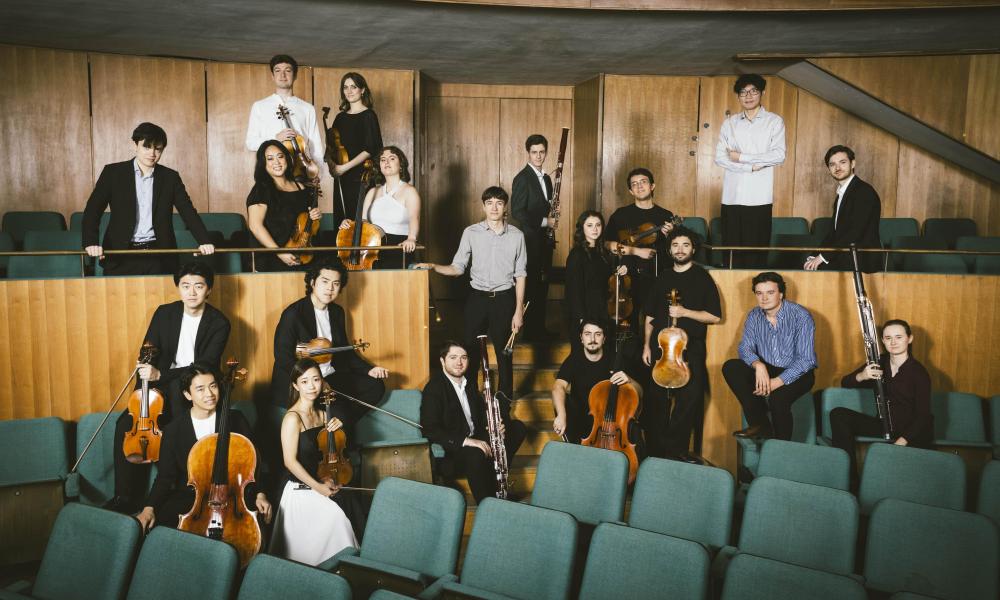
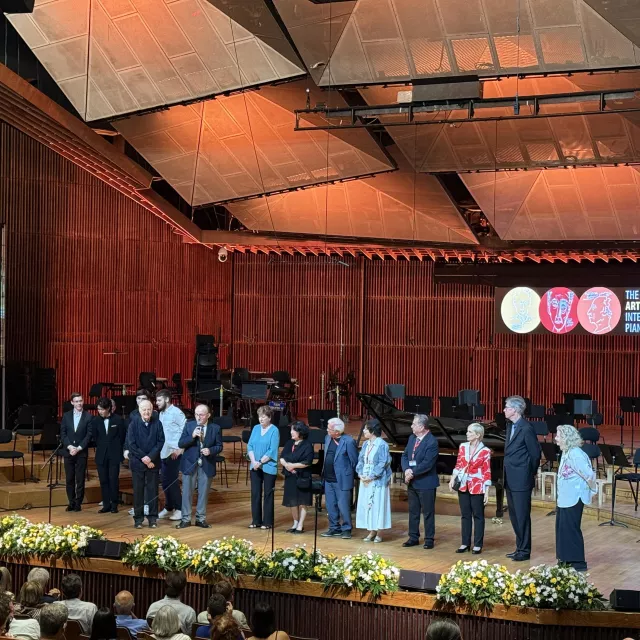
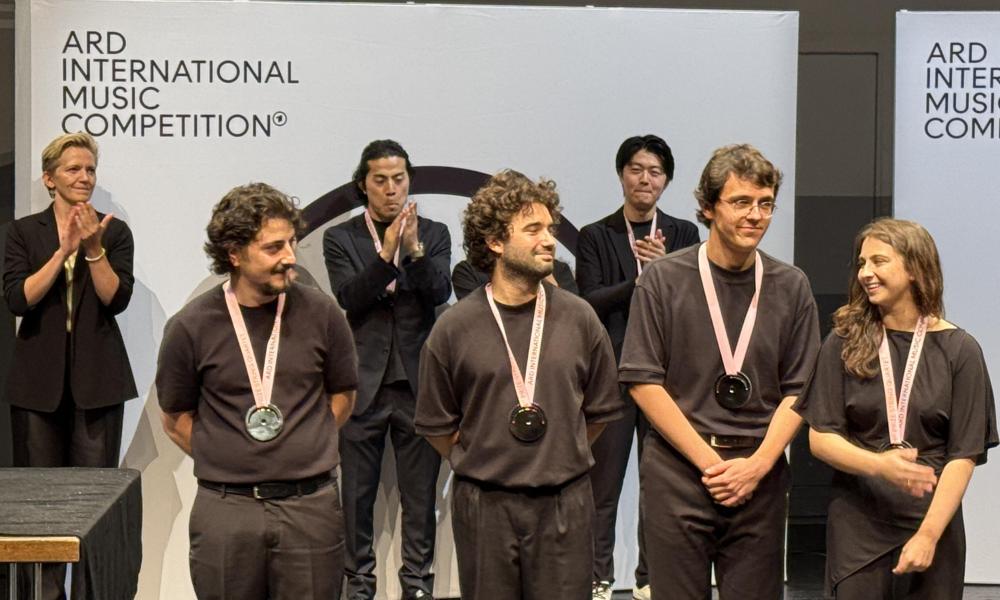
Laureates of the 2026 ARD Competition ©Daniel Delang

The Results


Organ

Awards
First prize: William Fielding (29), Toulouse
Second prize: Alexis Grizard (24)
Third prize: Julian Emanuel Becker (21), Leipzig

Jury
Andres Uibo, Sophie-Véronique Cauchefer-Choplin, Thierry Escaich, Zuzana Ferjencikova, Peter Kofler, Gianluca Libertucci, Kimberly Marshall

Artists
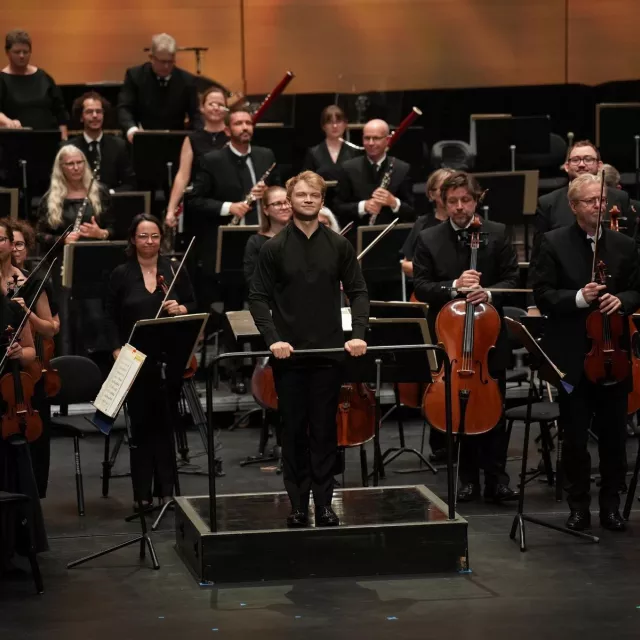
Symphonieorchester des Bayerischen Rundfunks/ Bar Avni, Conductor


Percussion

Awards
First prize: Gabriel Michaud (23), Genève
Second prize: Yuan Xia (25), Stuttgart
Third prize: Not Awarded

Jury
Martin Grubinger, Camille Baslé, Johannes Fischer, Sanja Fister, Germany, Timothy Genis, Marta Klimasara, Vassilena Serafimova

Artists
Symphonieorchester des Bayerischen Rundfunks/ Bar Avni, Conductor


String Quartet

Awards
First prize: Viatores Quartet, Berlin
Louisa Staples (violin), Johannes Brzoska (violin), Miguel Erlich (viola), and Umut Saglam (cello)

Third prize (ex aequo): Quartet Fugue, Hannover 
Mako Ochiai (violin), Kentaro Konishi (violin), Soichiro Kawabe (viola), and Soichiro Matsutani (cello)
Third prize (ex aequo): Katarina String Quartet, Boston
Jeanel Liang (violin), Jérôme Chiasson (violin), Celia Morin (viola), and Maya Enstad (cello)

Jury
Vineta Sareika (Chair), Pierre Colombet, Veronika Hagen, François Kieffer, Asbjørn Nørgaard, Arnau Tomàs Realp, Pawel Zalejski

Bassoon

Awards
First prize: Enrico Bassi (25), Hamburg/ Zurich
Second prize: Jappe Dendievel (22), Bremen
Third prize: Laure Thomas (23), Munich

Jury
Gustavo Núñez, Uruguay (Chair), Sophie Dervaux, Krisztina Faludy, Andrea Merenzon, Maria José Rielo Blanco, Johannes Schwarz, Eyal Streett

Artists
Symphonieorchester des Bayerischen Rundfunks/ Bar Avni, Conductor


©WFIMC 2026